
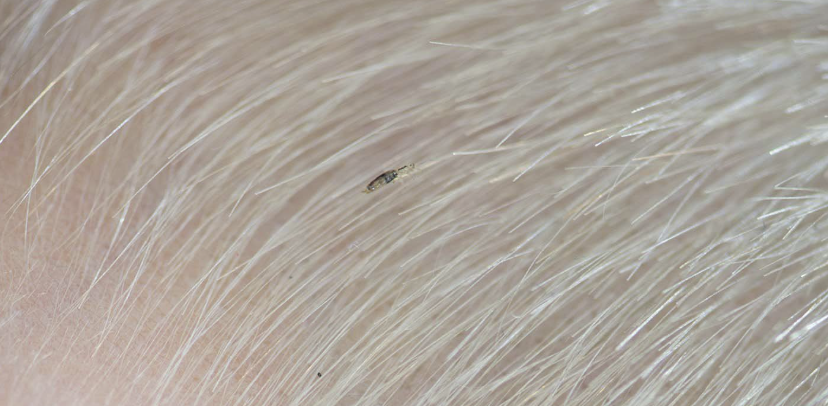
If one were to peer through a microscope at Politicus opportunistus, one might encounter a particularly well-adapted specimen clinging to the body politic: the louse known as Richard Lice MP.
Once a denizen of Mayfair boardrooms, this particular parasite is distinguished by its curious migration habits. Unlike ordinary lice, which remain close to the scalp, Lice has long preferred to live offshore – Dubai, for instance, a climate perfectly suited for those who enjoy a low-tax habitat. While ordinary citizens are left scratching their heads at rising bills, this desert-dwelling specimen thrives, feasting on tax arrangements as complex as its host is complacent.
In Parliament, he scuttles around the Reform UK Ltd benches, declaring that Britain has been sucked dry – a daft complaint, given his own parasitic relationship with the nation’s tax base. He speaks of national pride while ensuring he feeds off the nation’s purse. And from his sunlit cranium in the Emirates, Lice likes to lecture on sovereignty, patriotism, and “taking back control.” Control, it seems, is easier to take back when one’s wealth is neatly tucked away somewhere the Inland Revenue can’t quite reach.
Most hypocritical of all, for a creature whose very survival depends on clinging, Lice is obsessed with railing against “invasions.” Lice, after all, are notoriously territorial – forever panicked that another insect might colonise the scalp. Our Dubai-dwelling louse demands that Britain “stop the boats” lest another foreign irritant drifts ashore, all the while wagging a moralising antenna as if devotion to a patch of hair were a noble principle rather than the most basic survival instinct. He has even gone so far as to suggest leaving the European Convention on Hirsute Rights.
One might almost admire the consistency: Richard Lice is against immigration unless it’s his own; against parasites unless he is the one feasting; against tax unless someone else is paying it. He is, in short, the perfect political louse: difficult to dislodge, endlessly irritating, and always just out of reach of a comb.
Like all lice, Politicus opportunistus is difficult to shift once it’s attached. Researchers note that the louse’s call is shrill, repetitive, and almost indistinguishable from that of its closest cousin, Faragius brexitus. There is an ongoing debate among entomologists as to whether these lice actually believe the things they say, or whether they simply feed off whatever scalp happens to be nearest. Either way, they remain well adapted to the UK political ecosystem, where parasitism is not merely tolerated but positively rewarded with airtime on the BBC and GB News.
 i n s e c t i n s i d e