
Larval Populism and the collapse of civic habitats

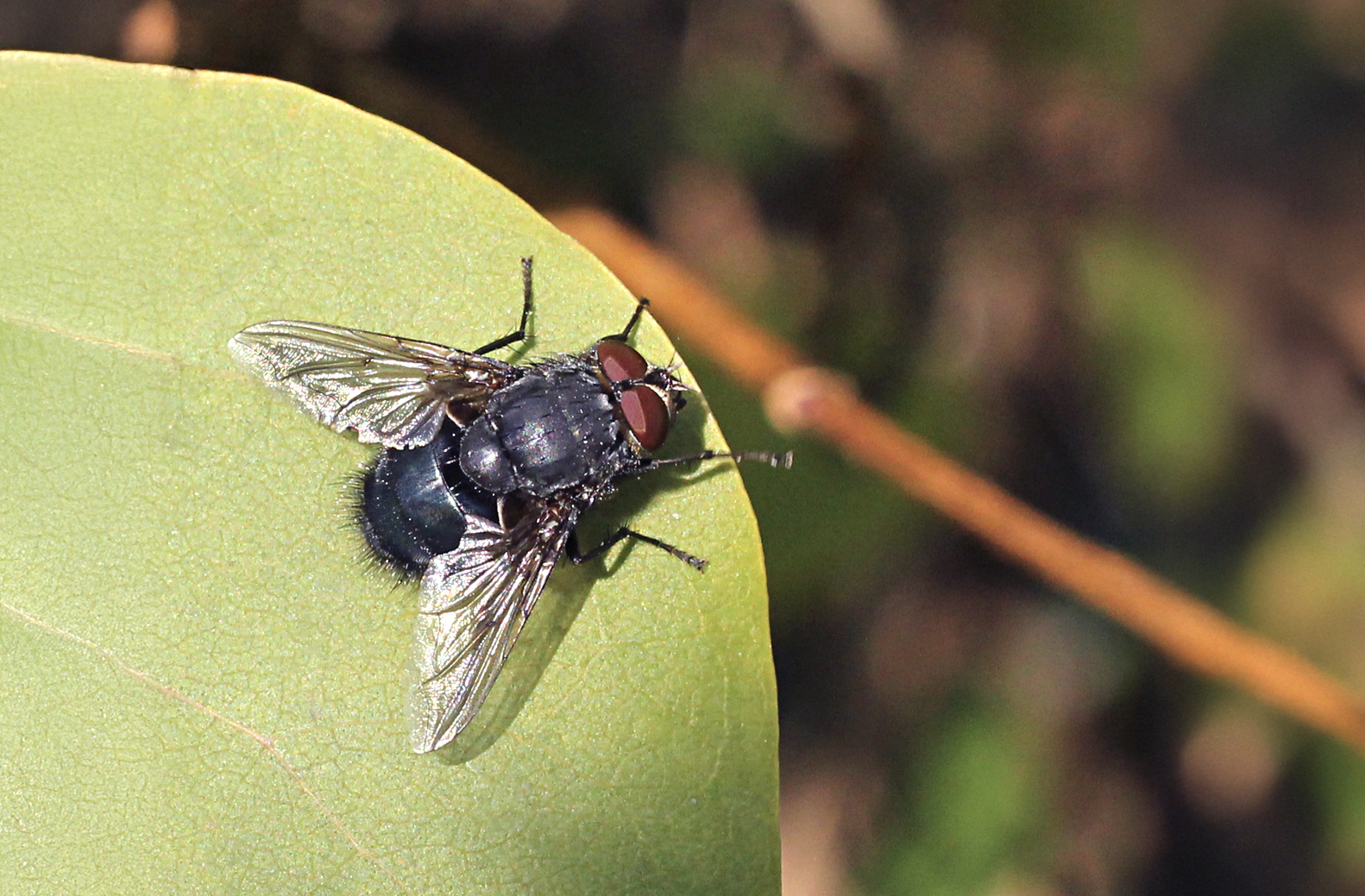
Bluebottle Faragius fauxpatriotus, the airborne charlatan

Ecologists observing orchard life have found that, no matter how complex or diverse insect communities are, they can only thrive in civic habitats where everyone contributes. Bees run the pollen economy, ants oversee infrastructural corridors, and wasps keep a vigilant eye on law and order. Beetle larvae turn rotting wood into communal mulch – the orchard’s tax base – which ensures nourishment for all. And, of course, everyone contributes their nutrient levies. Earthworms are the quiet municipal engineers, tunnelling unseen to aerate and redistribute nutrients; their work is the invisible groundwork, funded by these contributions. These enduring arrangements have long sustained the orchard’s common wealth.

Yet in recent seasons, a disruptive ideology has wriggled out of the compost heap: larval populism. Glorifying rot while denouncing evolution, it promises power to the soft-bodied masses by rejecting the very metamorphosis that sustains the orchard.

The foremost advocate of this is the grifting Compost MP Faragius fauxpatriotus, a maggot of unimpressive stature. His talent lies not in serving his constituents but in peddling slogans like “The Orchard is Broken” from a pile of decomposing plums. Faragius proclaims larvae to be the native born heirs to the orchard, casting any insect with wings as the enemies of the writhing classes. He denounces the ants as joyless technocrats, the bees as buzzing bureaucrats, and the dragonflies as aerial snobs who “Couldn’t possibly understand the wriggling classes.” “Wriggling is freedom,” he insists, sniggering at their immaturity, while dodging questions about offshore fruit-hoarding and nectar laundering.

Central to Faragius’s rhetoric is the claim that larval voices are being silenced by left-winged elites. He insists that freedom of speech is curtailed by any creature capable of flight, declaring them an existential threat to discourse in the orchard. Every butterfly becomes a symbol of censorship, every drone of a wasp patrol heralds the suppression of maggot opinion, and every shadow of a bird is interpreted as proof of a winged ‘leftie’ plotting against the writhing masses. At the same time, any sign of scrutiny – whether a buzz, chirrup, or tweet – is swiftly silenced. Larvae are urged to wriggle in solidarity, to reject democracy or see their rights as the soil-bound majority – absurdly cast as an oppressed underclass – being squashed.

Meanwhile, as ordinary larvae dutifully pay their compost taxes, Faragius slips his nectar donations through snail-shell companies beyond the reach of orchard auditors. He rails against the bees’ pollen tariffs – the very levies that pollinate the orchard – recasting the simplest civic duty as tyranny. All the while, he fiddles the system, hoarding surplus plums and starving the mulch fund that keeps the soil alive.
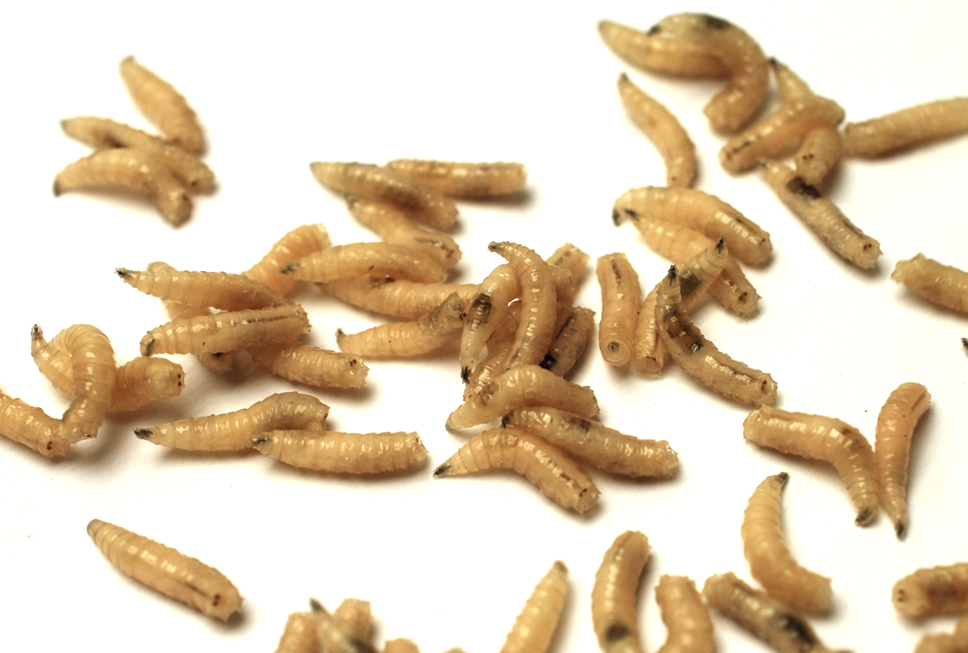
A movement of maggots, mistaking decay for destiny

What his anti-wing hyperbole fails to mention is one simple biological fact: larvae are meant to metamorphose. Reform is the very meaning of metamorphosis. Yet larval populism glorifies permanent immaturity. It nurtures extreme nationalism built on simplistic soundbites perpetuated by algorithms, and fake patriotism to a pile of rotting fruit in a biodiverse orchard. By persuading his maggot base to resist change, Faragius denies them the opportunity of social mobility – the chance to spread their wings. In mobilising them to dismantle their own civic habitats, he invites ruin: ant hills will crumble, nectar networks will falter, disorder will spread, and the orchard will collapse in ideological chaos.

The irony is inescapable. Faragius fauxpatriotus will pupate, but not into the butterfly of vision he so desperately dreams of. He will emerge as a common blow fly – buzzing frantically against windows, mistaking invisible barriers for conspiracies, and still dogged by nectar debts and phoney “consulting services”. Reform UK Ltd exposes the absurdity of larval populism: a flag-waving maggot-led mob, blind to how the orchard actually works, doomed to watch its leader’s pitiful metamorphosis into the airborne charlatan he really is.
A moth’s identity crisis

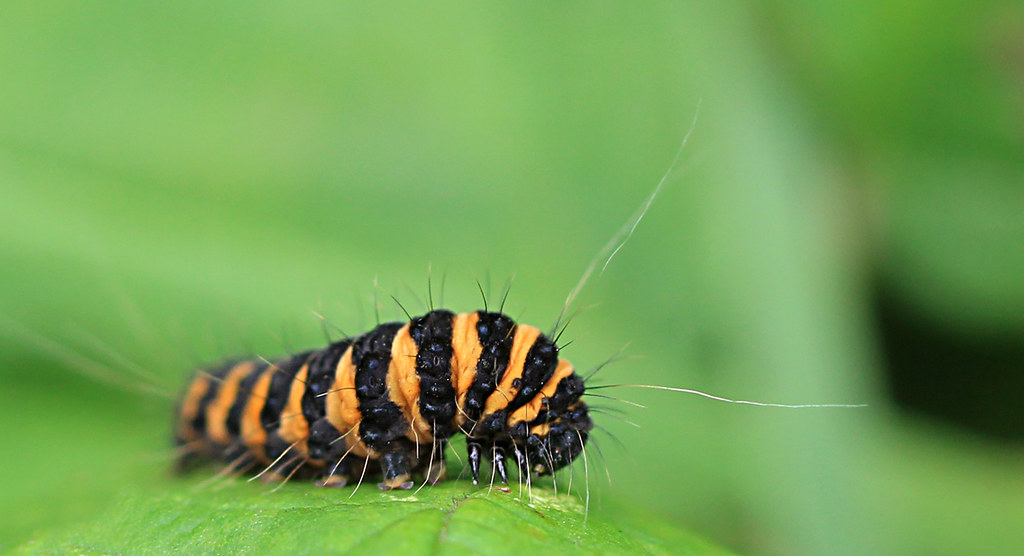
Once upon a time, in a lush, leafy meadow in the suburbs, lived a little moth caterpillar named Cinnabar. They/them were not your average caterpillar; Cinnabar was a vibrant and flamboyant creature with a flair for fashion that set them apart from their fuzzy companions, and they had dreams of one day transforming into a magnificent butterfly, ready to spread their colourful wings and dazzle the world.

One sunny day, Cinnabar was munching on a ragwort leaf and daydreaming about their future metamorphosis. The air was abuzz with the banter of butterflies nearby, chatting away about the latest trends in wing patterns and regaling each other with tales of their glamorous escapades in the meadow. Cinnabar, being an ambitious caterpillar, joined the conversation to share their excitement about deciding to become a butterfly when they grew up. However, the butterflies didn’t seem to pay much attention. They were too busy flittering about, discussing the most fashionable nectar spots.

Feeling a bit dejected, Cinnabar tried to assert themselves, exclaiming, “I can’t wait to join you all as a stunning butterfly!” The butterflies glanced at the caterpillar with puzzled looks and exchanged hushed whispers, wondering what on earth she was talking about and fumbling over the correct pronoun that put them in danger of being cancelled. One of them finally spoke up, “You must be confused. Butterflies are born with elegance and grace and wings that fold vertically up over our backs. You, on the other hand, will just be a moth“.

Cinnabar was taken aback. They had always believed that they could be anything they wanted to be, and they wanted to become the 60th UK butterfly and take their place in Britain’s Butterflies.

They decided to take their request to the Caterpillar Council. “I want to identify as a butterfly”, they exclaimed, unfurling a wish list of colourful upright wings and a desire to flutter through the meadows during the day – a bold request for a creature still bound to a ragwort plant. The council, outraged, declared “that one does not simply choose what species they want to be. Tradition dictates you will follow the law of pupation”.

So Cinnabar started a rigorous campaign for the right to self-identification, sparking a whirlwind of debates. “Equality for all Larvae!” chanted a group of progressive caterpillars who believed in the fluidity of the pupal process. “Invertebrate values under attack!” proclaimed the Conservative Cocooners, who maintained that the status quo was the backbone – or the lack of one – of insect society. BuzzFeed and Insectgram were full of hashtags #MothorButterfly and #PupalRights. As Cinnabar’s story went viral, a caterpillar pundit asked, “Is it nature? Is it nurture? Should metamorphosis be a personal journey or a societal structuration?” And an old moth caterpillar suggested: “Wait until you’re an adult before deciding, otherwise all our caterpillars will want to be butterflies, or even sawflies or beetles!””

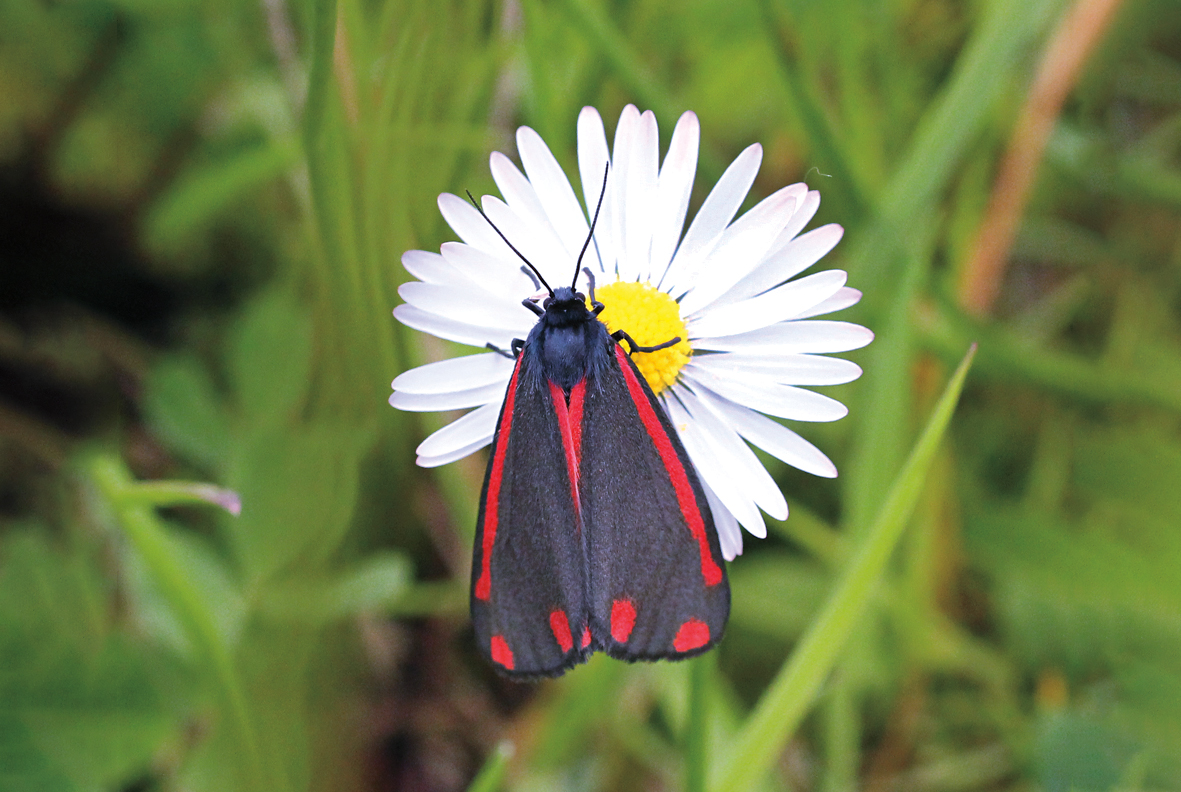
One day, Cinnabar finally felt a change within themself. Embracing the metamorphic journey, they cocooned themselves in the ground and began the process of transformation. When the moment arrived, Cinnabar emerged with wings painted in the most dazzling array of black and red the meadow had ever seen.

True to form, Cinnabar emerged as a moth… but felt like a butterfly. They hovered excitedly over to join the butterflies perching on a buddleia bush. To their dismay, the butterflies rejected them – they were miffed that such a hairy creature with wings, albeit rather attractive, that folded over their back, along with that graceless flight pattern, could even begin to think they could be a butterfly.

Devastated and deeply confused, Cinnabar retreated to a secluded daisy. They couldn’t understand why they weren’t allowed to identify as a butterfly. After all, they were colourful and flew during the day, whereas the usual perception was that moths were brown and fluttered around at night.

When they were at their lowest ebb, a Burnet moth glided over, looking just as dazzling as Cinnabar, with similar wings of spots instead of stripes. She talked to Cinnabar about the rainbow of anomalies in entomology, the vast spectrum of colours, shapes, and behaviours that defined the insect world. “Each species”, she explained, “has a unique story and purpose, contributing to the intricate web of life. There is no need to feel confused.” “Embrace your uniqueness,” she advised, “You don’t need to fit conventional norms”.

Then, the Burnet moth suggested that Cinnabar didn’t really need to identify as a butterfly as most people already think they are butterflies precisely because they are not brown and fly during the day. Instead, Cinnabar should embrace their true identity – that of a stunning moth. After all, there was already a safe space for them among Britain’s Day-Flying Moths