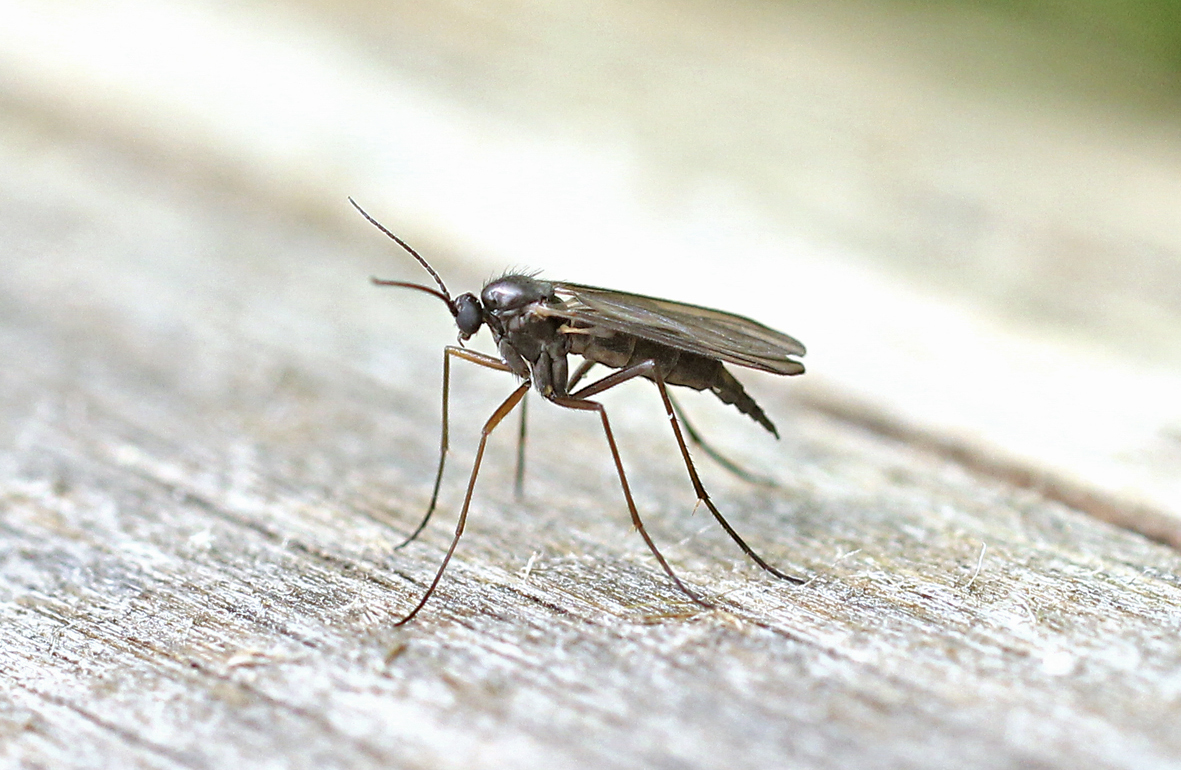
The flies are beginning to emerge from the wheelie bin in Lydd. One overly ambitious fungus gnat, named The Truss, is already waiting on the far right of the lid to spout her hate to anyone who happens to be flying by. Those maggots yet to metamorphose continue to feast within the bin, their appetites undeterred by The Truss’s antics. Among the remnants of discarded waste, they have found sustenance in a lettuce, the wilting vegetable that had outlasted her short 49-day tenure as Prime Minister.
Drawing inspiration from her hero, Maggot Thatcher, The Truss meticulously cultivates an image reminiscent of the former Prime Minister, from her demeanour to posing for photographs atop various unsavoury heaps, be it landfill sites or compost bins or the grass verges where people walk their dogs. Though diminutive in stature, her presence exudes an aura of insignificance, a testament to her desperate pursuit of influence.
Beneath this faux facade of power and prestige, The Truss remains an abhorrent figure to the worms entrenched in the compost below. They bear the scars of her past economic policies, which left them destitute when their compost bins were emptied in the name of progress. As she resurfaces with renewed ambition, they squirm angrily, questioning why she wasn’t squashed for the havoc she wreaked upon their livelihoods.
Her aspirations seem limitless as she aims to spread her messages of animosity far and wide. Known for her penchant for posturing and her apparent belief that soundbites could substitute for sound economic policy, The Truss has rebranded herself as a PopCon, taking a swipe at anyone who doesn’t see the world through her very narrow compound eyes. Her delusions of grandeur knew no bounds when she ventured across the pond to hobnob with the likes of Nigel Fraaage and Donald Dump, to complain her tenure as Prime Minister was “sabotaged” by the “administrative state and the deep state,” “wokenomics”, and boldly announcing that environmentalists are the new Communists… On and on she trilled, much to the bewilderment of the moderate observers of the ecosystem who see her as a fly in the ointment for democracy.
As she incessantly flutters about in a frenzy of self-importance, the only ones genuinely captivated are the few insects who inhabit her realm, who will hopefully be swatted into oblivion at the next election.
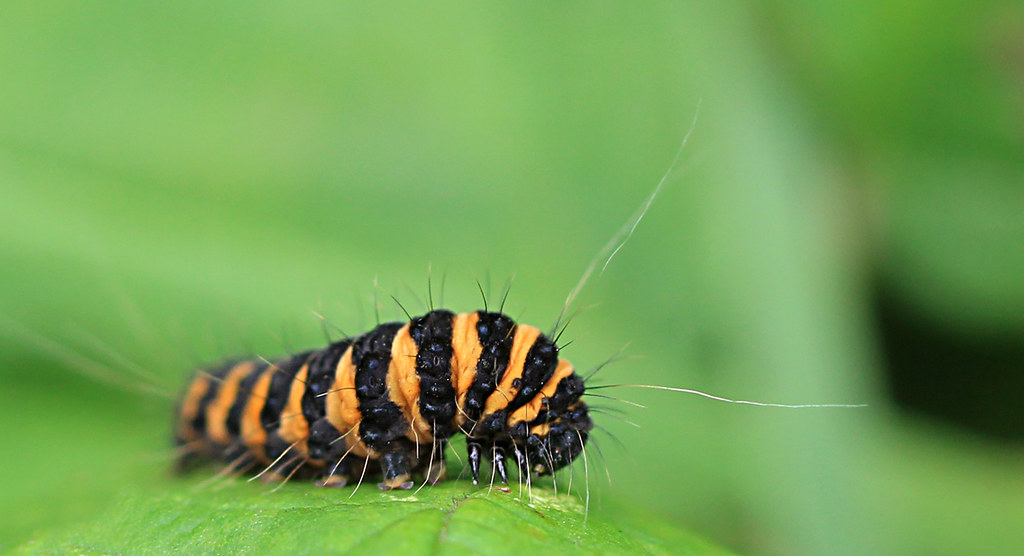
Once upon a time, in a lush, leafy meadow in the suburbs, lived a little moth caterpillar named Cinnabar. They/them were not your average caterpillar; Cinnabar was a vibrant and flamboyant creature with a flair for fashion that set them apart from their fuzzy companions, and they had dreams of one day transforming into a magnificent butterfly, ready to spread their colourful wings and dazzle the world.
One sunny day, Cinnabar was munching on a ragwort leaf and daydreaming about their future metamorphosis. The air was abuzz with the banter of butterflies nearby, chatting away about the latest trends in wing patterns and regaling each other with tales of their glamorous escapades in the meadow. Cinnabar, being an ambitious caterpillar, joined the conversation to share their excitement about deciding to become a butterfly when they grew up. However, the butterflies didn’t seem to pay much attention. They were too busy flittering about, discussing the most fashionable nectar spots.
Feeling a bit dejected, Cinnabar tried to assert themselves, exclaiming, “I can’t wait to join you all as a stunning butterfly!” The butterflies glanced at the caterpillar with puzzled looks and exchanged hushed whispers, wondering what on earth she was talking about and fumbling over the correct pronoun that put them in danger of being cancelled. One of them finally spoke up, “You must be confused. Butterflies are born with elegance and grace and wings that fold vertically up over our backs. You, on the other hand, will just be a moth“.
Cinnabar was taken aback. They had always believed that they could be anything they wanted to be, and they wanted to become the 60th UK butterfly and take their place in Britain’s Butterflies.
They decided to take their request to the Caterpillar Council. “I want to identify as a butterfly”, they exclaimed, unfurling a wish list of colourful upright wings and a desire to flutter through the meadows during the day – a bold request for a creature still bound to a ragwort plant. The council, outraged, declared “that one does not simply choose what species they want to be. Tradition dictates you will follow the law of pupation”.
So Cinnabar started a rigorous campaign for the right to self-identification, sparking a whirlwind of debates. “Equality for all Larvae!” chanted a group of progressive caterpillars who believed in the fluidity of the pupal process. “Invertebrate values under attack!” proclaimed the Conservative Cocooners, who maintained that the status quo was the backbone – or the lack of one – of insect society. BuzzFeed and Insectgram were full of hashtags #MothorButterfly and #PupalRights. As Cinnabar’s story went viral, a caterpillar pundit asked, “Is it nature? Is it nurture? Should metamorphosis be a personal journey or a societal structuration?” And an old moth caterpillar suggested: “Wait until you’re an adult before deciding, otherwise all our caterpillars will want to be butterflies, or even sawflies or beetles!””
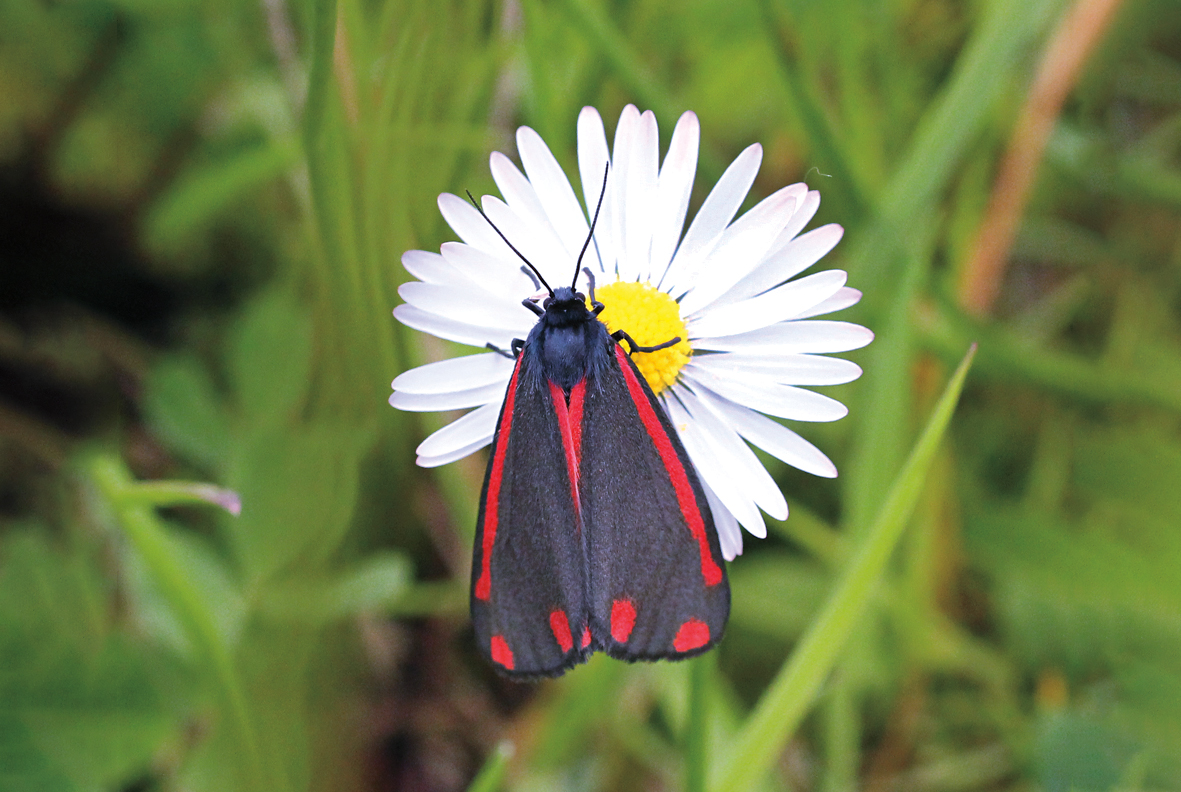
One day, Cinnabar finally felt a change within themself. Embracing the metamorphic journey, they cocooned themselves in the ground and began the process of transformation. When the moment arrived, Cinnabar emerged with wings painted in the most dazzling array of black and red the meadow had ever seen.
True to form, Cinnabar emerged as a moth… but felt like a butterfly. They hovered excitedly over to join the butterflies perching on a buddleia bush. To their dismay, the butterflies rejected them – they were miffed that such a hairy creature with wings, albeit rather attractive, that folded over their back, along with that graceless flight pattern, could even begin to think they could be a butterfly.
Devastated and deeply confused, Cinnabar retreated to a secluded daisy. They couldn’t understand why they weren’t allowed to identify as a butterfly. After all, they were colourful and flew during the day, whereas the usual perception was that moths were brown and fluttered around at night.
When they were at their lowest ebb, a Burnet moth glided over, looking just as dazzling as Cinnabar, with similar wings of spots instead of stripes. She talked to Cinnabar about the rainbow of anomalies in entomology, the vast spectrum of colours, shapes, and behaviours that defined the insect world. “Each species”, she explained, “has a unique story and purpose, contributing to the intricate web of life. There is no need to feel confused.” “Embrace your uniqueness,” she advised, “You don’t need to fit conventional norms”.
Then, the Burnet moth suggested that Cinnabar didn’t really need to identify as a butterfly as most people already think they are butterflies precisely because they are not brown and fly during the day. Instead, Cinnabar should embrace their true identity – that of a stunning moth. After all, there was already a safe space for them among Britain’s Day-Flying Moths…


 i n s e c t i n s i d e