A moth’s identity crisis

Once upon a time, in a lush, leafy meadow in the suburbs, lived a little moth caterpillar named Cinnabar. They/them were not your average caterpillar; Cinnabar was a vibrant and flamboyant creature with a flair for fashion that set them apart from their fuzzy companions, and they had dreams of one day transforming into a magnificent butterfly, ready to spread their colourful wings and dazzle the world.
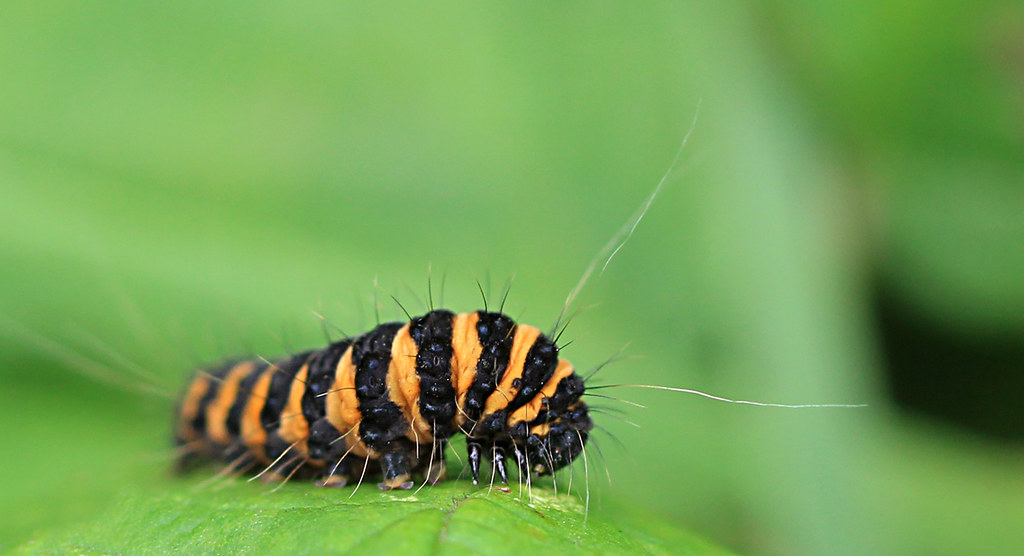
One sunny day, Cinnabar was munching on a ragwort leaf and daydreaming about their future metamorphosis. The air was abuzz with the banter of butterflies nearby, chatting away about the latest trends in wing patterns and regaling each other with tales of their glamorous escapades in the meadow. Cinnabar, being an ambitious caterpillar, joined the conversation to share their excitement about deciding to become a butterfly when they grew up. However, the butterflies didn’t seem to pay much attention. They were too busy flittering about, discussing the most fashionable nectar spots.

Feeling a bit dejected, Cinnabar tried to assert themselves, exclaiming, “I can’t wait to join you all as a stunning butterfly!” The butterflies glanced at the caterpillar with puzzled looks and exchanged hushed whispers, wondering what on earth she was talking about and fumbling over the correct pronoun that put them in danger of being cancelled. One of them finally spoke up, “You must be confused. Butterflies are born with elegance and grace and wings that fold vertically up over our backs. You, on the other hand, will just be a moth“.

Cinnabar was taken aback. They had always believed that they could be anything they wanted to be, and they wanted to become the 60th UK butterfly and take their place in Britain’s Butterflies.

They decided to take their request to the Caterpillar Council. “I want to identify as a butterfly”, they exclaimed, unfurling a wish list of colourful upright wings and a desire to flutter through the meadows during the day – a bold request for a creature still bound to a ragwort plant. The council, outraged, declared “that one does not simply choose what species they want to be. Tradition dictates you will follow the law of pupation”.

So Cinnabar started a rigorous campaign for the right to self-identification, sparking a whirlwind of debates. “Equality for all Larvae!” chanted a group of progressive caterpillars who believed in the fluidity of the pupal process. “Invertebrate values under attack!” proclaimed the Conservative Cocooners, who maintained that the status quo was the backbone – or the lack of one – of insect society. BuzzFeed and Insectgram were full of hashtags #MothorButterfly and #PupalRights. As Cinnabar’s story went viral, a caterpillar pundit asked, “Is it nature? Is it nurture? Should metamorphosis be a personal journey or a societal structuration?” And an old moth caterpillar suggested: “Wait until you’re an adult before deciding, otherwise all our caterpillars will want to be butterflies, or even sawflies or beetles!””

One day, Cinnabar finally felt a change within themself. Embracing the metamorphic journey, they cocooned themselves in the ground and began the process of transformation. When the moment arrived, Cinnabar emerged with wings painted in the most dazzling array of black and red the meadow had ever seen.
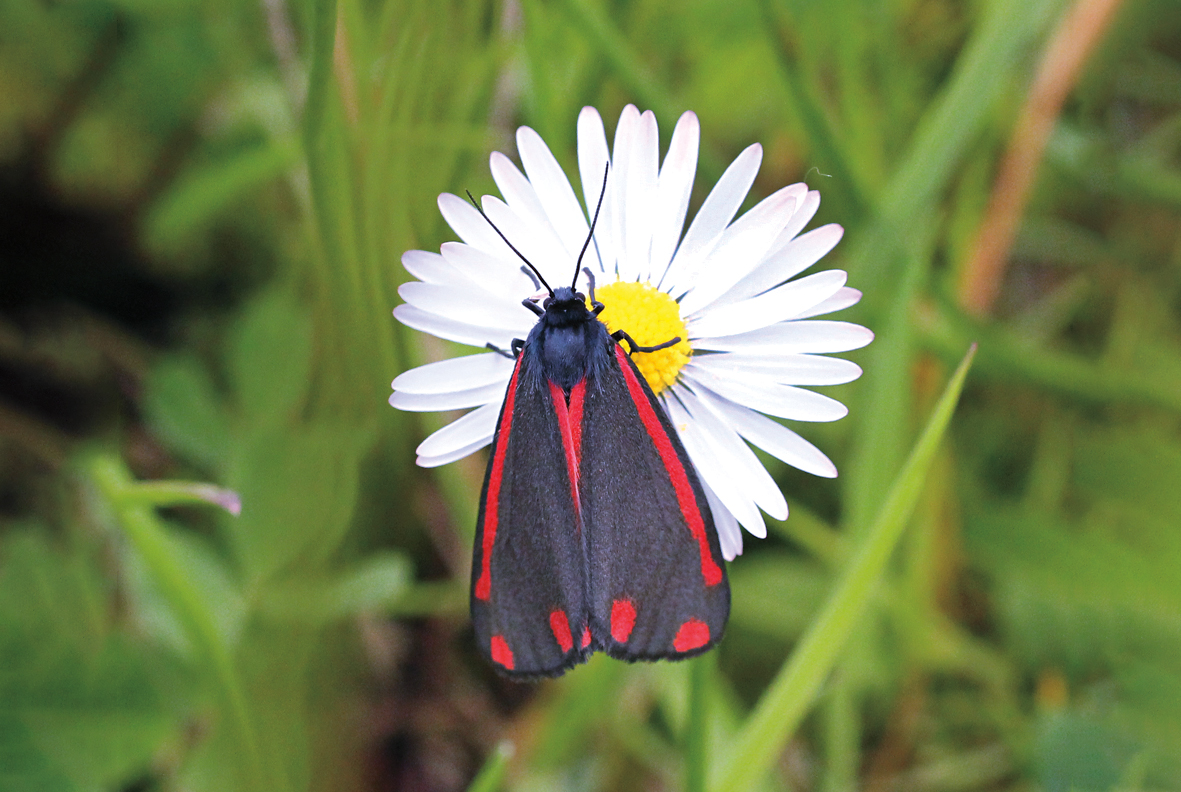
True to form, Cinnabar emerged as a moth… but felt like a butterfly. They hovered excitedly over to join the butterflies perching on a buddleia bush. To their dismay, the butterflies rejected them – they were miffed that such a hairy creature with wings, albeit rather attractive, that folded over their back, along with that graceless flight pattern, could even begin to think they could be a butterfly.

Devastated and deeply confused, Cinnabar retreated to a secluded daisy. They couldn’t understand why they weren’t allowed to identify as a butterfly. After all, they were colourful and flew during the day, whereas the usual perception was that moths were brown and fluttered around at night.

When they were at their lowest ebb, a Burnet moth glided over, looking just as dazzling as Cinnabar, with similar wings of spots instead of stripes. She talked to Cinnabar about the rainbow of anomalies in entomology, the vast spectrum of colours, shapes, and behaviours that defined the insect world. “Each species”, she explained, “has a unique story and purpose, contributing to the intricate web of life. There is no need to feel confused.” “Embrace your uniqueness,” she advised, “You don’t need to fit conventional norms”.

Then, the Burnet moth suggested that Cinnabar didn’t really need to identify as a butterfly as most people already think they are butterflies precisely because they are not brown and fly during the day. Instead, Cinnabar should embrace their true identity – that of a stunning moth. After all, there was already a safe space for them among Britain’s Day-Flying Moths

COPOUT28


In the ludicrous oil-rich city of Dubai, where the towering skyscrapers touch the smog-filled sky, and the cacophony of honking horns and distant sirens fill the air, a rather unconventional protest is underway. In the midst of the grandiose COP28 conference, where world leaders gather, yet again, to discuss the fate of the planet, a swarm of insects have assembled outside Expo City, armed with tiny picket signs and a buzzing determination.

Led by the global insect union Hexapoda, they have rallied what is left of the invertebrate species from all corners of the globe – bees, flies, wasps, butterflies, beetles, and even a few rebellious crickets have either flown, scuttled or hopped in. Their demands are simple: an end to pesticide use, protection of natural habitats, and recognition of insect rights in international law. Their slogans, chanted in unison, are a high-pitched symphony of discontent.

Inside the conference halls, the atmosphere is filled with well-intentioned speeches and promises, each trying to outdo the other with pompous pledges and commitments. The delegates pay lip service to saving endangered species, and protecting ecosystems, blah, blah, blah, even though in the real world, forests are still being decimated, the urban sprawl is expanding, the air is thick with toxins and the dwindling water supply full of sewage.

Amidst closed-door negotiations, a different dance unfolds – one where haggling and bargaining takes centre stage, often prioritising short-term economic gains at the expense of the planet’s long-term health. Beneath the surface of global cooperation lies the subtle art of greenwashing, as self-interest masquerades as a genuine commitment to sustainable practices.

Hexapoda, fuelled by a mix of desperation and determination, decided to send a brave group of representatives to infiltrate the conference. A team of earwigs, dragonflies, and shield bugs embarked on their mission, crawling through the shadows to the main auditorium and onto the podium.

They begin by chirping their role as unsung heroes, vital to the global ecosystem – pollinators, waste decomposers, soil purifiers, and maintaining the delicate balance of nature – arguing that excluding them from the climate talks spells doom for the planet. But before they could finish, a giant hand swooped down and swatted the insects away. The conference attendees scarcely register the disruption, engrossed in annual discussions about carbon emissions, renewable energy, and cutting oil and gas that seldom materialise into action. The buzzing on the podium is dismissed as a minor annoyance, the insect protest relegated to insignificance. A real cop out.

Undeterred by the dismissive response, the insect delegation regroups outside Expo City. Hexapoda, resilient and united, comprehends the enormity of their uphill battle. The conference halls may have stifled their protests, but the struggle for insect rights and environmental justice persists. As night blankets the city, they press on, their tiny picket signs illuminated by fireflies – a persistent commitment to be seen and heard. The high-pitched humming reverberates through the streets of Dubai, drawing the gaze of curious onlookers and passersby.

In the face of relentless indifference, they hope that their unwavering buzz will one day permeate the corridors of power, sparking substantive change for the planet they call home.

The vaccine bug

As seen in magazine A VOID Vol. 4 for Morbid Books

Mosquito

The mosquitoes of Peckham are feeling really miffed. At the start of the year, much fuss was made about the new COVID-19 vaccines, and a call was made for helpers in the vaccination rollout. The mosquitoes, still in larval form, got wind of this and started congregating in the ponds, pools, and puddles of Peckham. They were excited as by the time they emerged as adults, they were eligible to volunteer. Basically, they had the right equipment – a long proboscis acting as the thinnest of syringes, together with a light touch and the ability to jab you in unlikely places. And they didn’t need PPE or to sanitise their legs or wear masks; they even knew that a large proportion of them would die splattered against a bedroom wall. A real kamikaze attitude.

They applied and were instantly rejected. “Not enough experience”. Not enough experience? the mosquitoes whined in unison. After all, they were experts at spreading diseases – malaria, dengue fever, Zika virus, yellow fever, West Nile virus – why not just load up with the vaccine and inject people? Some even tried to volunteer for the vaccine trials, especially as a lot of their friends had already escaped the swamps and were being reared in sterile white laboratories. Admittedly they were being subjected to genetic modification for other uses, but hey-ho, it seemed a small sacrifice.

The mosquitoes felt it was time to rebrand themselves as the good guys – how marvellous it would feel to be held up as the heroes of the COVID-19 pandemic rather than one of the most hated insects on the planet. They talked about saving the NHS millions of pounds, calculating if they all pulled together, they could inject a whole country in a week given the right muggy conditions. They even had perverse ideas about how to dupe the anti-vaxxers by convincing them the swollen itchy needle hole in their arm is ‘just a mosquito bite’. Obviously, they would have to get around DDT and other nasty mosquito repellents or flying too close to citronella candles, and those pesky nets are an obstacle. Nevertheless, they were experts at surreptitiously crawling up inside someone’s trousers or under a t-shirt, though they would have to quell their annoying whiny buzzing so as not to be squashed. But in their tiny minds, it could be done…

For the many…

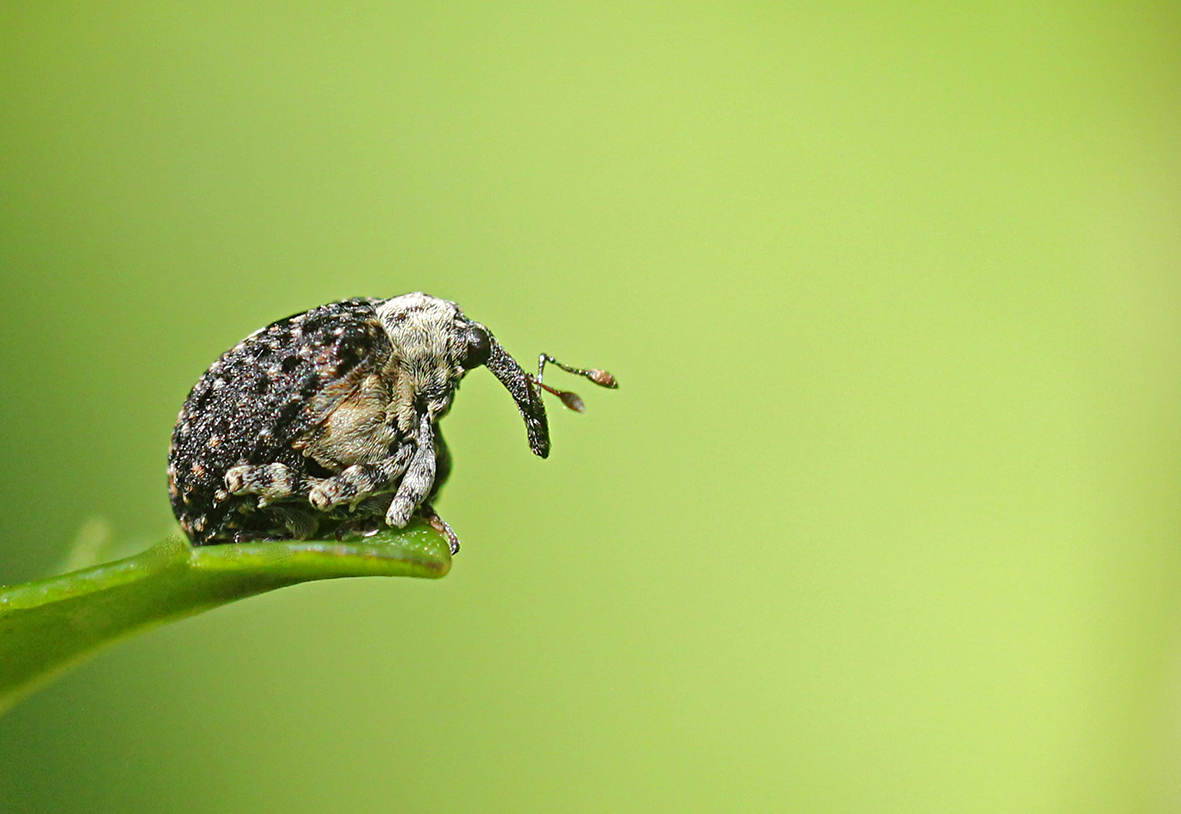
Figwort weevil_9917

Figwort weevil (Cionus scrophulariae)

This is Jeremy. He has the weight of the world on his shoulders, on a leaf-edge at the possibility of winning a General Election. He’s a small beetle up against the Tory wasps who feel they have a God-given right to rule the allotment. He was unexpectedly voted in as leader by a committee of momentum beetles who realised this maverick backbench weevil might actually be their ticket to power.

His plans for the allotment are simple: organic planting for the many insects who have suffered for years from the effects of insecticide, public owned plots and free compost for all. He wants state ownership of the old logs and leaves left lying around to rot for the essential mulch munching woodlouse workers, the nationalisation of pollen and a ban on the building of privately-owned insect hotels for the privileged few.

Every insect will be considered in his manifesto. Sustainable aphid farms for ants, higher taxes for corporate honeybee hives, the scrapping of homogeneous flower banks and adequate welfare for winter hibernation. There will be protection of sap-sucking rights for bugs, squatter rights for nomad bees, and the right to self-identify as both a caterpillar and a butterfly.

Campaigning hasn’t been easy. The wasps, led by a rather toxic individual, have been very noisy, swarming around the allotment buzzing ‘Get Wexit Done’ and lying about absolutely everything. Their manifesto is based on stinging all the insects and privatising the fruit and vegetable crops so only they can reap the rewards and screw everyone else.

Yet the vote is split amongst the other insects – some view Jeremy as a natural campaigner for those at the bottom of the food chain, others see him as a pest for munching through all the vegetables and upsetting the status quo. The flies quite like the idea of having a share of the fruit with the wasps. The solitary bees, set to benefit from the new proposals, are conflicted as they can get rich on all the pollen in the allotment and are considering setting up a more liberal party and going into coalition with the other key pollinators the hoverflies. Even the beetles, historically loyal to their own kind, are rebelling against a socialist weevil takeover.

But it is winter and most insects are hibernating. It might only be the flies and woodlice at the ballot box. Whatever happens it will be interesting.


Leafing the nest

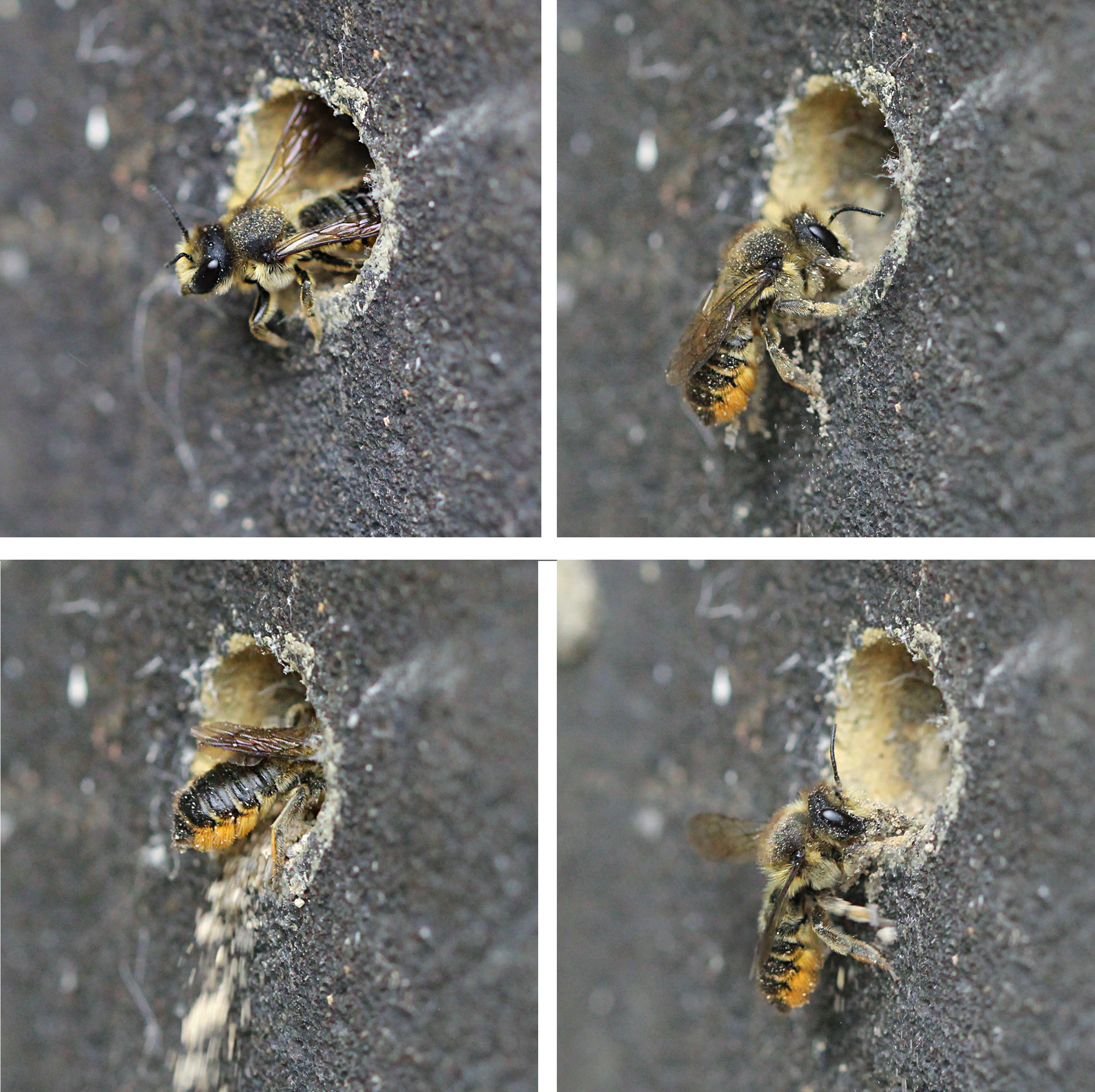
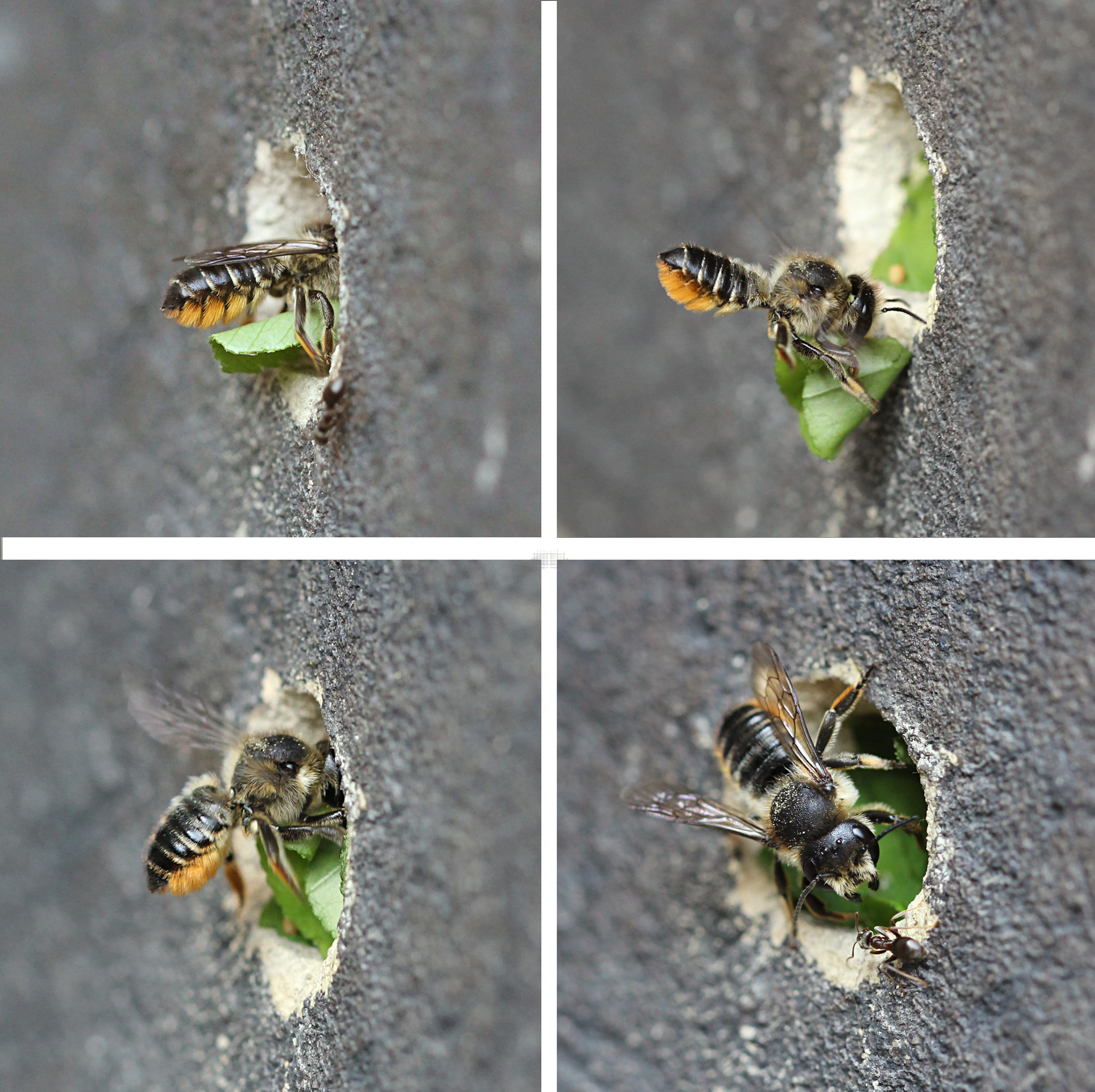
In my porch, a leafcutter bee has decided to build her nest in a damp-proofing hole in the wall. First, she had to excavate the mess left by a previous tenant – a spider – by pulling out all the debris.

Leafcutter bee excavating and old spider nest

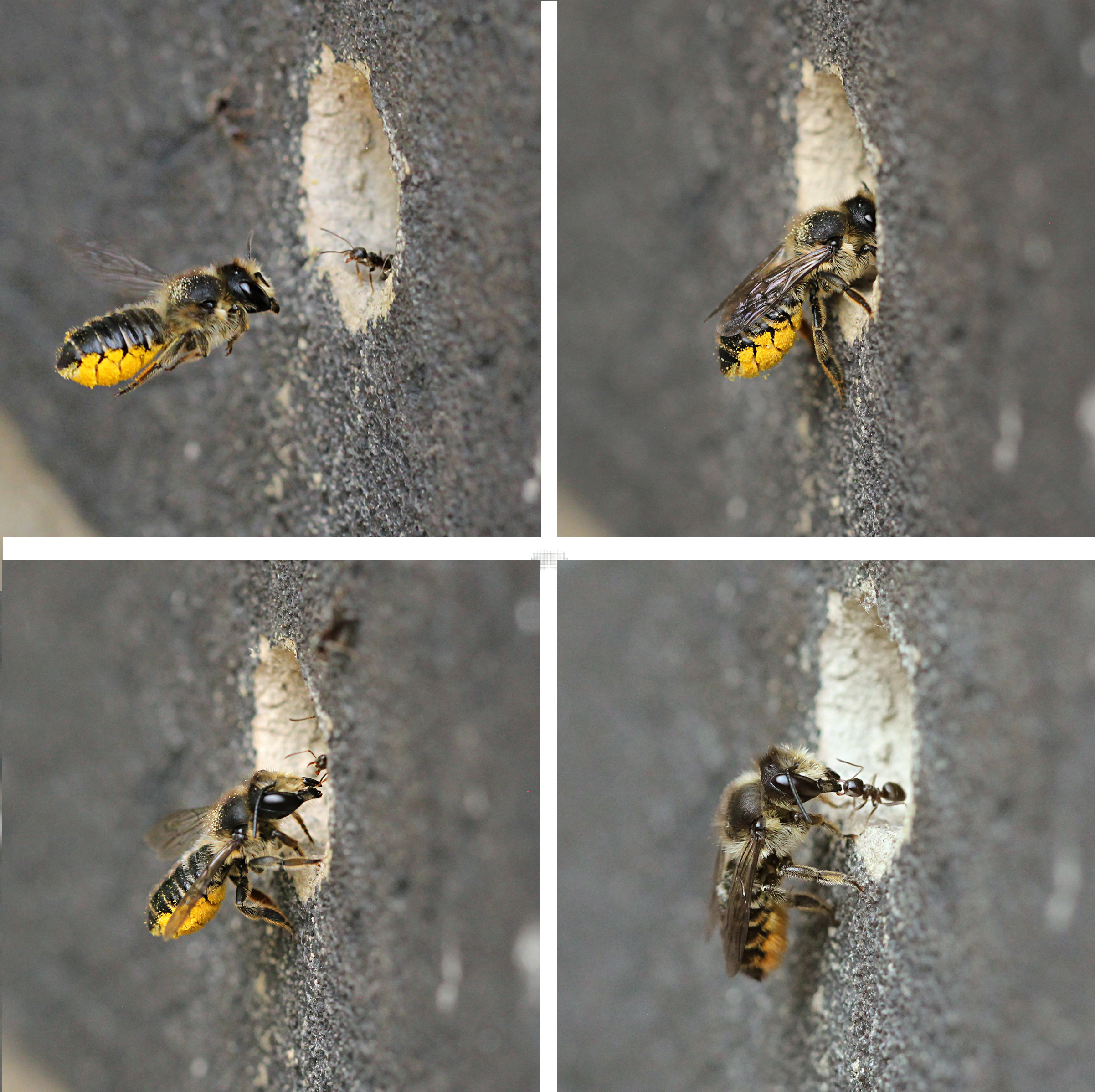
It’s early morning, and our bee has resumed her chamber-making duties. Her distant cousins, the ants, are running around eager to help. They are hoping for some pollen scraps. But it seems a password is needed to enter the nest – if you’re not on the list you’re not coming in. Luckily, our bee knows the secret code.

The ants have joined in

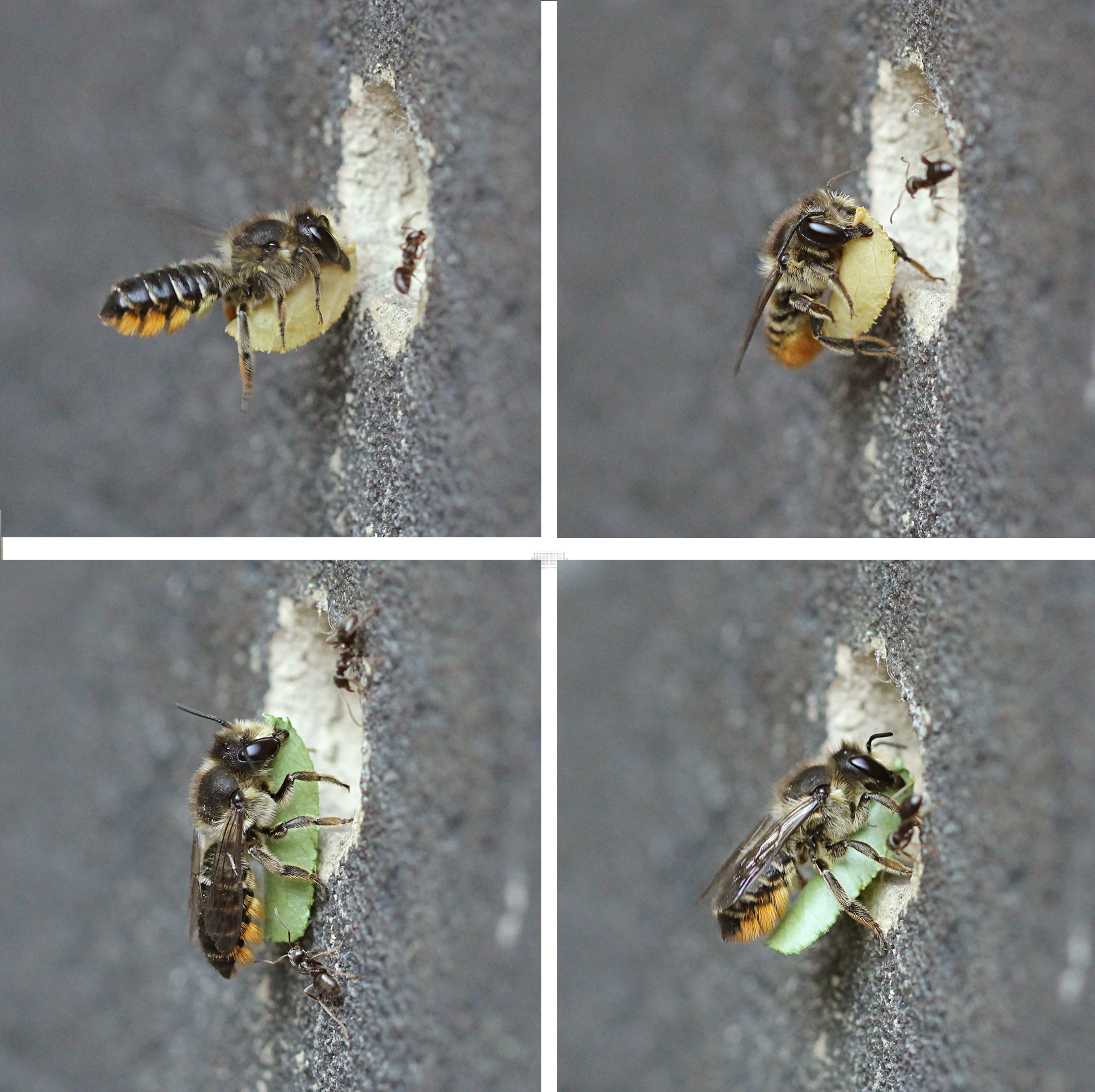
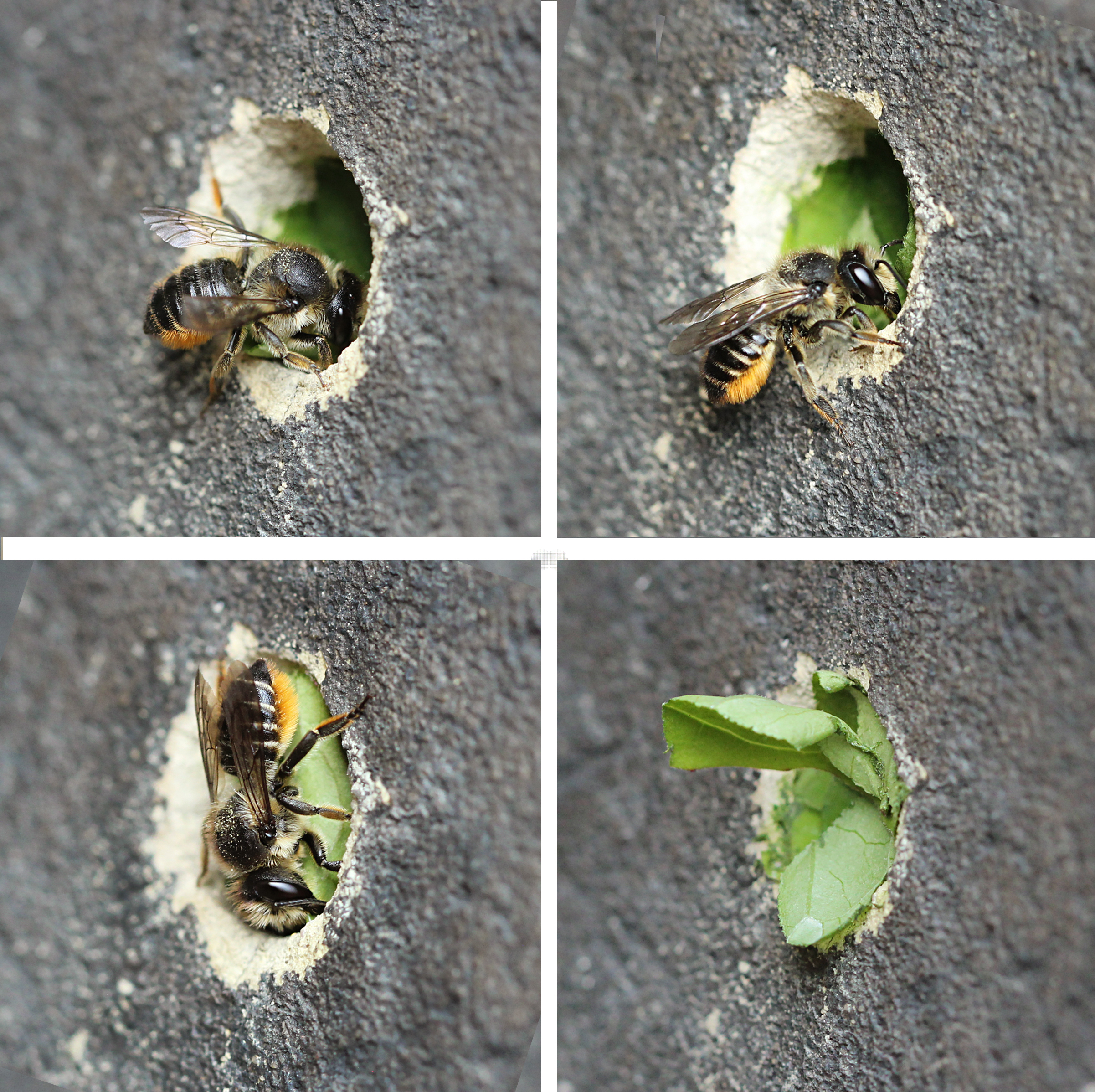
She starts to line the cavity with leaves, cut to size and usually harvested from a rose bush, carrying the leaf plugs to the nest between her mandibles. These are plastered to the walls with saliva, creating a cosy chamber. During the day she collects pollen, stored on the hairs of her underbelly. She likes ‘flat’ flowers like daisies, so she can wiggle her abdomen over the stamens to collect the dust. The pollen is stored in the chamber for the bee larvae to feed on once hatched. Then she will lay an egg and seal up the chamber, creating a bijou home for one of her young.

The first leaves are brought in

Once the first cell has been sealed up, she starts the whole process again. Depending on how long the cavity is, leafcutter bees will make enough chambers to fit. She could probably fit four chambers in a damp-proofing hole. Female eggs will be laid first, the male eggs last.

The nest building has begun

Closing the nest up can be a tough job. It gets harder to fly in with a leaf, and the pesky ants are still in the way. Discarded leaves litter the ground below, unsuccessful attempts at negotiating a way to shove a leaf into a nearly full hole. Sealing the nest takes time and a lot of leaves and saliva to make it watertight and safe from predators. The young bees will emerge in spring, the males flying out first followed by the females.

The nest is finished