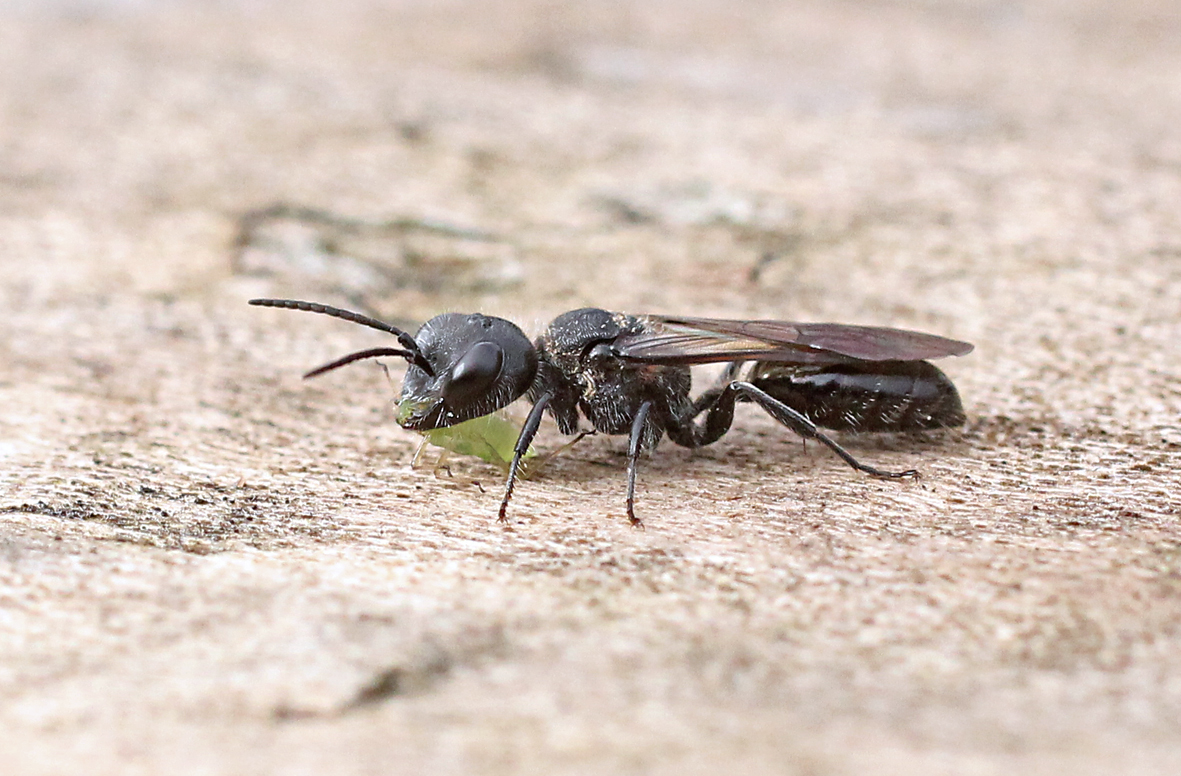
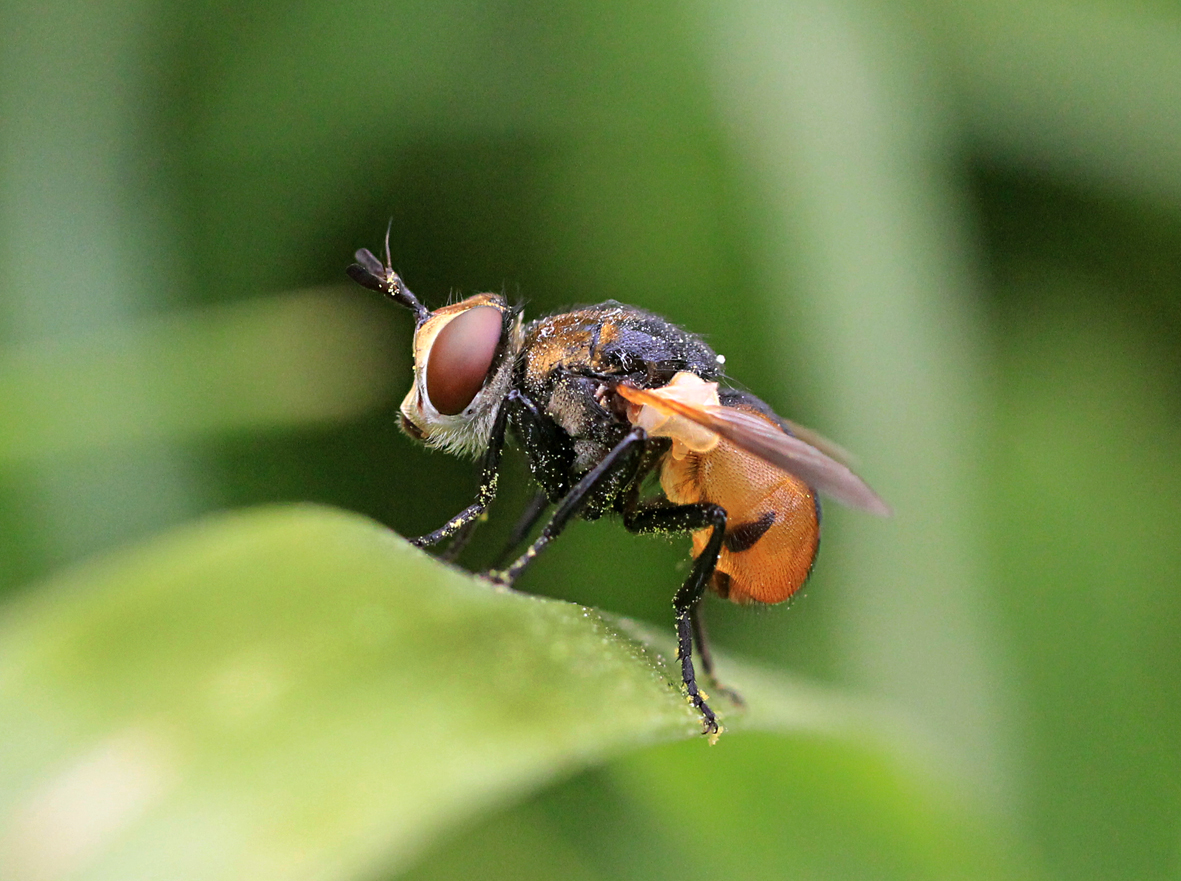
The vaccine bug

As seen in magazine A VOID Vol. 4 for Morbid Books

Mosquito

The mosquitoes of Peckham are feeling really miffed. At the start of the year, much fuss was made about the new COVID-19 vaccines, and a call was made for helpers in the vaccination rollout. The mosquitoes, still in larval form, got wind of this and started congregating in the ponds, pools, and puddles of Peckham. They were excited as by the time they emerged as adults, they were eligible to volunteer. Basically, they had the right equipment – a long proboscis acting as the thinnest of syringes, together with a light touch and the ability to jab you in unlikely places. And they didn’t need PPE or to sanitise their legs or wear masks; they even knew that a large proportion of them would die splattered against a bedroom wall. A real kamikaze attitude.

They applied and were instantly rejected. “Not enough experience”. Not enough experience? the mosquitoes whined in unison. After all, they were experts at spreading diseases – malaria, dengue fever, Zika virus, yellow fever, West Nile virus – why not just load up with the vaccine and inject people? Some even tried to volunteer for the vaccine trials, especially as a lot of their friends had already escaped the swamps and were being reared in sterile white laboratories. Admittedly they were being subjected to genetic modification for other uses, but hey-ho, it seemed a small sacrifice.

The mosquitoes felt it was time to rebrand themselves as the good guys – how marvellous it would feel to be held up as the heroes of the COVID-19 pandemic rather than one of the most hated insects on the planet. They talked about saving the NHS millions of pounds, calculating if they all pulled together, they could inject a whole country in a week given the right muggy conditions. They even had perverse ideas about how to dupe the anti-vaxxers by convincing them the swollen itchy needle hole in their arm is ‘just a mosquito bite’. Obviously, they would have to get around DDT and other nasty mosquito repellents or flying too close to citronella candles, and those pesky nets are an obstacle. Nevertheless, they were experts at surreptitiously crawling up inside someone’s trousers or under a t-shirt, though they would have to quell their annoying whiny buzzing so as not to be squashed. But in their tiny minds, it could be done…

Stripes are in Vogue

As featured in the latest issue of BQ magazine

Its early October and the insects of Warwick Gardens are so excited – it’s time for the annual Autumn Fete. The grasshoppers are fat and fully grown and the mottled shield bugs are finally adults after several moults, whilst the Roesel’s bush-crickets, whose love songs kept up the spirits of Summer, can barely wheeze after weeks of wooing. The long grass is faded and falling over and the blackberries have been picked. Thankfully the green alkanet, a Trojan of the plant world, is still opening its blue flowers to everyone. It is time for one last party before the winter sets in. And as usual the Fete will be held at the most popular bar in the park – the Ivy Bush – currently in full flower and offering free nectar and pollen on tap.

This year there is a fashion show for the pollinators and the theme is stripes. There is a real buzz in the bush as the designers step up onto the stage.

Lesser hornet hoverfly – Volucella inanis

First up are Diptera & Gabbana presenting their new ‘Bella Volucella’ plus-sized range. The lesser hornet hoverfly showed off an elegant bodycon frock in light orange and black striped suede with a shiny black and chestnut patterned collar. Everyone loved their creation and applauded the designers for their inclusivity.

German wasp – Vespula germanica

Next up is Vivienne Waspwood waving a placard shouting ‘God Save the Pollinators’. Having spent years dressing the individualistic ichneumon wasps in her retro punk black leather-look catsuits she finally had a chance to bring in some colour and produce a uniform for the social wasps: black and daffodil yellow stripes with a few dots and a scanty black hairy ruff. Everyone cheered except for the tiny flies who flew away in fear of being eaten.

Ivy bee – Colletes hederae

Ivy Saint Laurent chose to dress the ivy bee. A sleek black and beige striped pencil skirt with a massive furry stole in rich caramel. The other insects oohed and aah’d at the sheer beauty of her, as they had only seen her a couple of times since she arrived from France a few years ago. The stylish design was one step up from the honey bee deemed rather dull at last years’ show.

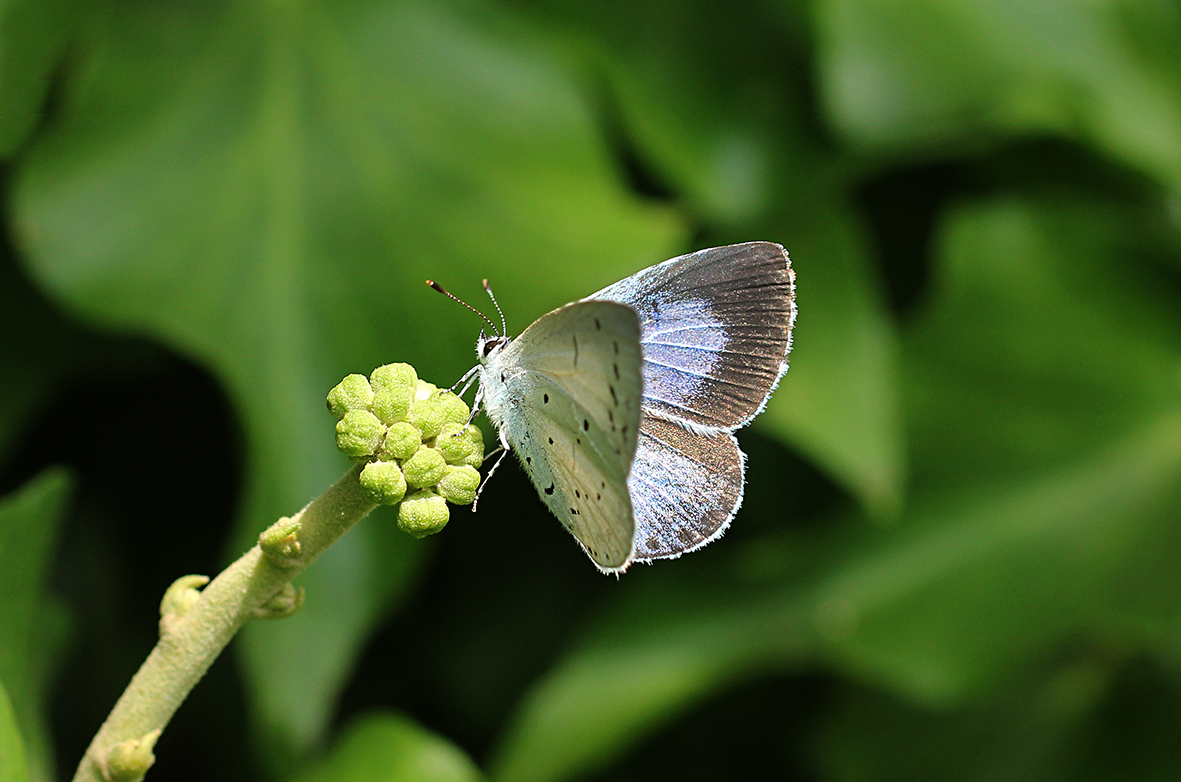
Holly blue – Celastrina argiolus

Then Galliano rocked up with a butterfly. He hadn’t read the brief and presented a holly blue. Not a stripe in sight, but a thin white border around the lustrous blue ombre wings. To the audience this was a breath of fresh air – the stripes were getting confusing and all too similar.

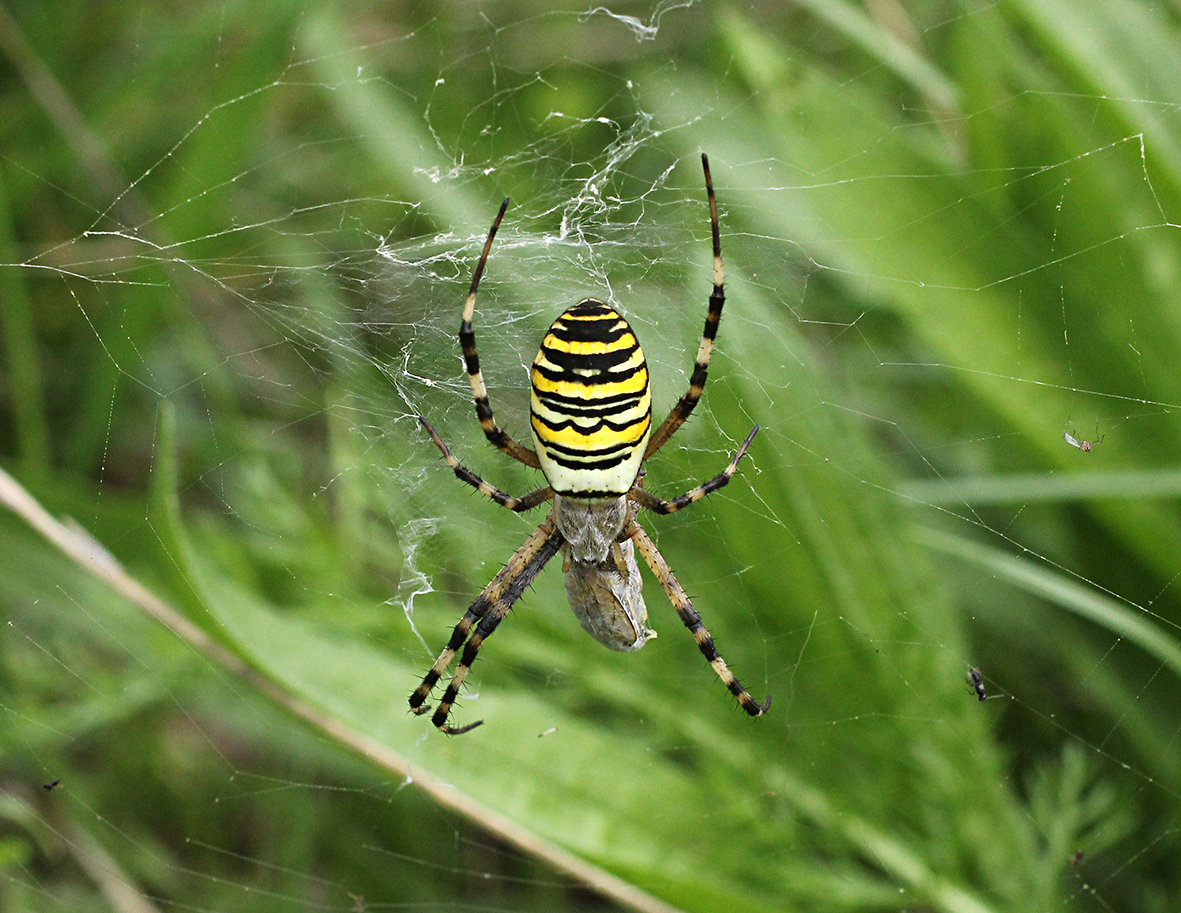
Wasp spider – Argiope bruennichi

Meanwhile down amongst the grasses is the circus of wasp spiders who have been dressed by Gaultier, flamboyant in cream and lemon yellow stripes outlined in black. They have spent the night spinning their famously chaotic webs with its striking zig-zag pattern ready for the classic game of Catch The Grasshopper. As for the grasshoppers they are enjoying outwitting the spiders with spectacular leaps and bounds over the webs, though occasionally one mis-steps and gets quickly pounced on and wrapped up in silk.

It was a day to remember. And now to look forward to spring.

Warwick Gardens on BBC Springwatch!

It was a Wednesday evening in June and the insects of Warwick Gardens were all a-fluster. It was the day they were going to be on BBC Springwatch. They were huddled around a window on a house on Lyndhurst Grove peering through the glass at the television.

And then it started. They watched in anticipation as they were taken on a whirlwind tour of Norfolk, northern Scotland and Northern Ireland. They ooo’d and aaah’d at the glorious habitats in these far flung locations and realised they’d never even seen the sea before. They laughed at the shelducks waddling out of a tree, booed at the hatching of grey wagtails, and the caterpillars celebrated the decline of the blue tits! They learnt about tracking pine martins (which they thought looked like the local foxes) and marvelled at otters. And they were staggered by the sheer amount of sea birds on cliffs and gaped in awe at the guillemots that looked like badly drawn penguins.

And then they were on. Iolo Williams introduced Penny Metal and the insects chirped in delight as they saw their friends on national television. They cheered when they saw the scarce fungus weevil, who they thought had left the park years ago, emerging from lockdown. They saw their park from above, shot via a drone, and those who couldn’t fly finally saw where they actually lived – the dragonflies were surprised that anything man-made could fly that high.

As usual the common green shield bugs were having sex, and the more modest gorse shield bugs covered their faces in embarrassment at the behaviour of the local chavs. Local superstar Myopa, already a Twitter celebrity who had previously appeared in a blog, in a book and in Time Out magazine, also made an appearance and now has primetime television to add to her CV.

And then the film finished and the insects were so excited to see Michaela Strachan holding the book they all starred in and she loved it! As she flipped through the pages they all saw themselves, and they couldn’t believe someone so well known liked them and was telling other people to look at them too. And they did! Ever since, they have been peered at and prodded and photographed by every passerby who has been looking in the bushes at Warwick Gardens.

To watch the episode: BBC Springwatch

To fly or not to fly

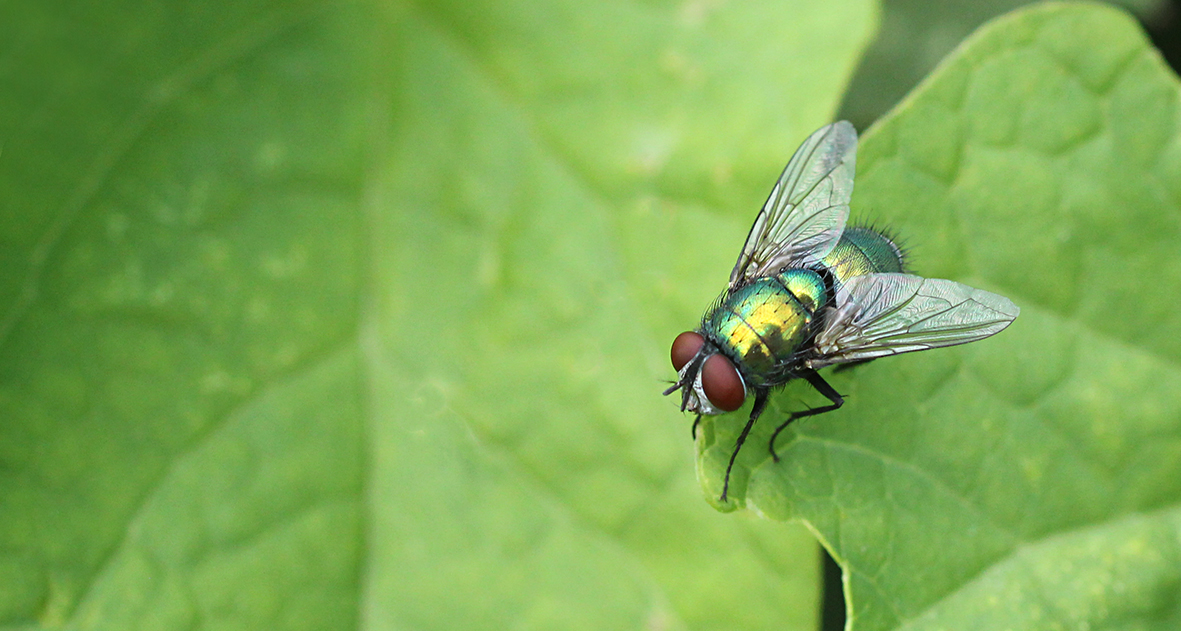
Greenbottle – Lucilia caesar

The flies of Warwick Gardens are really perplexed by the latest government rules for flying. On the one hand their need to fly relates to work (pollinating and cleaning) but it seems they can’t fly off to meet friends in another part of the park. There is a red, amber and green traffic light system in place which offers a confusing list of where you are allowed to fly or not to fly.

It means the greenbottles in Poo Corner need to sanitise their feet of dog shit and get tested before they can go to the Log Quarter, but they also need to take a test to fly a few metres to the Railway Quarter despite the fact that part of the park is also full of dog shit. Even if they wanted to fly to the Log Quarter they will have to self-isolate on a leaf for 10 days, by which time their life-span will probably be over. The Football Quarter is an amber destination where you can only go ‘for some pressing family or urgent business reason’ but you will need to take two tests and quarantine, and most flies can’t be bothered as they know they will be eaten if they sit around in the same place for too long.

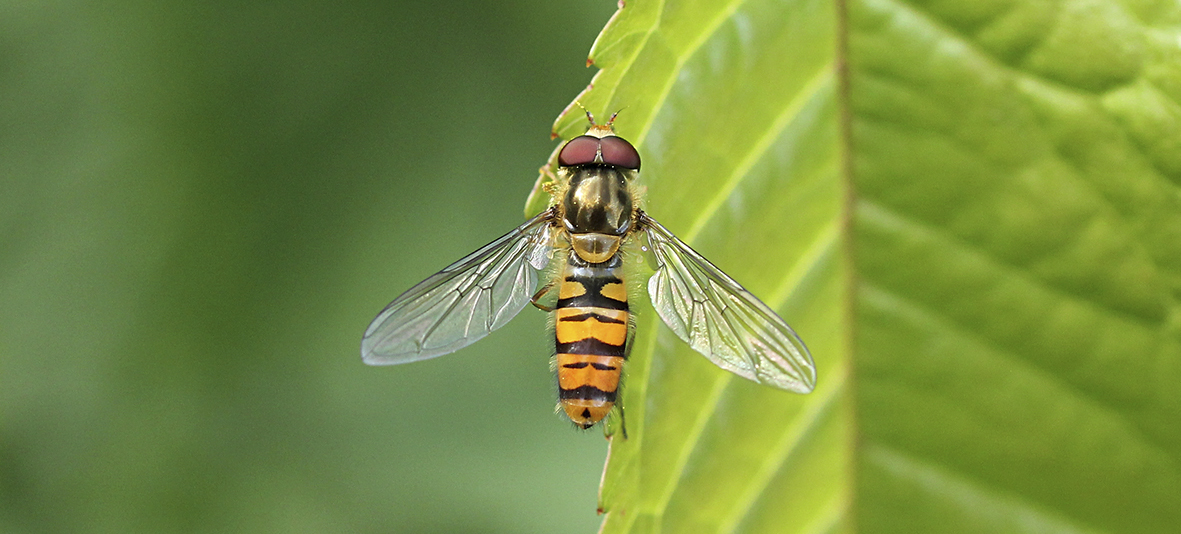
Marmalade hoverfly – Episyrphus balteatus

The hoverflies can fly to Greendale, which is on the green list, but not Peckham Rye Park (red list). They can’t visit red-listed Burgess Park, but Hyde Park, a destination completely out of reach to the average Peckham fly, is on the green list. And a trip to Goose Green (green list) is hardly worth it as there are no flowers there. They are rightfully anxious as the economy depends on them for pollination, and having been furloughed all last year are in danger of dying out.

Common orange legionnaire – Beris vallata

Meanwhile, the soldier flies are being mobilised to survey the swathes of flies returning from amber parks, with the Home Secretary threatening ‘a knock on the door’ to check they’re all obeying the rules. But it might take a while as the soldier flies have yet to emerge, once again showing how incompetent this Government really is.

End of season

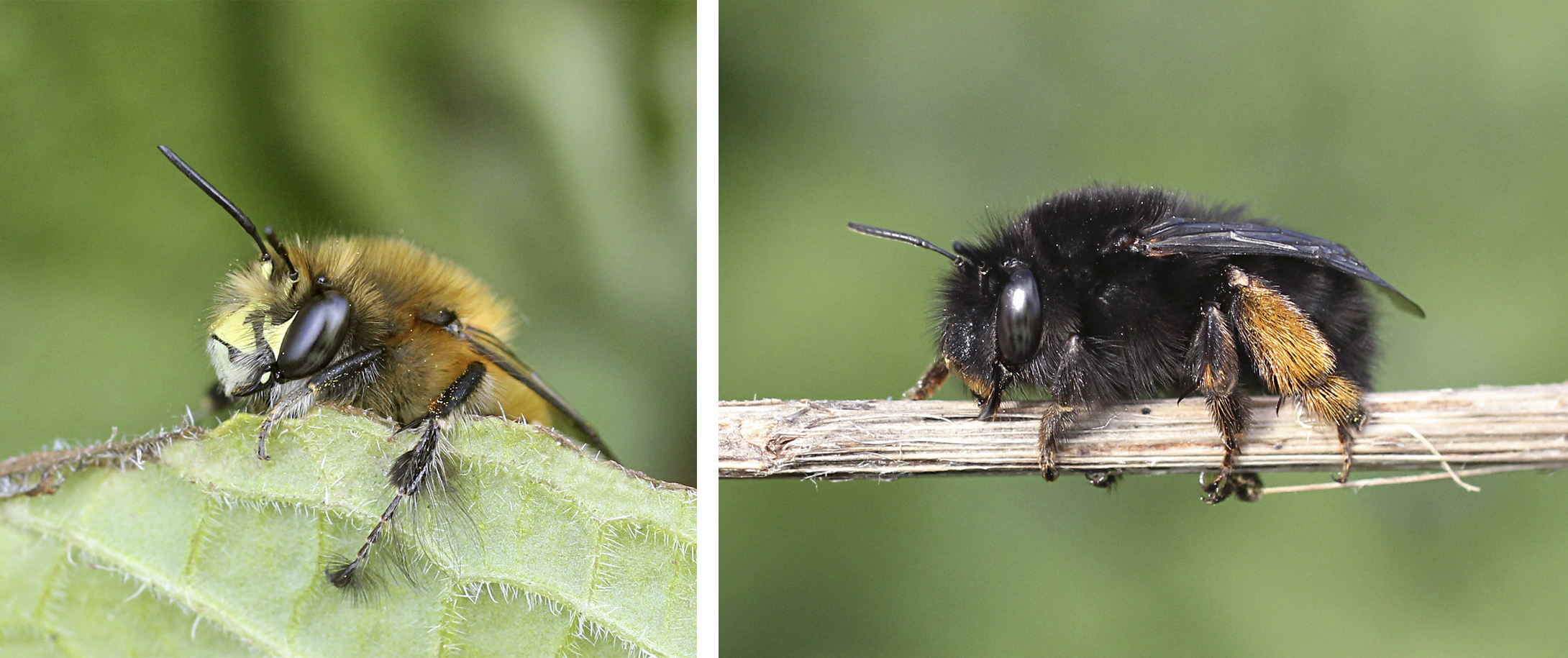
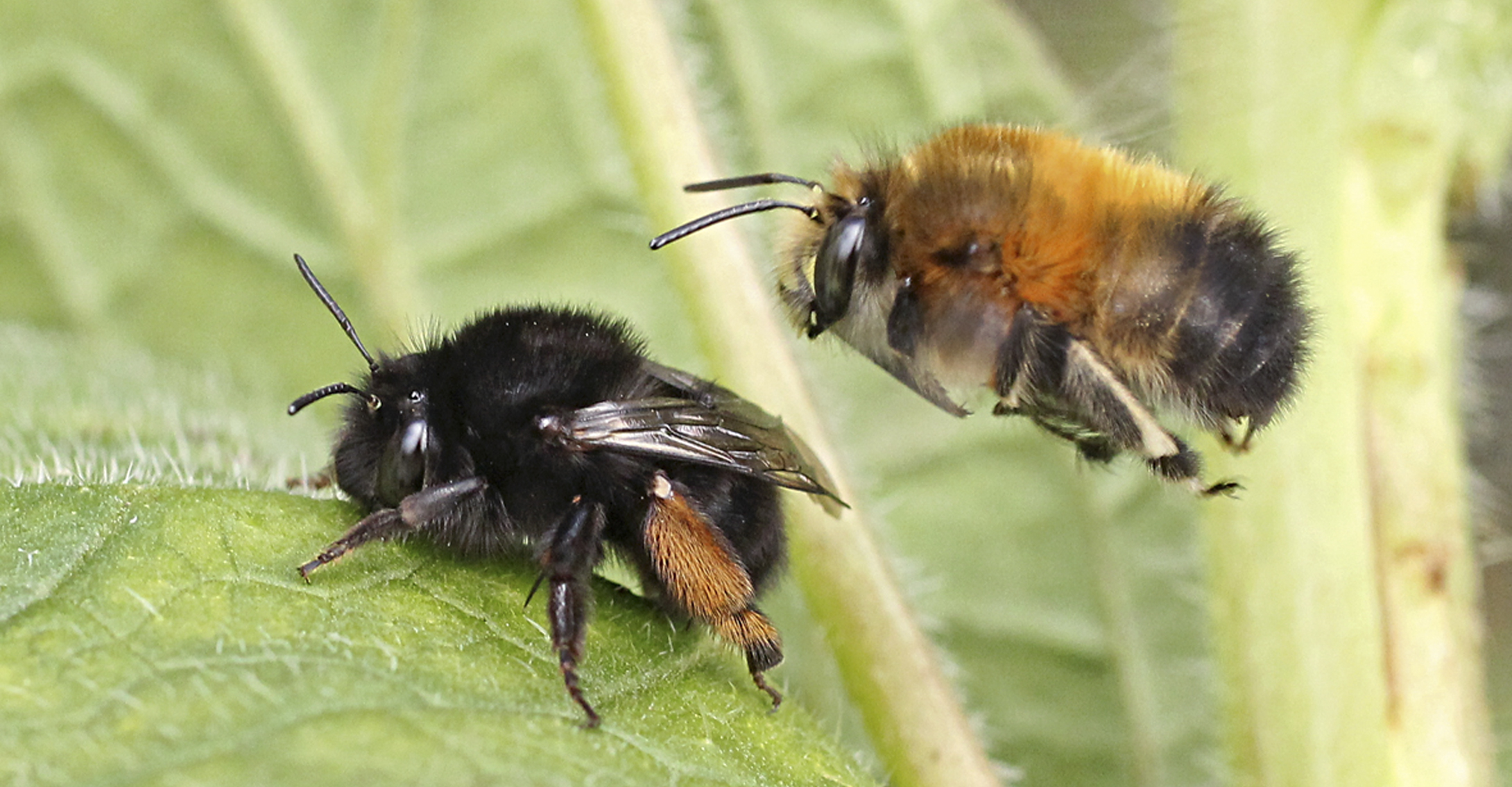
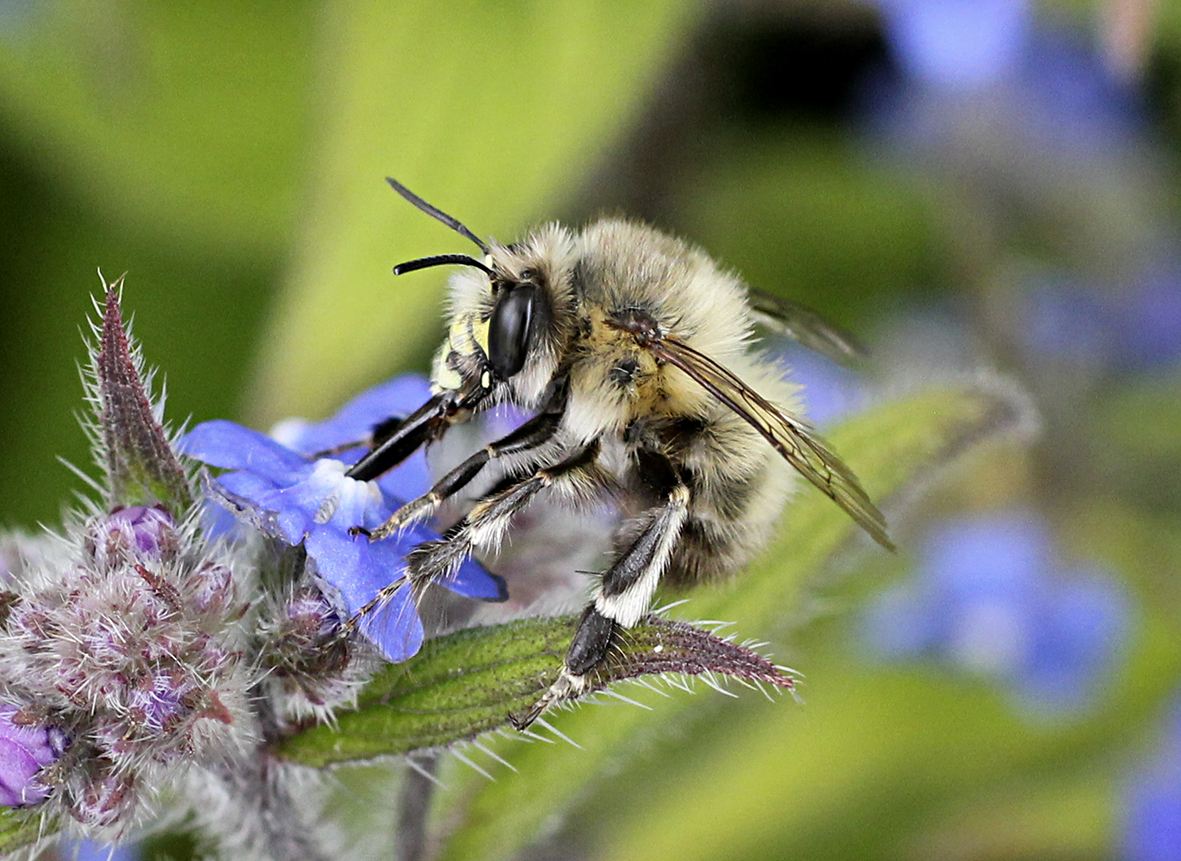
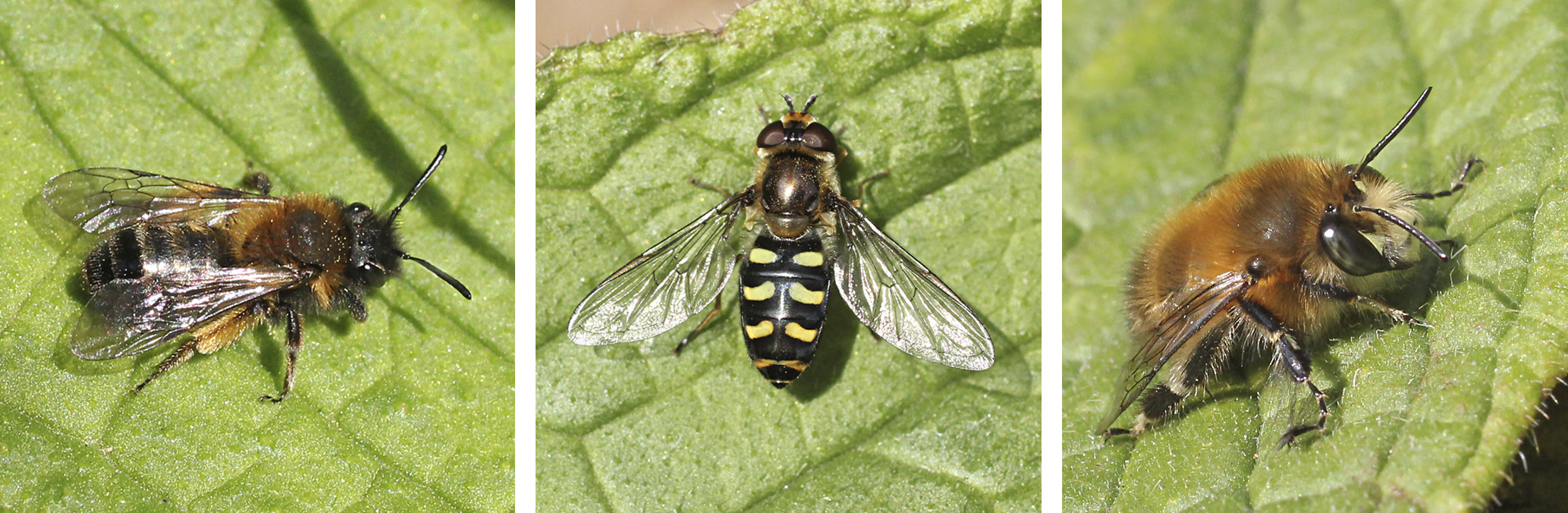
Male and female hairy-footed flower bees – Anthophora plumipes

Its late February and the hairy-footed flower bees have defied the Government and broken all the lockdown rules by emerging from their nests. The boys fly out first, all fluffy and bright ginger with hairy-legs, and an exuberance that says ‘Hello! Look at me’. They are a delight to behold and a true sign Spring has arrived. The flowers have yet to unzip themselves, and the bees whizz through them, darting around our parks and gardens getting a feel for their territory. They are inquisitive, getting to know the neighbours and generally being seen.

A couple of weeks later the girls fly out, looking fashionably dressed in black tunics and the bright orange trousers she uses to collect pollen. By now the comfrey flowers are open for business and she tentatively sups on the nectar with her long tongue. She has a long list of things to do: find a place to nest, go shopping for pollen, start a family, pollinate some flowers and generally do things the boys are incapable of.

Mating is her first challenge and there is no shortage of suitors sniffing her out and harassing her while she goes about her daily life. She has to bat them away, out-fly them and fight them off before conceding to the strongest boy, making her the perfect calendar girl for the #BeeToo movement.

Then she has to find a hole to build her nest, preferably in a housing complex of soft mortar near other flower bees which makes it very noisy. She will live in her own flat, crafting cells to fill with pollen where she will lay her eggs. It’s hard work!

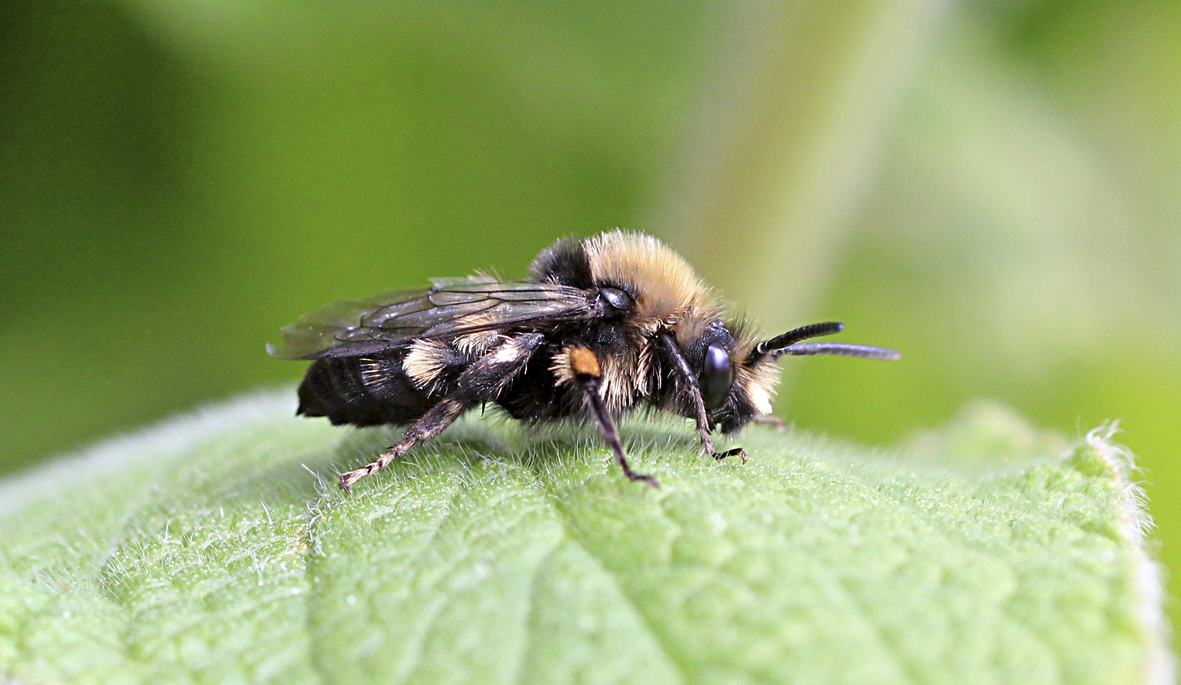
Mourning bee – Melecta albifrons

And that’s not the only moan. The mourning bees have taken over her nest, redecorating the cell walls and chucking out anything bought from John Lewis. They have replaced the flower bee eggs with their own, commandeered the pollen larder and are now buzzing loudly about squatters’ rights for cleptoparasites.

By mid-May the boys are looking old and faded, a trip to the nectar pub is about all they can muster. The girls are still out collecting pollen and weeks of hard work have left their wings in tatters. She has nearly finished her jobs. And they have been meeting the new late-Spring bees who have just emerged all looking dapper and pimped-up ready for World Bee Day. And it is with a sense of pathos that the flower bees won’t be looking at their best as they come to the end of their season just before the world spends a day celebrating them.

Electing the next leader

Beetles candidates 2

Candidates for the leadership

Well that was that. Squashed at the General Election. For the fourth time. The beetles, blinded by their dogmatic approach to intellectual thought and idealism, are wondering why they lost. Could it be that Jeremy, a weevil with a lot of baggage having spent his life voting against the allotment, was utterly useless and had no idea about leadership? Or maybe the strategy was all wrong – the beetles, in their enthusiasm of offering everyone everything for free, were incoherent and had total disregard for the scepticism amongst the other insects who felt their policies were just not credible. And instead of taking responsibility for losing the election they are blaming the wasps’ propaganda machine and ridiculing the bugs and bees for having the audacity to vote for someone else. Admittedly the wasps out-buzzed everyone, being an insect that nests together rather than a bunch of disparate beetles. The weevils had a real chance and blew it, dashing the hopes of half the allotment and consigning it to a dystopian future. So some soul searching and that old trope lessons have to be learned is being rolled out. Yet again.

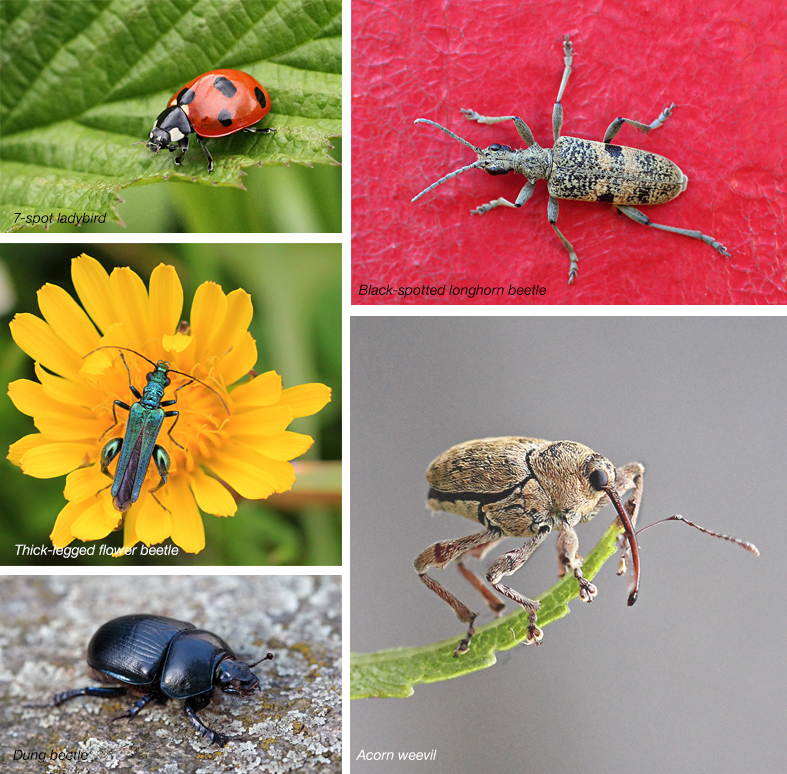
Now they are scurrying around looking for a new leader. Do they elect another weevil in the image of Jeremy, or a different species? There are plenty of them willing to throw their antennae into the ring. Some suggest the legally competent black-spotted longhorn beetle. He certainly has gravitas but is hinting at a slight move to the centre ground. Others want a ladybird, preferably with a northern reach. Could a media-savvy flower beetle have a chance? Potentially yes, as it is popular with the bees, flies and butterflies sharing the same habitat and these are the voters the beetles need. And many want a dung beetle who has spent a lifetime shovelling shit and has actual experience of what it is like to be working class.

They certainly don’t want the stag beetle who won 3 elections, took the allotment into an illegal war, and is now an endangered species.

In the meantime the allotment will be dug up, sold off and paved over with expensive housing for humans.

For the many…

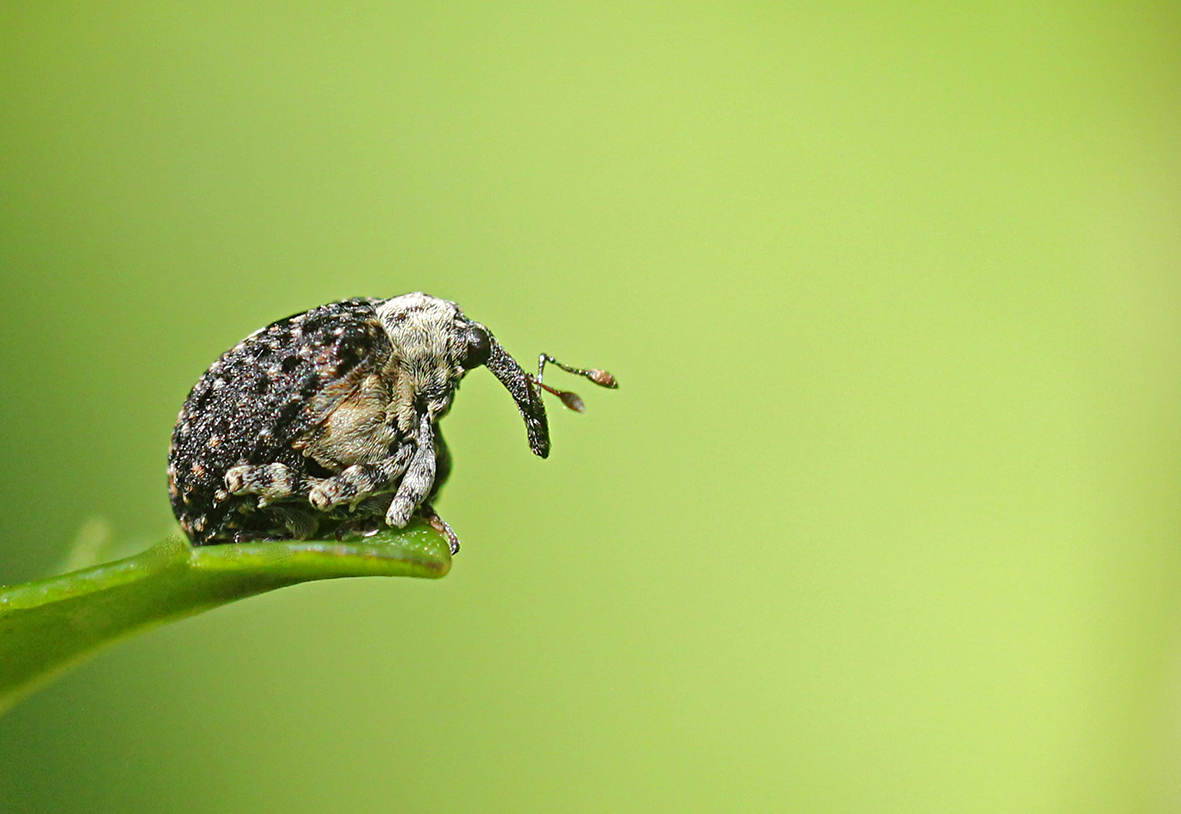
Figwort weevil_9917

Figwort weevil (Cionus scrophulariae)

This is Jeremy. He has the weight of the world on his shoulders, on a leaf-edge at the possibility of winning a General Election. He’s a small beetle up against the Tory wasps who feel they have a God-given right to rule the allotment. He was unexpectedly voted in as leader by a committee of momentum beetles who realised this maverick backbench weevil might actually be their ticket to power.

His plans for the allotment are simple: organic planting for the many insects who have suffered for years from the effects of insecticide, public owned plots and free compost for all. He wants state ownership of the old logs and leaves left lying around to rot for the essential mulch munching woodlouse workers, the nationalisation of pollen and a ban on the building of privately-owned insect hotels for the privileged few.

Every insect will be considered in his manifesto. Sustainable aphid farms for ants, higher taxes for corporate honeybee hives, the scrapping of homogeneous flower banks and adequate welfare for winter hibernation. There will be protection of sap-sucking rights for bugs, squatter rights for nomad bees, and the right to self-identify as both a caterpillar and a butterfly.

Campaigning hasn’t been easy. The wasps, led by a rather toxic individual, have been very noisy, swarming around the allotment buzzing ‘Get Wexit Done’ and lying about absolutely everything. Their manifesto is based on stinging all the insects and privatising the fruit and vegetable crops so only they can reap the rewards and screw everyone else.

Yet the vote is split amongst the other insects – some view Jeremy as a natural campaigner for those at the bottom of the food chain, others see him as a pest for munching through all the vegetables and upsetting the status quo. The flies quite like the idea of having a share of the fruit with the wasps. The solitary bees, set to benefit from the new proposals, are conflicted as they can get rich on all the pollen in the allotment and are considering setting up a more liberal party and going into coalition with the other key pollinators the hoverflies. Even the beetles, historically loyal to their own kind, are rebelling against a socialist weevil takeover.

But it is winter and most insects are hibernating. It might only be the flies and woodlice at the ballot box. Whatever happens it will be interesting.


The We’evils of Peckham’s Gentrification

This article first appeared in the Space #147 issue of Litro magazine.
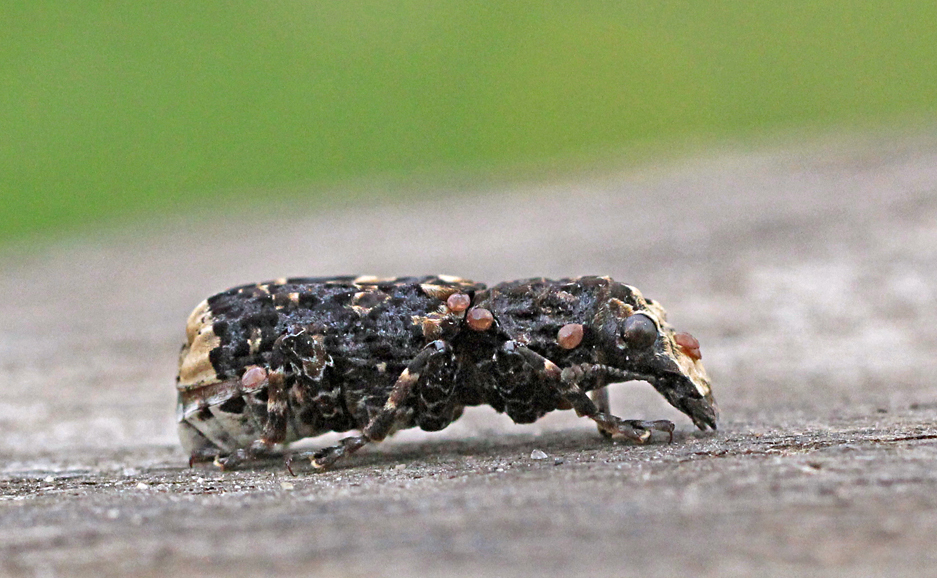
Scarce fungus weevil Platyrhinus resinosus, with mite infestation

My name is Platyrhinus resinosus and I live in Peckham

My name is Platyrhinus resinosus. I am a weevil and I live in a log in a small park in Peckham. I moved into a council log when a grant was given to spruce up Warwick Gardens a few years ago. It suits me well as I have my own cramp-ball fungus to feed on, though I do have to contend with upstart spiders who weave their webs over my patch with absolutely no regard for my personal space. My home is in the Log Quarter of Warwick Gardens, an area of high-density log housing, populated by beetle larvae, woodlice, earwigs, spiders, solitary bees and wasps. We have a buzzing little community here. Yes, we have our problems – the mining bees have a hard time in the summer when they have to fend off parasitic wasps wanting to inject eggs into their nests; the beetle larvae cause havoc to the log interiors, and the woodlice make quite a noise at night with all their chewing. And spiders can be a nuisance, especially for the flies. All in all we try to get on with each other. But things are changing.

New species have moved into the area, with fancy names like ‘mottled shield bug’, ‘mosaic leafhopper’ and ‘southern oak bush-cricket’. They have taken over the lilac bushes, conveniently positioned to look down on the more common species in the park. This area, next to the football pitch, is the main food boulevard with its ivy bars, thick long grass, lush blackberry bushes and the big-leafed showy lilac bushes. It’s the trendiest place to be and full of pop-up food stalls offering a range of artisanal kebabs of plump aphids and shield bug nymphs, alongside cocktails of dandelion nectar, ragwort pollen and craft yarrow stem juice.

It used to be relatively quiet here, but since the council stopped mowing a patch of grass and let it run wild with flowers it’s become really noisy with visitors swarming in from the surrounding areas to party. The hoverflies tell me stories of ladybirds running amok, bees drunk on pollen and crickets chirruping loudly all day long in a desperate attempt to find someone to mate with. This is the place to see all the well-heeled fashionable insects: the brightly coloured butterflies, sleek whizzy dragonflies, jewel wasps in their fancy metallic clothes, and the hipster ladybird flies with their beards and orange polka-dot shirts. Habitat is at a premium and I did hear that the parent bugs and their families had been pushed out due to the high rent of catkins and forced to move to the silver birch tree next to the railway line.
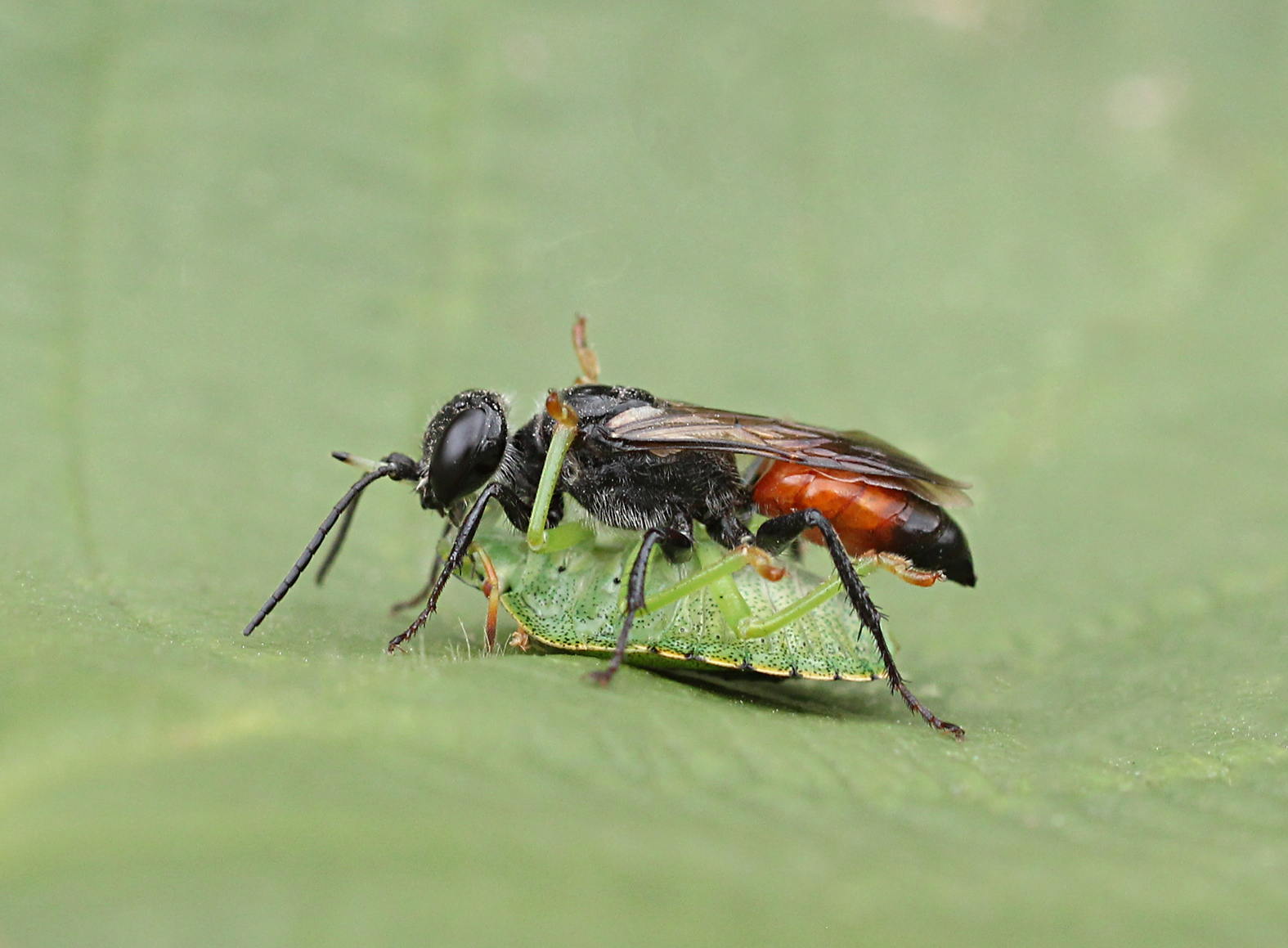
Solitary wasp with shield bug nymph

Solitary wasp with an artisanal shield bug nymph kebab

In my log a plethora of new kitchens have popped up. In the days before gentrification we called them ‘caffs’. The solitary wasps have repurposed, upcycled and retrofitted old beetle holes in readiness of opening their own seasonal pop-up kitchens. Their menus promote ‘locally-sourced produce’. Juicy organic aphids farmed by ants and plucked from the stem of an award-winning rose bush, or fed exclusively on the sap of a mature sycamore tree; spiders that have been fattened up on free-range hoverflies who have been allowed to roam free amongst the flowers and whose blood has a piquant of ragwort about it; and plump bluebottle flies with their robust meaty flavours of dog poo. Preparation is simple. Aphids and flies will be ‘lightly paralysed’ so as not to destroy the delicate juices and to ensure they keep their freshness. Spiders will have their legs skilfully sliced off with sharpened jaws and the precision of a master butcher, their bodies stacked high in larders like slowly drying hams. In a true ‘once-in-a-lifetime dining experience’ each diner will have its own room in which to enjoy the all-you-can-eat buffet. And these diners are special – they are the young wasp larvae.

One of the logs on our manor is up for renewal. It finally succumbed to being rendered useless partly due to decomposition. This log has been home to bees, wasps and beetles for the past few years and they are now being forcibly evicted by either the council foxes or human vandals with nothing better to do. Admittedly it has seen better days – a rather shabby exterior full of holes, cracked bark, and fungus graffiti’d along the damp ground-floor walls. The interior is a brittle honeycomb of lignin, filled with sawdust echoing their use as bee and wasp nurseries and still ringing with the distant sounds of buzzing gone by.
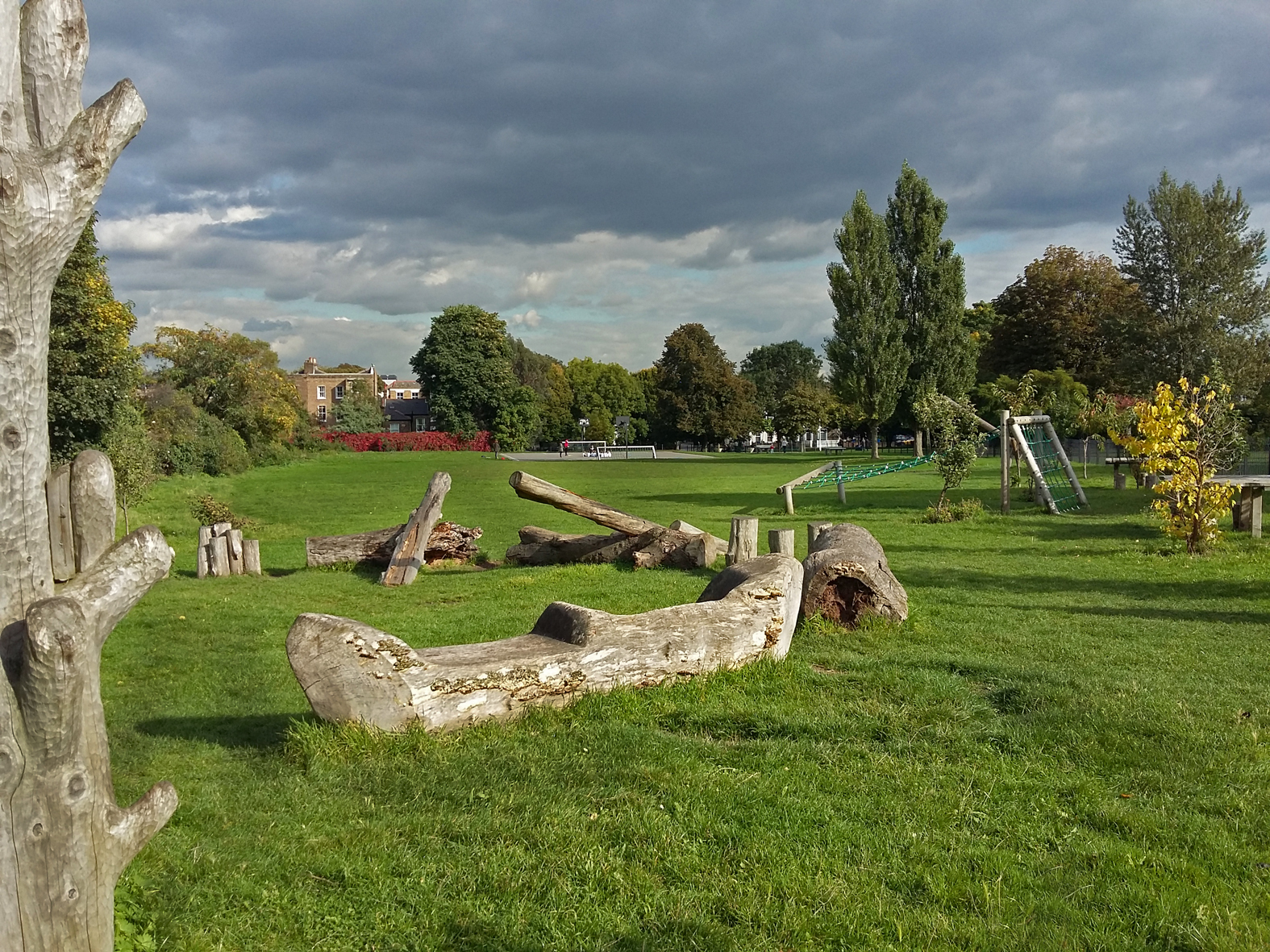
The Log Quarter in Warwick Gardens

The Log Quarter in Warwick Gardens

Unfortunately some of the residents didn’t receive their eviction notices in time and their homes have been brutally ripped away and strewn across the park, the contents spilling out onto the grass exposing still-ripening larvae cocooned in silk. Tiny beetle larvae caught up in the carnage struggle with being exposed to the outside world and succumb to being carried off by ants, whilst the centipedes emerge from hiding to see what all the fuss is about. The woodlice, who occupied the lower floors and have always had their antennae to the ground, have already moved their families to another log after realising the beetle larvae neighbours had been eating away at the upper floors and were in danger of being crushed. And the common wasps have moved in, like bailiffs, to pick over the remains and take all the free sawdust to build their nests.

Soon the developers will move in with “a vision of the log as a horizontal city for thousands of insects to live in and enjoy”. Knowing developers they will probably replace it with a shiny new MDF log, complete with layers of impenetrable varnish rendering it totally useless to us beetles. Holes drilled in neat and tidy rows, inspired by some of those fancy bee hotels, will be sold off as ready-made bijou homes for the wealthier bees and wasps, with a noticeable lack of affordable lignin making it impossible for the hard-working mulch-munching insects to set up home. And they will make it multi-functional to include habitats for humans complete with a rooftop picnic area, parking for pushchairs and nice tidy planting.

There is even a new edible hedge stretching all the way along the side of the railway line. This regenerated area is a sprawling estate of shiny new shrubs and fruit trees, replacing the perfectly established clusters of black horehound, thistles and nettles deemed rather unattractive and scythed into oblivion. Stylish architectural sculptures of dead wood dot the area, no doubt hoping to attract the rather distinguished stag beetle to make a home here. At the moment the local insects are not keen on the hedge as it contains plants they have never seen before, and as they were never consulted on what plants they would like, are rather pissed off. Instead they have been converging on a tiny patch of tatty thistles, purposely left off the weeding roster and preserved as a nod to the ‘heritage’ of the area, in an act of defiance. My cousins the vine weevils have had to find somewhere else to live as their habitat has gone, and we really don’t know what will happen to the tiny spear-thistle lacebugs who have lived in the park for generations.

It will be interesting to see who moves in or whether it will end up half-used and entomologically unloved, a moral of regeneration gone wrong. And now there is talk of creating a meadow full of all the big flashy commercial wildflowers such as ox-eye daisy, poppy and knapweed ‘to bring more pollinators into the area’ – a sort of Westfield of the wildflower world. Yet another expensive homogeneous development devoid of individualist character promoted by over zealous but under-appreciative landscapers, upsetting the local demographics and taking all the credit away from the lowly daisies and dandelions who have spent years effectively doing the same job.

So I sit here, on my log, watching the changes with a sinking heart. The park has become unrecognisable to when I moved in. I see fewer of the insects I grew up with, having had to move to ever decreasing pockets of habitat just to survive. Gone are the days when we would stop and have a friendly chirp over a blade of grass, the new neighbours deigning to give me only a cursory glance as they scuttle by with an air of snobbish arrogance. And soon even I will be gone, a remnant of old Peckham, remembered only in the pages of an insect identification book.

No more honey bees, please

The recent chatter to encourage more bee hives in our cities is somewhat alarming to me. I wouldn’t want to be a honey bee – spawned from a hybrid queen sent in the post, brought up to live a life of domesticated soviet-style drudgery, drugged up to the wing tips on pesticides, plagued by viruses and under attack from mites and fungus, worked too hard, often on a monoculture diet, continuously smoked out of their homes to have the fruits of their labour wrenched out beneath them, then left in the winter with barely enough food to eat. All in the name of having something sweet to spread on our morning toast. No wonder they are such moody insects and no wonder their colonies are collapsing.

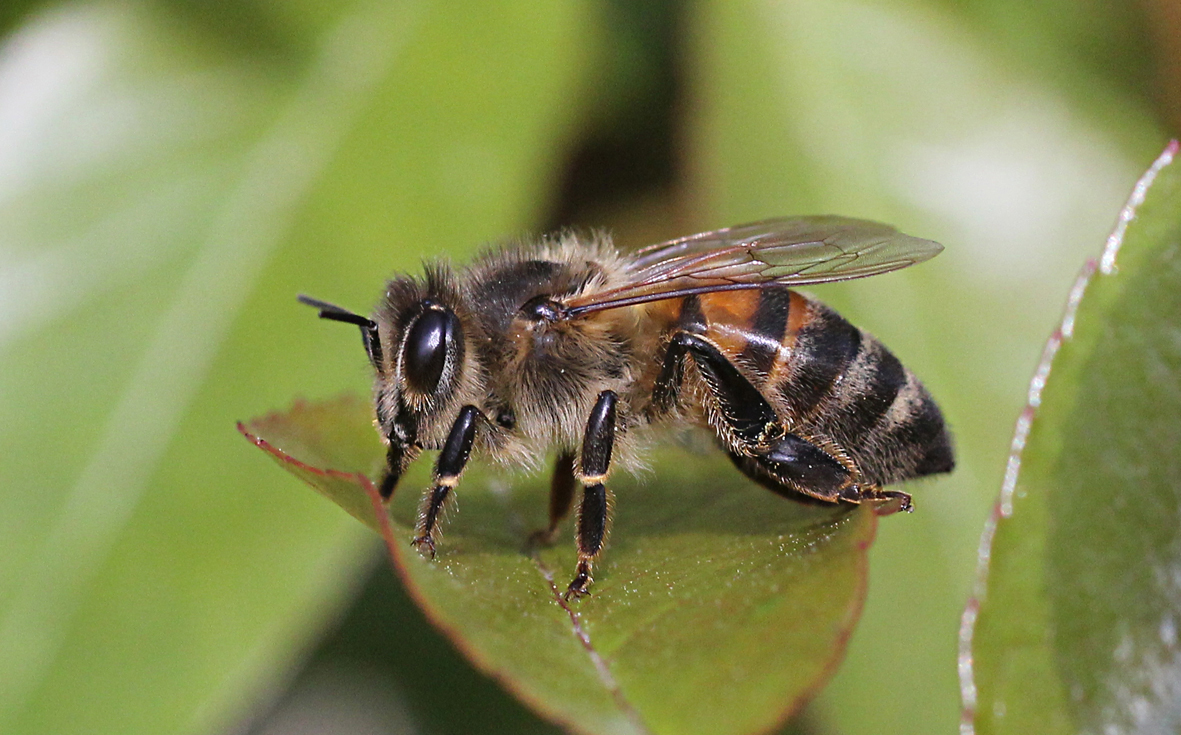
A honey bee having a rest from the drudgery of pollen collecting

A honey bee having a rest from the drudgery of hive life

I am being cynical. Of course honey bees are important. ‘The economic value of honey bees, and bumblebees, [note the add on and why not just ‘bees’] as pollinators of commercially grown insect pollinated crops in the UK has been estimated at over £200 million per year’. (The British Bee Keepers Association). All well and good but I see there is no mention of the other economy – the sale of honey – which I see as a bigger problem and rarely seems to be included in statistics. And we are being misled – honey bees only pollinate 30% of our crops. Which leaves me to wonder why we need them in our cities? The only ‘crops’ we have in cities are allotments and orchards and pollination of these is easily done by our other pollinators – solitary bees, wasps, flies, hoverflies, beetles, bugs, butterflies and moths. And its these we need to be focussing our energy on.

Mason bee Heriades truncorum collecting pollen

Mason bee Heriades truncorum collecting pollen

Research has shown honey bees maybe infecting bumblebees with diseases, but we don’t yet know what the effect of honey bees have on our other solitary bees. Viruses and mites brought in by honey bees, often imported, surely must have an impact, as well as the pesticides to control these. Much is made of colony collapse but how long before we see a collapse of all our insect societies due to measures taken to preserve the lives of honey bees. Less hives, especially in cities where habitat is at a premium, would allow our native bees to flourish and restore their populations which are on the decline. But we need varied and healthy habitats to ensure the survival of all our insects, not just bees. To consider preserving and encouraging the plants that naturally occur in an area – local planting feeds the local insects. Even the current trend for wildflower meadows in parks to ‘attract pollinators’, though commendable, is rather worthless if stuck in the middle of a large swathe of lawn with no shade or allowance for nesting habitats. They are also costly and time-consuming to manage. Far better to distribute those wildflowers amongst other planting, or scatter a few seeds next to a wall. Or even just ‘let it go wild’! The area left unmown in Warwick Gardens is a good example of allowing the natural growth of local plants – after 3 years we are seeing crops of clover and mallow flourish, creating a carpet perfect for grasshoppers to hide in and flowers for hoverflies and butterflies to feed on. The yarrow, loved by beetles, has also expanded its range. Yes sometimes we do need to manage it but at a much lower level – pulling up the odd fat-hen plant that has run riot is maybe not a bad thing! We often forget we have to allow for some of our pollinators that feed on other insects and this is rarely mentioned in plans when considering planting. Some solitary wasps stock up on sap-sucking shield bugs and aphids to feed their young, and the inclusion of plants and grasses to accommodate these is vital. Meanwhile, all these insects will be pollinating the beans and peas you are growing on your allotment.

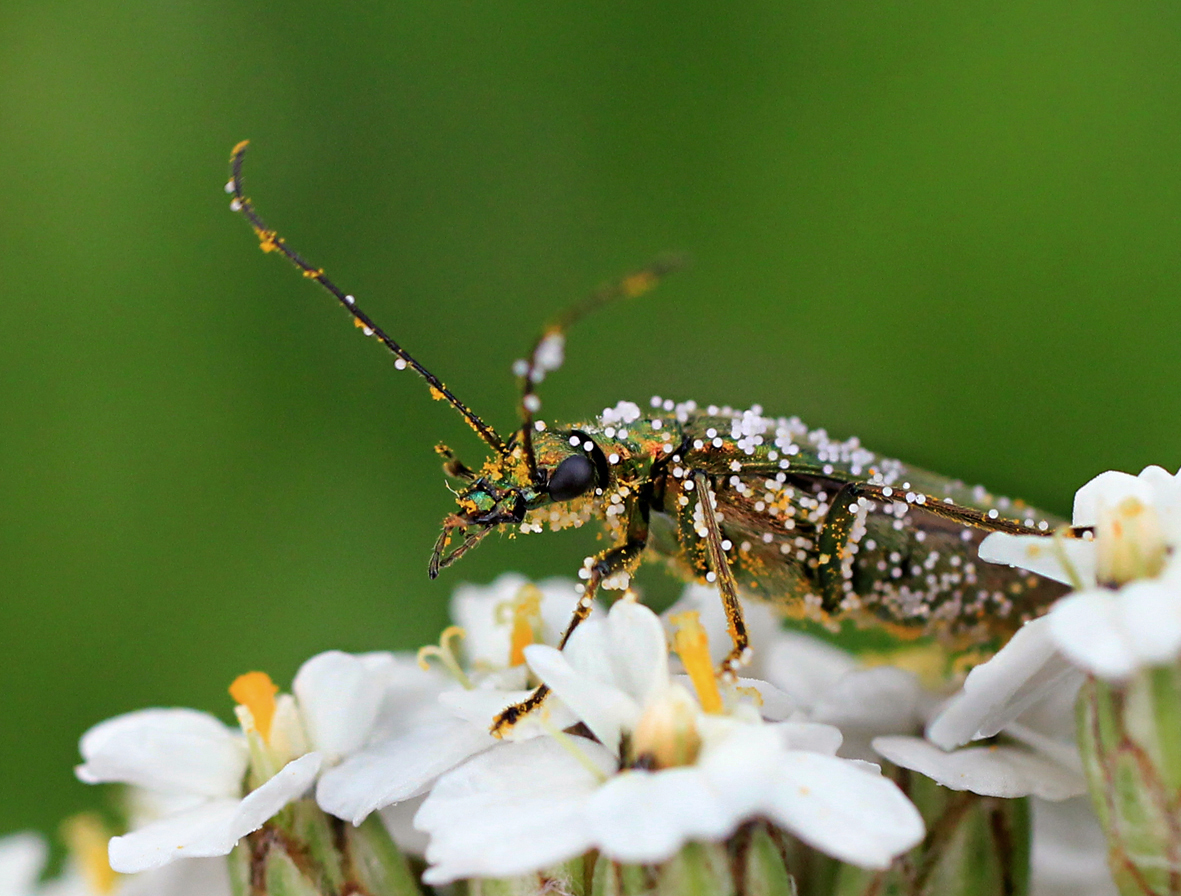
Thick-legged beetle Oedemera nobilis covered in pollen

Thick-legged beetle Oedemera nobilis covered in yarrow pollen

So why do we need hives in our cities? Education? Studies of beekeeping for ‘unruly’ kids has benefits, especially around respect and responsibility. I can’t argue with that but a big part of me would prefer to promote the life of our solitary bees. Watching mason bees and leafcutter bees building their nests in a bee hotel is not only fun, it also teaches us important lessons about the fragility of life. Solitary bees have to defend themselves against cuckoo bees and parasitic wasps without the back-up of an all-stinging all-waggle dancing army. Their life is harder and more hit and miss. All the more reason to treasure them.

And the other reason for hives? Honey. Honey should be a speciality food, like truffles, expensive and hard to come by. I worry that the current trend for all things ‘olde and crafty’ will see a rise of pop-up hives, hipster honey and mead. The air in our city is pretty grim so I can almost see a diesel flavoured honey appearing on the shelves, along side a bottle of mead with a ‘hint of carbon monoxide’. And all the while the poor little honey bee is working itself to death to put that sugar hit on your toast. Harsh, I know. But ideally I would put a ban on hives altogether until the honey bee has had a chance to recover, and allow our other pollinators to take the credit for all the hard work they do.


House clearance

Rotten Lodge

Rotten Lodge

There has been some major demolition happening in Warwick Gardens. One of the logs mentioned in The Bug Quarter has finally succumbed to being rendered useless partly due to decomposition. This housing block in the Log Quarter has been home to solitary bees and wasps for the past few years and they are now being forcibly evicted by either the council foxes or youths with nothing better to do. Admittedly the log has seen better days – a rather shabby exterior full of holes, cracked bark, and fungus graffitied along the damp ground-floor walls. The interior is a brittle honeycomb of tunnels between the lignin, and filled with sawdust echoing their use as nurseries and still ringing with the distant sounds of buzzing gone by. The structure is just not safe. And no, an estate agent certainly wouldn’t recommend buying this log, not even as a fixer-upper.

Solitary bee, wasp, and wasp larva in cocoon

Solitary bee, wasp, and larva in cocoon

Some of the resident bees and wasps have already excavated their nests, stocked their larders and laid their eggs. Unfortunately they didn’t receive their eviction notices in time and their homes have been brutally ripped away and strewn across the park, the contents spilling out onto the grass exposing still-ripening larvae cocooned in silk. Tiny beetle larvae caught up in the carnage struggle with being exposed to the outside world and succumb to being carried off by ants, whilst the rove beetles emerge from hiding to see what all the fuss is about. The woodlice, who occupied the lower floors and have always had their antennae to the ground, had already moved their families to another log after realising the beetle larvae neighbours had been eating away at the upper floors and were in danger of being crushed. And the common wasps have moved in, like bailiffs, to pick over the remains and take all the free sawdust to build their nests.

Rove beetle

Rove beetle

Soon the developers will move in with “a vision of the log as a horizontal city for thousands of insects to live in and enjoy”. Their ideal would be to replace Rotten Lodge with a shiny new log, the longest in Europe, complete with layers of varnish for an impenetrable surface to keep out the riffraff – “we certainly wouldn’t want woodlice and weevils littering the neighbourhood”. It would be designed with style in mind. Holes drilled in neat and tidy rows, inspired by some of those fancy bee hotels but much more minimalist, would be sold off as ready-made bijou homes for the wealthier bees and wasps. It would be multi-functional to include habitats for humans complete with a rooftop picnic area, parking for pushchairs and nice tidy planting. And they would call it The Seat, befitting their ideal vision of a new Peckham!

The fly who looked like a dog

Is it a dog or a fly?

Is it a fly or is it a dog?

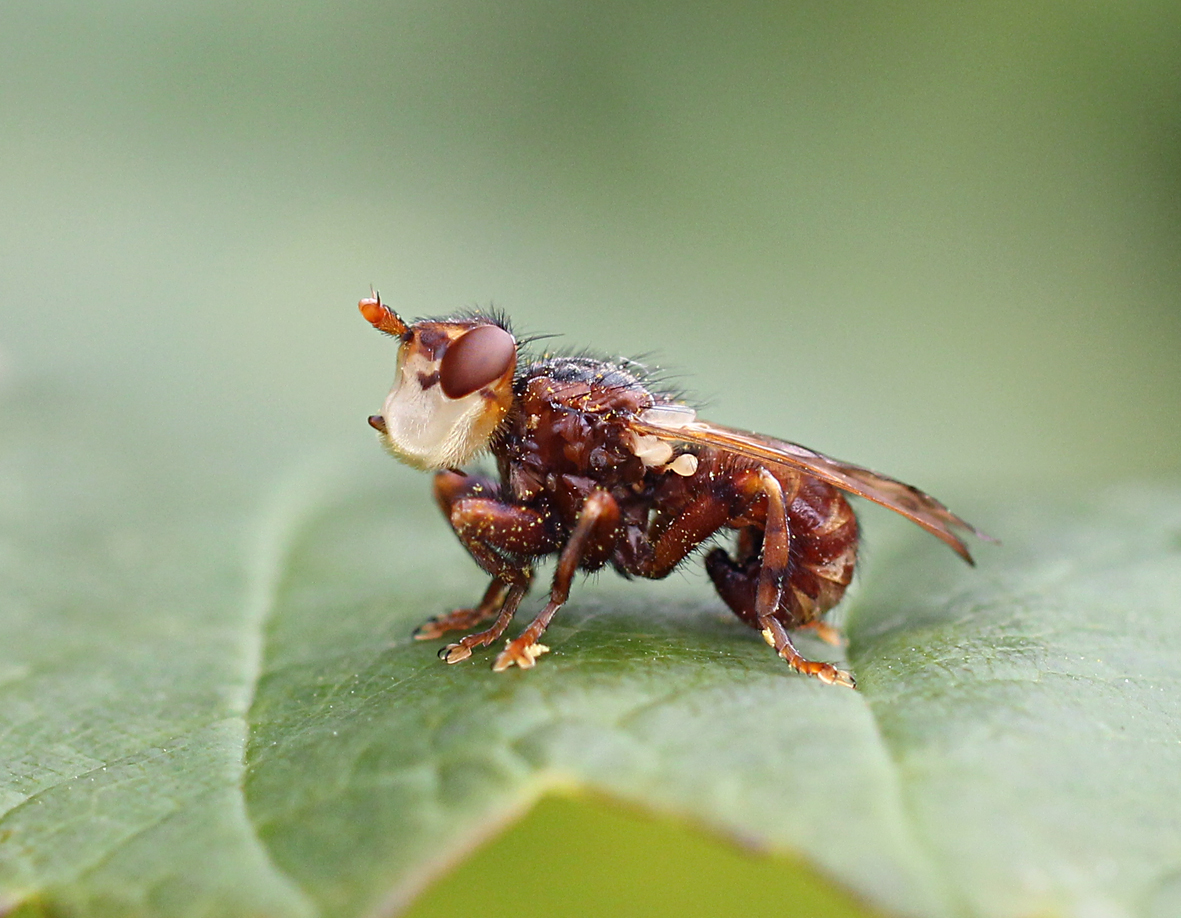
Once upon a time there was a fly called Conopid. Well, that was her family name. To most people she was a thick-headed fly. To her mates she was just plain Myopa as no one really knew if she was Myopa pellucida or Myopa tessellatipennis. Unfortunately, to determine her true identity she would have to be dissected and slid under a microscope and she didn’t want that. Myopa spent her days hanging around on flowers waiting for solitary bees to parasitize – she was rather proud that her abdomen, which acted like a can opener, could pry open the segments of a bee’s abdomen to insert her egg. She particularly liked Andrena bees and Warwick Gardens was full of them. But sometimes Myopa felt ‘overlooked’ as she realised her family weren’t that well studied. She knew she was rather aesthetically-challenged, which meant it was unlikely she was ever going to appear on the front cover of BBC Wildlife Magazine. At the very most she could hope to find herself being discussed in a specialist Conopid recording scheme. Most of all she was well aware that her lifestyle was rather repellent to bee lovers. But Myopa wanted to be noticed and she contemplated this as she took a rest on a sycamore leaf.

Then one day a photographer did notice her. Word on the ground was she was a very friendly photographer and not going to sweep you up in a net and pop you in a pot. Myopa had heard legendary tales about other insects who had been photographed and showcased on the world wide web. Some had even been published on blogs and in magazines! This was her chance for some fame. Myopa sat very still as the camera loomed in, determined not to fly off as the shutter came down again and again. She knew she was looking her best as she posed for her portrait.

And then it happened. Myopa was all over the internet, on Facebook and Twitter, and she was liked by lots of people. She was ‘awesome’ and ‘fabulous’ and ‘cute’. And she didn’t mind that she looked like a ‘Disney dog’ or ‘Fido’ or a ‘Cartoon dog’ because now she had a starring role in a blog and lots of people knew who she was. She had her 15 minutes of fame, and she had been talked about. Contented, Myopa flew off and lived happily ever after.

It’s nearly spring!

Early mining bee, Eupeodes luniger, hairy-footed flower bee

Mining bee Andrena bicolor, hoverfly Eupeodes luniger, hairy-footed flower bee

The sun has been shining for the past few days and the temperature is such that I have discarded my thick coat and roll neck jumpers and opted for long sleeved t-shirts and a leather jacket. That means one thing – spring is nearly here. I say ‘nearly’ as the flowers need to catch up and bloom as us insect photographers are getting impatient! There are murmurings on Flickr with the odd hoverfly and small tortoiseshell butterfly appearing, and postings of insects ‘from the archives’, which means we are all sitting here twiddling our thumbs and waiting to start pressing our camera shutters. It can be quite competitive in the entomology world – whose bees have appeared first and where in the country, “blimey your Eupeodes hoverflies are out early”, that twinge of jealousy when someone posts an insect you have never seen but always wanted to – but it is wonderful to see how the insect year unfolds online. In Warwick Gardens the hairy-footed flower bees are out, the hoverflies have started to appear and yesterday I spotted the first mining bee of the year. Yep spring is nearly here.

The Bug Quarter

Gentrification is taking over our city and nothing is stopping it. Soho as we know it is about to be turned into a shiny haven for shoppers with affordable homes for the rich, sweeping away its long cultural history as the bohemian side of town. London is being carved into ‘Quarters’ – such a poncey name for neighbourhoods. Mayfair has become The Luxury Quarter, The Shard – ‘Western Europe’s first vertical town’ – spearheads The London Bridge Quarter, Waterloo and Baker Street have their own Quarters, and Dalston is making a bid to become The Artist Quarter. At least their Quarters have a maze of roads contained within them. In Peckham we now have an Art Deco Quarter which is essentially a few buildings on the corner of Rye Lane and Blenheim Grove. Hardly a maze. So in the spirit of gentrification I have decided to divide Warwick Gardens into Quarters.

Warwick Gardens' Quarters

Warwick Gardens’ Quarters

The Bug Quarter
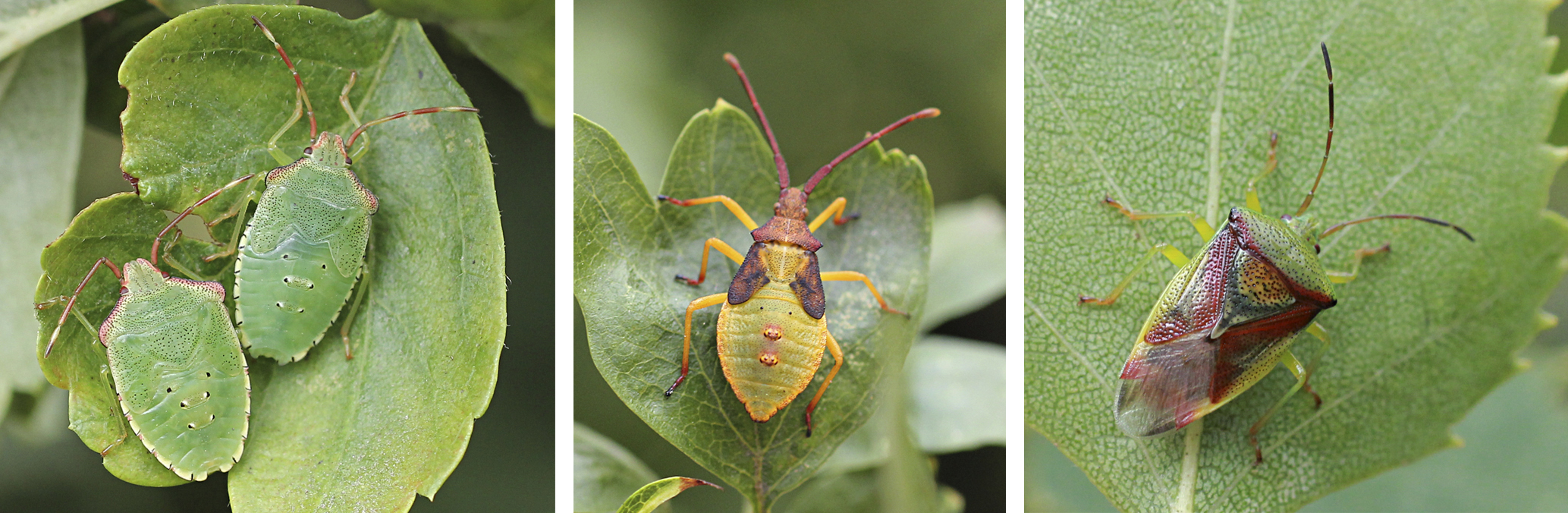
The home of the upwardly mobile, this is where a lot of bugs have decided this is the perfect place to raise a family. The canopies of hawthorn and silver birch trees provide an aerial playground for birch catkin bugs, parent bugs, hawthorn shield bugs, birch shield bugs, red-legged shield bugs, common green shield bugs, and the occasional mottled shield bug who has decided to up sticks and move out of the Football Quarter. Even the box bug, once historically rare and only found living at Box Hill but has recently begun an expansion through southern England, has moved in after finding a suitable home on the hawthorn.

Hawthorn shield bug nymphs, box bug nymph, birch shield bug

Hawthorn shield bug nymphs, box bug nymph, birch shield bug

The Log Quarter
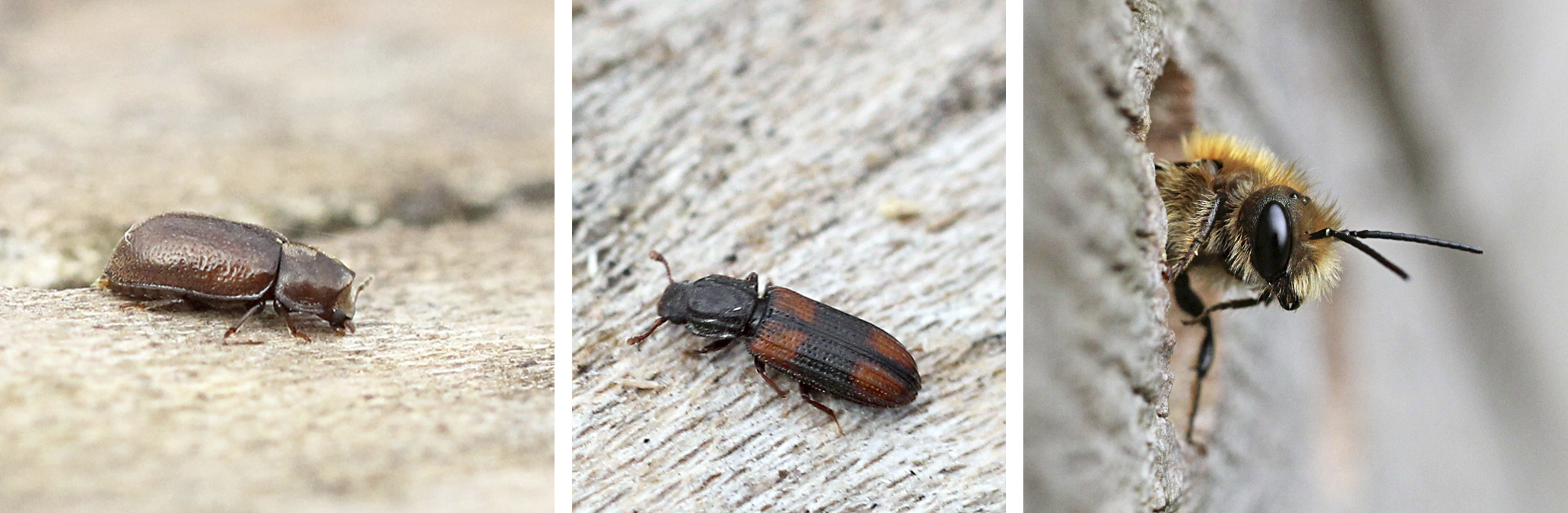
This is the largest housing estate in Warwick Gardens, offering a mixture of multiple-occupancy logs that house a wide variety of invertebrate families. The long term mulch-munching residents – woodlice, bark beetles, fungus beetles, beetle larvae – share the space with short-let summer homes for solitary bees and wasps who burrow into the wood to make their nests. A popular picnic spot for people who spend their lunchtimes eating sandwiches and playing with their iPads, and for children who enjoy jumping over the logs oblivious to the life beneath them, this is one area that will be earmarked for redevelopment in the future once all the residents have decomposed it.

Cis boleti, Saddle-backed bitana, blue mason bee

Cis boleti, Saddle-backed bitana, blue mason bee in her nest

The Football Quarter
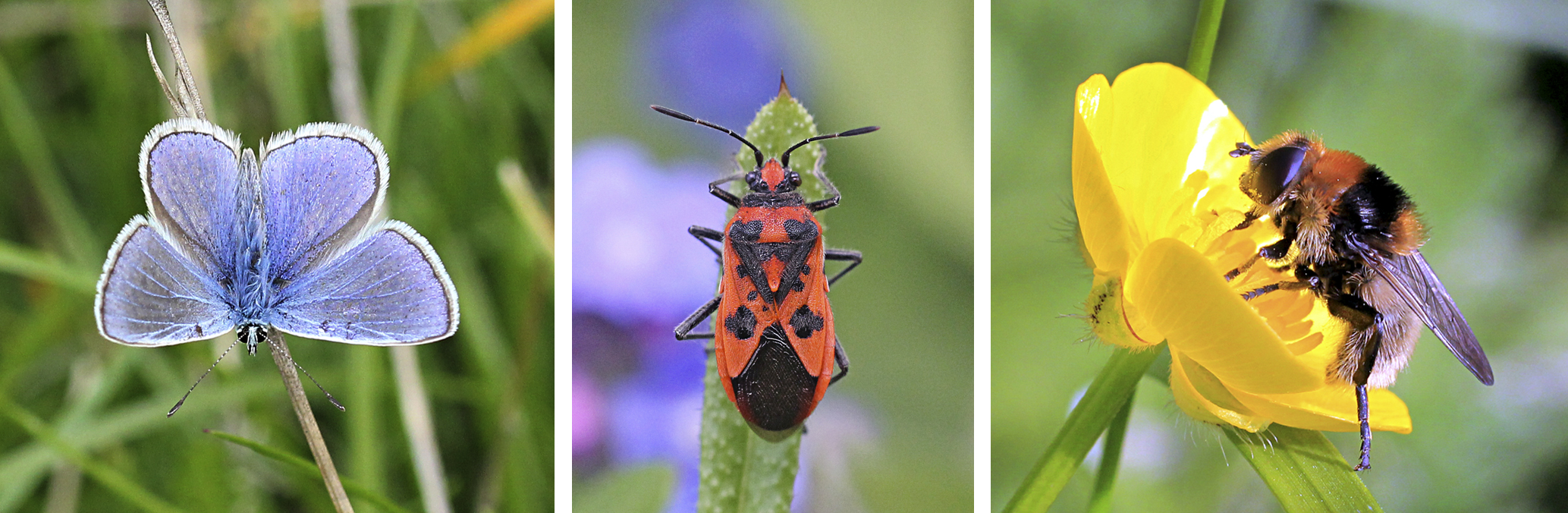
The south side of the park, situated next to the football pitch, is the main food boulevard. The habitat here showcases some of the finest food available in the park from season to season. Green alkanet is on the menu throughout the year and ragwort and yarrow are specialities in summer. In the spring the comfrey plants open their flowers up to hairy-footed flower bees, their leaves providing posing platforms for bee-flies and spiders. On sunny days the lilac bushes, home to the notable ‘Peckham’ leafhopper Orientus ishidae, proffer their leaves for insects to take a rest and indulge in a spot of sunbathing. The tall grass fronds act as plush elevated restaurants for mirid and plant bugs, whilst the ground levels are stomping grounds for chanting crickets and grasshoppers on the look out for a mate. The ivy bars are in flower from September offering a constant drip of sweet nectar to wasps, hoverflies and red admiral butterflies. This is the place to ‘celebrity spot’ the flamboyant dragonflies, butterflies and jewel wasps who visit in the summer. Ladybirds and Corizus hyoscyami bugs add a splash of colour, and narcissus flies prance around in fur coats doing a remarkable impersonation of a bumblebee. And in the winter, once everything seems to have disappeared into hibernation, wolf and nursery web spiders use the space to lounge around in relative peace and quiet except for the occasional disturbance of a football crashing into them.

Common blue butterfly, Corizus hyoscyami, Narcissus fly

Common blue butterfly, Corizus hyoscyami, Narcissus fly

Poo Corner
This is the seedy side of Warwick Gardens frequented by lazy dog walkers. Overshadowed by trees nothing much grows here except for swathes of nettles and bramble. This is where you will find the yellow dung flies and greenbottles swarming around piles of dog shit, and is characterised in the warm summer months by the faint whiff of urine. Not the best place for a picnic. Attempts to gentrify it last year failed miserably as the hedge that was planted in an effort to make the area more upmarket got swamped by nettles. Local bad boys, the horse chestnut leaf-miner moth, have vandalised one of the conker trees leaving it with an eerily stunted growth. In August nettle bugs gather on the nettles in large numbers in an orgy of mating, unaware of the comb-footed spiders that lurk under the leaves waiting to capture their next meal. This is also one place to spot the bright red velvet spider mites on the look out for a dinner of tasty springtails that live amongst the fallen leaves in autumn.

Dung fly, greenbottle, horse chestnut leaf-miner

Dung fly, greenbottle, horse chestnut leaf-miner

Wasp kitchens

Aphid-hunting wasp selecting her beetle hole

Aphid-hunting wasp Pemphredon sp in her beetle hole

A plethora of new kitchens are popping up around Peckham. In the days before gentrification we called them ‘restaurants’ or ‘cafes’. The solitary wasps of Warwick Gardens, already ahead of this trend, have secured their premises in the log circle and are busily repurposing, upcycling and retrofitting old beetle holes in readiness of opening their own seasonal pop-up kitchens.

They will, of course, only be choosing locally-sourced produce. Juicy organic aphids farmed by ants and plucked from the stem of an award-winning rose bush, or fed exclusively on the sap of a mature sycamore tree; spiders that have been fattened up on free-range hoverflies who have been allowed to roam free amongst the flowers and whose blood has a piquant of ragwort about it; and plump bluebottle flies with their robust meaty flavours of dog poo.

Wasp with aphid

With an aphid

Preparation is simple. Aphids and flies will be ‘lightly paralysed’ so as not to destroy the delicate juices and to ensure they keep their freshness. Spiders will have their legs skillfully sliced off with sharpened jaws and the precision of a master butcher, their bodies stacked high in larders like slowly drying hams.

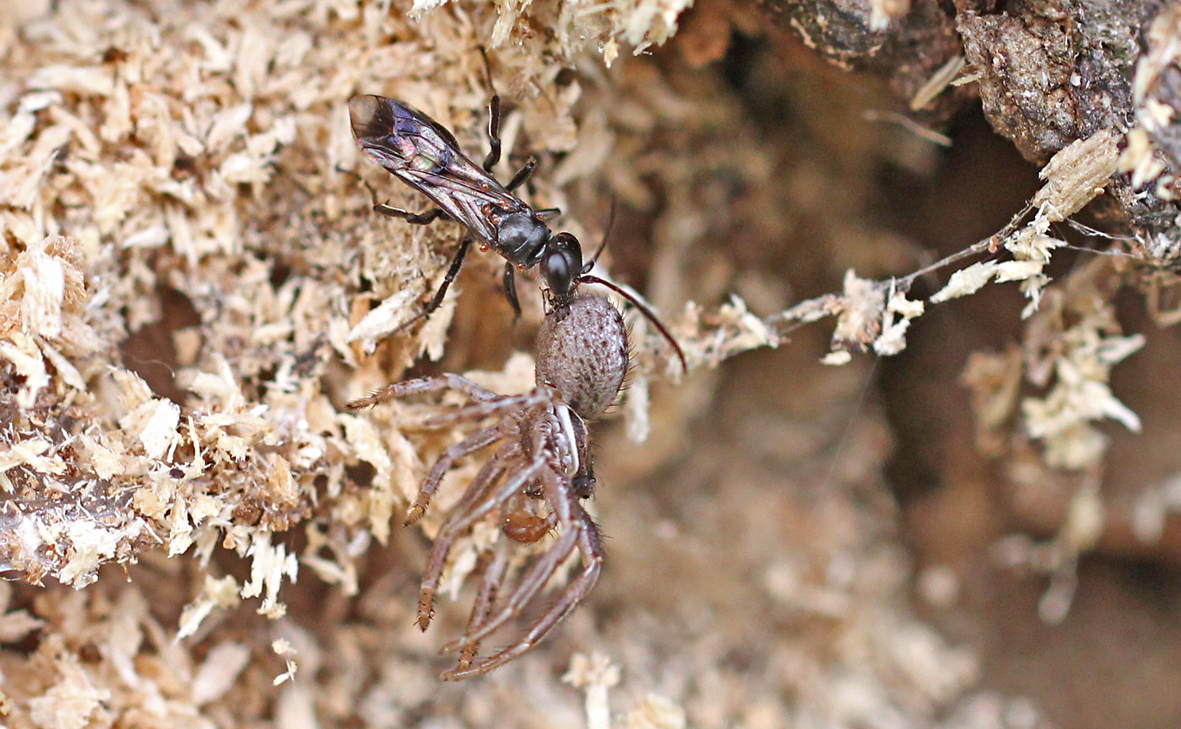
Wasp with crab spider

Spider-hunting wasp Dipogon sp with a crab spider

And every care is taken to ensure the food will be tasty and plentiful. In a true ‘once-in-a-lifetime dining experience’ each diner will have its own room in which to enjoy the all-you-can-eat buffet. The ambience has to be just right because these are very special diners. They are the larvae of the wasps. Bon appétit!

Normcore bugs

My friend was over from Istanbul at the weekend. She heads the design team for the largest jeans company in Turkey and was in town to snoop around at what London has to offer in terms of fashion trends. When I see her its the only time I get to talk about fashion, not a subject I am particularly hot on. This years’ unlikely trend is ‘Normcore’. Apparently its all about blending in and looking rather boring. Some fashion statement and an indication our clothes designers have completely run out of ideas! Either that or they have taken hipster irony to a new level. Reading up about normcore lead me onto an article in the Guardian where the comments rang with complete derision with someone declaring ‘at last – after 73 years – I’m fashionable’.

Plant bugs blending in

Mirid bugs blending in

In Warwick Gardens there are plenty of normcore bugs. The mirid bugs, in particular, prefer to ‘blend in’. They don’t flaunt themselves in flamboyant jackets à la Vivienne Westwood like ladybirds, or mooch around in smart Paul Smith-style suits like shield bugs, or even whizz around in fancy Zandra Rhodes ‘look-at-me’ stripy dresses like they do in the hoverfly world. Mirid bugs are more of an M&S style of bug. But at least, for a season, they can pride themselves with being on-trend.

A population explosion

Sundays in this part of Peckham used to be really quiet – you’d be lucky to see anyone walking down the road. For any sign of activity you had to go to the bustling and colourful Rye Lane with its God hawkers, the endless queues in Primark and the greengrocers overflowing with bowls of vegetables for £1. Nowadays Bellenden Road is packed with upmarket shoppers, diners, drinkers and people wandering around with their heads stuck in estate agent literature, vying for space on the pavement. The population has exploded – do these people live here or are they on day-trips from elsewhere, having read in the Evening Standard that Peckham is the cool place to be?

Southern green shield bug (left), and Common green shield bug

Southern green shield bug (left), and Common green shield bug

A less visible population explosion in Peckham has been that of the Southern green shield bug – the unusually hot weather has created the perfect conditions for them to thrive. A recent immigrant to the UK from Africa, Nezara viridula arrived via the route of imported vegetables. Indeed, you may find them living happily on your broad beans or pea pods. In Warwick Gardens they tend to favour the blackberry bushes. The adults can be identifiable from its cousin, the Common green shield bug Palomena prasina, by 3-5 white dots along the front edge of the scutellum. The nymphs, however, are much more colourful, making you wonder how something so striking can morph into a rather bland looking bug.

Southern green shield bug nymphs at various stages of development

Southern green shield bug nymphs at various stages of development

Usually I only see one or two Southern green shield bugs each year – a somewhat uncommon sighting. But this year the nymphs are everywhere! Uploads on Flickr are plentiful, cropping up on Twitter with queries as to whether they are ‘ladybirds in fancy jackets’, and they have been recorded in Jersey for the first time. I like shield bug nymphs. They look so small and vulnerable but somewhat earnest as they get to grips with working out how to live in this world. Bunched together for the first few days after hatching they mill about before braving their independence and venturing further afield by themselves, usually down a plant stalk. Though the 37 Nezara viridula nymphs that hatched on the lavender bush in a front garden in Choumert Road opted to stay together after sussing out that ‘walking down the stalk’ meant landing on tarmac. Another large batch hatched on the bindweed in Warwick Gardens last week, looking like little black shiny beads glistening in the sun, and dispersed into the bramble bushes making them hard to spot. But we did find one – Paul Brock, author of the fabulous new book A comprehensive guide to the Insects of Britain & Ireland, who was visiting the park, scooped it up into a pot and whisked it away to raise in comparative luxury in the New Forest. We wish ‘Warwick’ well!

Escapologist

Onthophagus coenobita caught in spider web, and rescued

Onthophagus coenobita caught in a spider web, and rescued

I keep finding these little beetles, Onthophagus coenobita, not on the ground or sitting on a leaf, but tied up tightly in spider webs. The first time was on a walnut orb-weaver spider web by the railings in Warwick Gardens, cocooned in silk, and as I looked closely I could see it was still moving. I am a bit of a sucker for insects caught in webs and regularly deny a spider of a wasp, bee or grasshopper meal if I see one struggling in a web. So when I saw this beetle I snipped it off the silk and proceeded to help it untangle itself. I used a badge pin to carefully ease off the cocoon and all the while it was pushing itself out with quite a force for a little insect. After being freed it thanklessly flew off while I walked away filled with a sense of do-gooding.

Another one!

Another one!

A couple of weeks later I found another one in a different web… wrapped up in spider silk. I did the same again and it flew off. A few days later another one – this time it had already extricated itself from its silk tomb but needed help getting its final leg out. The next day another one dangling from a silk thread having completely freed itself and dreading the drop to the ground below. I began to wonder if this was the same beetle, living its life as the Houdini of the Coleoptera world, or if it was a game played with other beetles about who could escape the quickest from a dumb spider’s web before being eaten. Either way I still haven’t seen one just running along the ground.

Always take a camera…

The digger wasps are back nesting in the log (see House-hunting in Peckham). Looking at the size of the pile of sawdust gathered outside they have excavated a much bigger burrow in the side of the log compared to last year. I have been watching them as they bring in their hoard of insect prey – this year they have a taste for bluebottle flies. Photographing them has not been easy as the position of the nest hole is obscured by blades of grass which really interfere with focussing, and the wasps disappear pretty quickly down that hole! Several attempts over a couple of days and I have one measly ‘just about in focus’ image of a wasp emerging out of her burrow.

Digger wasp burrow, and emerging wasp

Digger wasp burrow, and emerging wasp

I was booked to play at Bestival which meant no wasp-watching for a few days. My fellow DJ friend Fábio was over from Lisbon and having witnessed me photographing Portuguese bees, wanted to see Warwick Gardens so we made a quick detour on the way to the station. I don’t take my camera to festivals so didn’t have it with me as I showed him around, pointing with pride to our wasp spider, our array of shield bugs, and the digger wasp burrow. We plonked ourselves by the logs, amongst the mother and baby circle who were completely oblivious to all the action taking place around them, and I explained digger wasps to Fábio. Then it appeared: a female with a pair of copulating bluebottle flies firmly in her grasp. And she sat there for a couple of minutes on top of the log in the perfect position for a photograph. I was mortified as I had been waiting for this moment for days and there I was with no camera. It was if she was saying “Ok, so here I am with not one but TWO flies, which I know you would be impressed to see as I have been watching you watching me hoping for a good photo, so now I will just sit here and taunt you as I see you have no camera. Pff!”. She eventually flew off, circling us, then dropped the flies into the grass – the male still attached to his female and rather bewildered to discover she was paralysed. And I was left rueing the missed opportunity for my wasp-action photograph of the year.

Lesson learned: always take a camera when looking for insects!


Little helicopters

Yesterday there was a guy flying his remote-controlled helicopter in the park. It whizzed around making a whirring sound high above the trees. It reminded me of the drone cameras which were popular with the rallyers at this years launch of the Mongol Rally in Battersea Park, where it seemed everyone had one and were avidly flying them over the start line – a birds eye view of the 220 cars lined up ready for a mad adventure. I can’t wait to see aerial footage of the Mongolian steppes and the finish line in Ulaanbaatar. Back in Warwick Gardens the helicopter wasn’t the only thing flying around – dragonflies were showing off their spectacular aerodynamics by swooping and chasing one another around the park.

Migrant hawker

Migrant hawker

It is a good year for dragonflies as southern hawkers, migrant hawkers, a black-tailed skimmer and a broad-bodied chaser have all decided to pay a visit. I like dragonflies as they are such a prehistoric insect that has evolved into a lean, mean flying machine which can fly six ways: forwards, backwards, up and down, side to side, and hover, with an average flying speed of 22-34 mph. That is some achievement and showed up the rather weak limitations of the remote controlled helicopter which could only go up and down and forwards and backwards and somewhat slower!

Black-tailed skimmer

Black-tailed skimmer

Dragonflies start their lives as nymphs in water and are ferocious predators devouring other invertebrates, tadpoles and small fish fry. They can be at the larval stage for five years but most are ready to emerge as adults after three years. When ready they crawl up a plant or reed stalk and emerge from their larval skin. The adults feed on midges and flies.

Broad-bodied chaser (female)

Broad-bodied chaser (female)

The word dragonfly has its source in the myth that dragonflies were once dragons. To the Japanese, dragonflies symbolise summer and autumn and are respected so much that the Samurai use it as a symbol of power, agility and victory. In China, people associate the dragonfly with prosperity, harmony and as a good luck charm. For Native Americans, they are sign of happiness, speed and purity. A somewhat different attitude in Europe has the dragonfly classed as a witches animal sent by Satan to cause chaos and confusion with names like Ear Cutter, Devil’s Needle, Adderbolt and Horse Stinger. In Sweden, folklore suggests that dragonflies sneak up to children who tell lies and adults who curse and scold, and stitch up their eyes, mouth, and ears. The Welsh call the dragonfly the snake’s servant and think they follow snakes and stitch up their wounds, and in Portugal be aware as they think of them as eye pokers and eye snatchers. In Peckham we prefer just to call them dragonflies or as the little boy, who was standing next to me watching them in awe, called them – little helicopters.

Bright young things

Warwick Gardens was awash with children from Bellenden Primary School last week, running around playing football, shouting and swinging from the swings and generally having a great time. Dolled up in orange high vis vests they virtually dazzled in the sunshine, like little daytime fireflies or mini construction workers having a playtime from mending the rail tracks. But they were not the only bright young things in the park – there were jewel wasps competing for the title of the brightest of bright young things.

Chrysis ignita

Chrysis ignita

If you look closely amongst the shrubs you might see a flash of metallic blue/green and red skittering around on the leaves. These are the ruby-tailed wasp Chrysis ignita. Whenever I see them they are running up and down stems, pausing occasionally to have a sniff using their downward-curving antennae to pick up the scent of their host insect. As a cuckoo wasp they are looking for mason bee nests. Once the female finds the nest she explores the entrance to make sure no one is home then sneaks inside and lays her eggs. With a hard body cuticle to protect from stings she is well-equipped to defend herself if she comes under attack from an angry host bee – she curls up into a ball. The eggs hatch into larvae, which eat the newborn host species. The larva complete their development inside the nest and the adults emerge the following spring.

Hedychrum niemelai

Hedychrum niemelai

Another jewel wasp to look out for is Hedychrum niemelai. Its the first time I have seen this beautiful shiny wasp in Warwick Gardens. They love to come out in bright sunshine to feast on the yarrow. The female lays her eggs in the nest of the digger wasp Cerceris arenaria – another first sighting for Warwick Gardens. If a host insect is nesting you can be sure to find its cuckoo!

Absent Parent bugs

Parent bug nymphs with not a parent in sight

Parent bug nymphs with not a parent in sight

Last year I wrote about Parent bugs, marvelling at the fact the mother sits with her nymphs until adulthood. This year it seems this has all changed. I have been watching 11 families of nymphs in Warwick Gardens and none of them have a mother in attendance, even early instar nymphs. I have found them laying eggs and soon after the female has gone. I would have expected a couple of females to fall by the wayside, but all of them? This has got me wondering about what is happening to them. Maybe its an early brood thing – the adults overwinter and breed in the spring so maybe they have just died off before raising their nymphs? Has it got something to do with the warm winter – did they breed too early? Or are the adults being predated – there are certainly a lot of shield bug predating wasps in the park, especially on the southside, and a juicy adult bug would be perfect for the larder. But surely not all the adults would have been taken, especially as the abandonment is happening on trees on both sides of the park?

I have even trudged around the streets of Peckham looking through every silver birch tree I come across and have found plenty of nymphs being brooded by their mothers. So it seems the abandonment is only happening in Warwick Gardens. Have our females formed a union and gone on strike after voting to rescind their parental duties? The nymphs certainly seem to be happy going it alone and not rebelling like teenagers and running amok hosting Facebook parties. They prefer to hang out as a gang on a leaf; so well-behaved that maybe the mothers are feeling unnecessary and trying out a new form of liberal parenting. If this phenomenon continues will our Parent bug have to be renamed the Absent Parent bug?

On a serious note I would be interested if anyone else has noticed Parent bug nymphs without the adult present. Many of our nymphs have reached adulthood and starting their own families so I will be watching to see if this pattern continues.

Hipster flies

Peckham used to be relatively free of hipsters until the Overground started to spit them onto our streets, transported from their spiritual home in Shoreditch and no doubt digging the irony of being in south London. They are a strange cultural subset, looking rather like bored lumberjacks in limbo cycling around the forest-free streets in their checked shirts, skinny jeans and large spectacles. Their beards seem to sit uncomfortably on the face as if the fashion dictat threw them a cynical reason to make us all laugh. Or is that the irony?

The dapper Gymnosoma rotundatum

The dapper Gymnosoma rotundatum

To be fair, Gymnosoma rotundatum is more of a dandy than a hipster. But it does have a beard! Decked out in a dashing black shirt and bright orange pants with three black spots down its back, like large buttons, gives rise to its common name the ladybird fly. Rather than cycling it flits around Warwick Gardens, stopping on leaves and flowers and taking time to pose for photos. It belongs to the Tachinid family of flies. Tachinids are parasitic and ours has a preference for shield bugs. They lay their eggs on the bug and when the eggs hatch, the larvae bore into the body and feed off the insides. When they are ready to pupate they crawl their way back out and into soil. Rock ‘n’ roll lifestyle!

High rise living

The chronic need for housing in London is big news at the moment. Land is at a premium and house building has to fight for space amongst the fancy office blocks and shopping malls that are littering our city. There is talk of building on the green belt, extending suburbia, despite legislation making that impossible; our brownfield sites are being handed over to build yet more supermarkets, and soon people will be able to build in their gardens. Add to that the loss of front gardens to parking the ever increasing sales of cars, contributing to flooding and chokingly high levels of pollution. All this erodes our green spaces – valuable both to wildlife and our health and sanity. We need to utilise the thousands of houses that stand empty, heavily tax the people who buy just for investment, and build upwards. Tall housing is a win – multiple occupancy for humans and opportunities for living roofs offering high rise meadows and other wildlife friendly habitats. Couple that with some living walls and solar panelling we could start to restore the lungs of our city. Simple really!

Woodworm holes,

Beetle holes, Yellow-faced hyleaus bee and Chelostoma campanularum bee

The solitary bees and wasps of Warwick Gardens have utilised the empty beetle holes in one of the tall standing totem poles. There is a whole community of tiny bees buzzing with all the fervour of living in a multiple occupancy block of nests. The main occupants – Hylaeus and Chelostoma sp – spend a lot of time out and about in the park collecting pollen to store for their young, zipping back to their nests every so often, while the parasitic wasps lurk around waiting to lays their eggs in these nests. Today as I watched a bee go into her nest a Gasteruption jaculator wasp was also watching… when the bee left the wasp stuck her oviposter in the hole and laid her eggs. On hatching they will feed on the grubs of the bee as well as on stored food. These dainty fairy-like wasps do have a dark side!

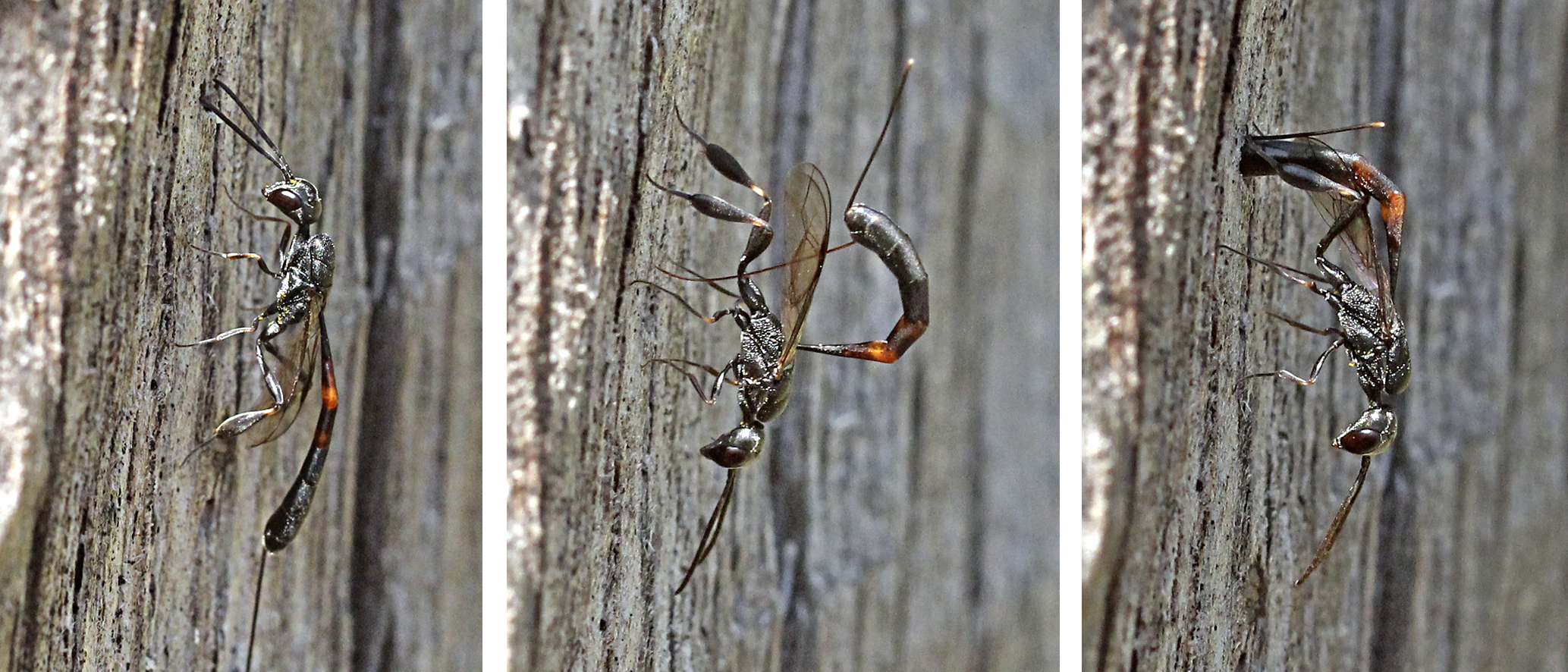
Gasteruption jaculator checking bee hole,

Gasteruption jaculator checking bee nest, preparing, and oviposting

Also living in the tower block is the tiny mason wasp Microdynerus exilis which is new to Warwick Gardens. She is nesting higher up the block. I am excited to find this wasp as it is a Notable B species and thus uncommon, only found in the south of England. I first saw one wrapped around the stamens of a buttercup in early June, so it is good to see it nesting in the park.

Microdynerus exilis

Microdynerus exilis

The penthouse is occupied by the wool-carder bee, Anthidium manicatum, one of our largest solitary bees. At the moment they are busy feeding on the black horehound, with a characteristic darting flight pattern – the males are fiercely terrirtorial, defending their territory vigorously against other males and insects and will fly at intruders to move them on. Nests are constructed in existing aerial cavities like beetle holes. Our bees are nesting in the top crevice of the totem pole with nests made of the shaved hairs of plant stems.

Wool-carder bee

Wool-carder bee

All is good in this high rise block of hymenoptera and its great to sit and watch all the comings and goings. Though lurking in the shadows are the dark things… the walnut orb spider sits and waits for the moment a bee flies into its web. Just like a moody landlord waiting for the day you can’t pay the rent…

Walnut orb spider

Walnut orb spider

Tortoise beetles, bugs and butterflies

Its been a while since my last post and Warwick Gardens has burst into life. It seems the warm winter and the recent hot weather has allowed certain species to flourish. The new edible hedge is doing well with the first fruit being a fine crop of fat gooseberries, the thistles are back with a vengeance and a new patch of black horehound has sprung up. The insect life is certainly abundant with record numbers of bees, beetles, bugs and butterflies. There have been new sightings of red-headed cardinal beetles, the plant bug Leptopterna ferrugata, bordered shield bug and a tiny wasp which i am trying to get an ID for… But this post is about all things tortoise!

Tortoise beetle and larva

Tortoise beetle and larva

The Green tortoise beetle is what I would call a paranoid beetle in the way it has equipped itself to avoid detection. I usually find them face down tucked between the thistle leaves but this year they have decided to hang out on the Lesser burdock. The vast leaves of this plant are a playground for these beetles – I have never seen them so active! Running across the leaves, flying, mating and, of course, when you approach them they behave just like tortoises, pulling their antennae and feet in and pulling their ‘shell’ tight down around them. They really blend into the green background, making them difficult to spot. The larvae are equally careful about being detected: these little spiky beings carry their poo on their backs!

Tortoise shield bugs

Tortoise shield bugs

Another new sighting in the park has been the Tortoise shield bug. I have been really pleased to find these as they have been on my ‘wish list’ for a while. I spotted the first one amongst the comfrey bushes when I was photographing flower bees. Since then I have found five. They seem to differ in colouration – from a rather dull brown to wonderful pink/brown mottled ‘tortoise’ markings. They have been mating so the next challenge is to find the nymphs. I will keep you posted!

Tortoiseshell butterfly caterpillar and adult

Tortoiseshell butterfly caterpillar and adult

Our best known British butterfly has to be the beautiful Tortoiseshell butterfly. One of the first butterflies out in the spring, they are the denizens of urban gardens. Their bright orange tortoiseshell markings really brighten up the day. This year they have been in abundance in Warwick Gardens, with a fine showing of caterpillars on the nettles.