Larval Populism and the collapse of civic habitats

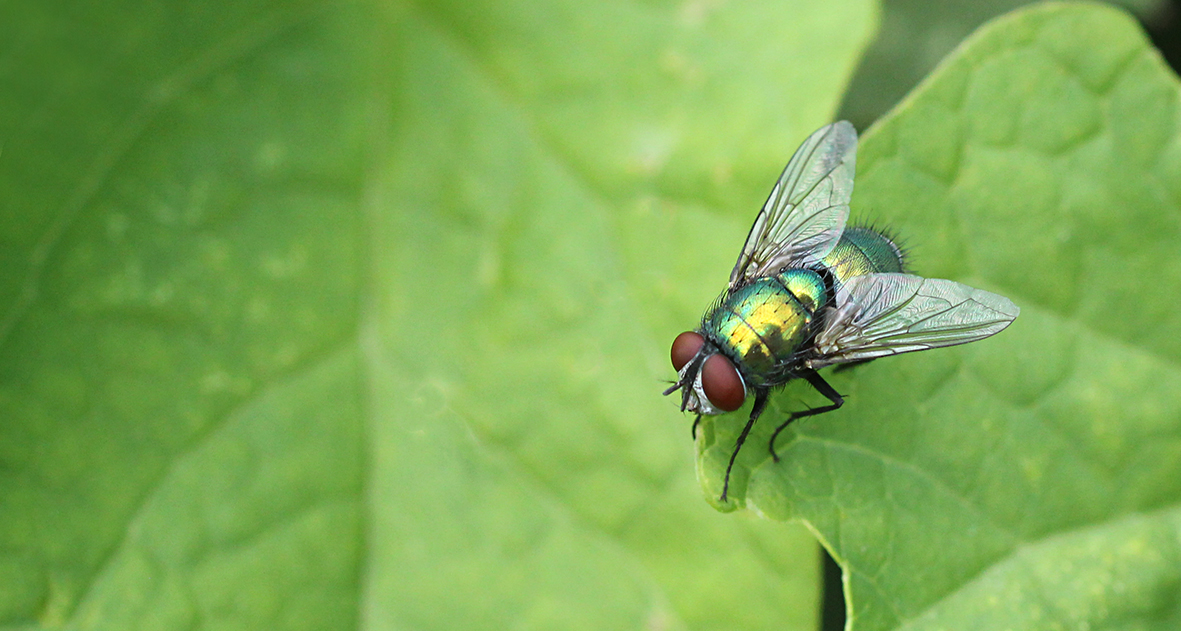
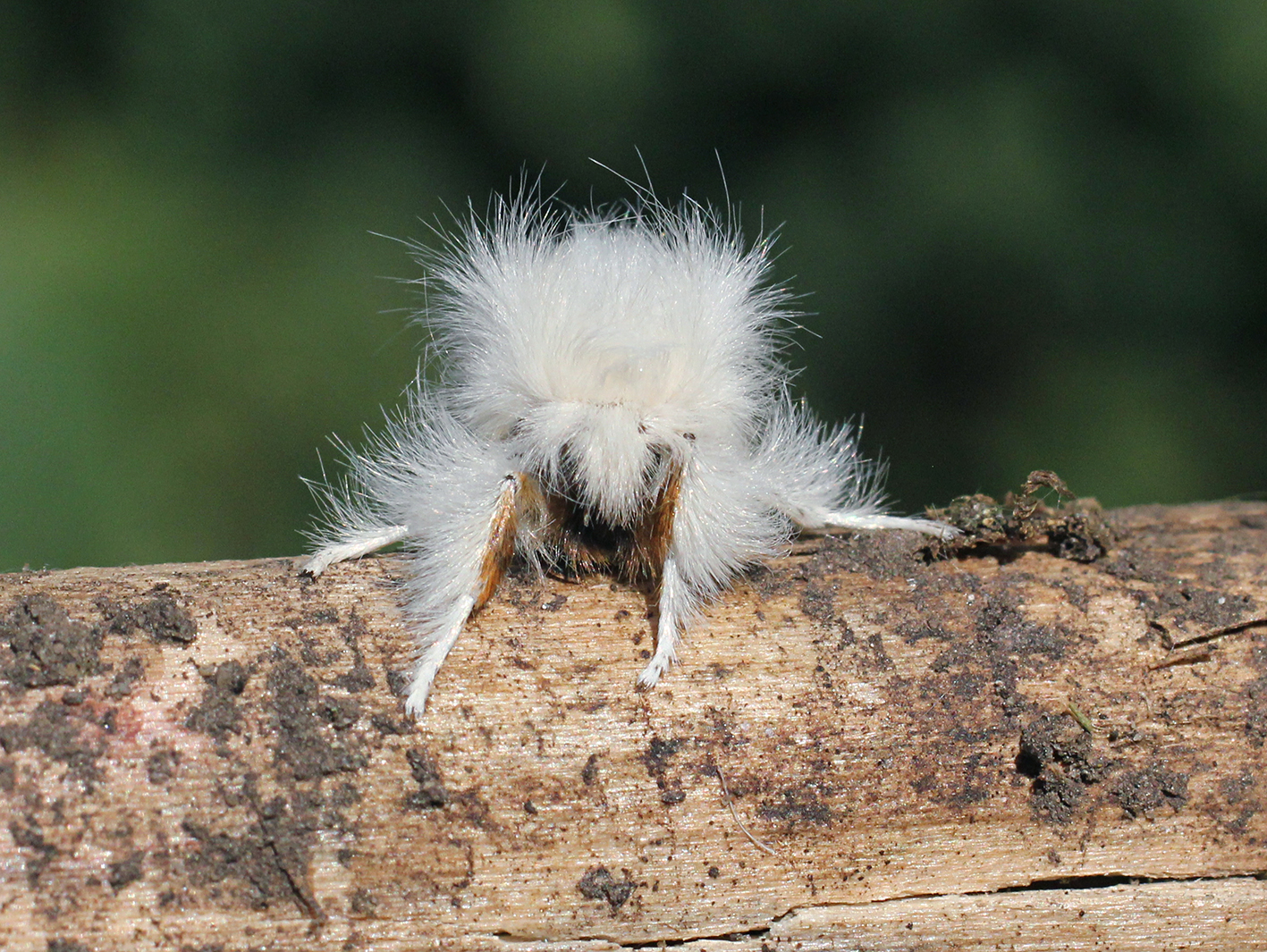
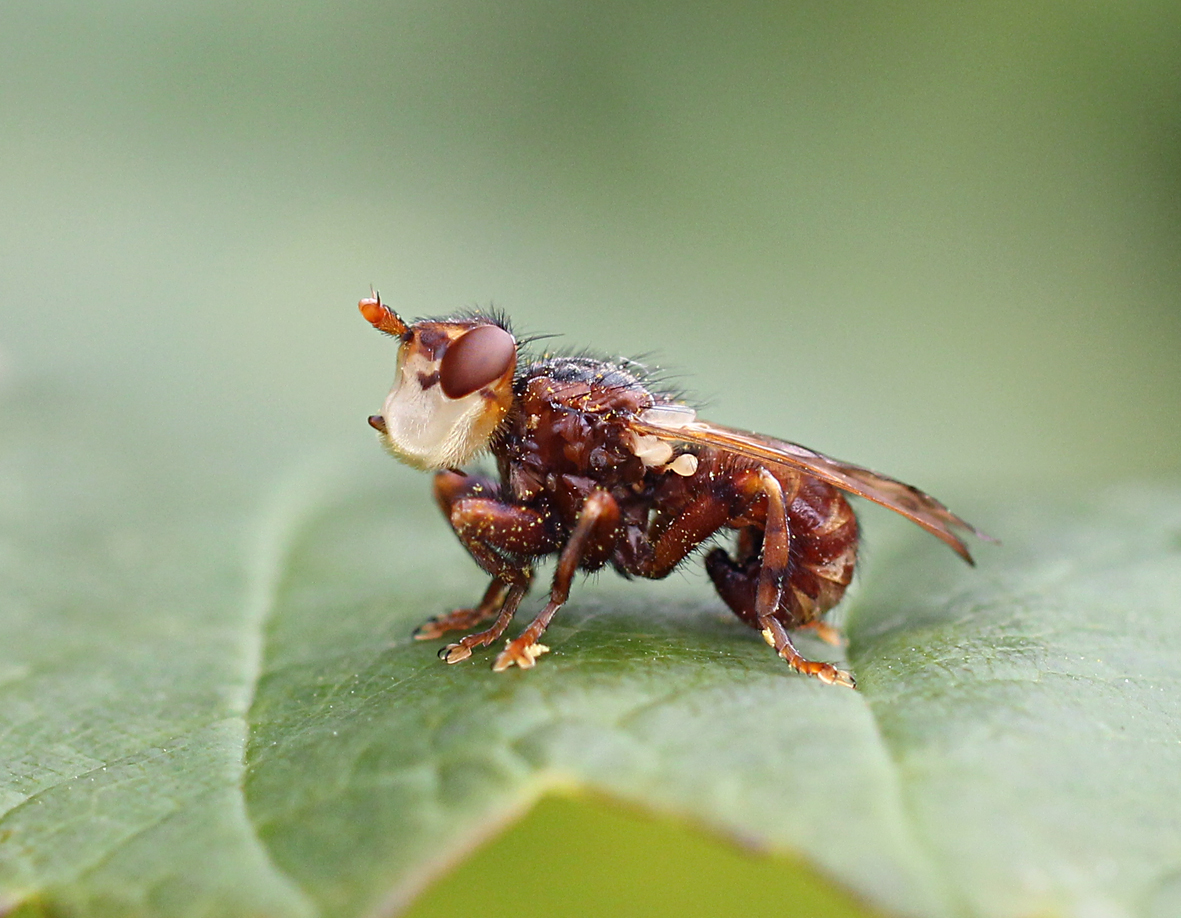
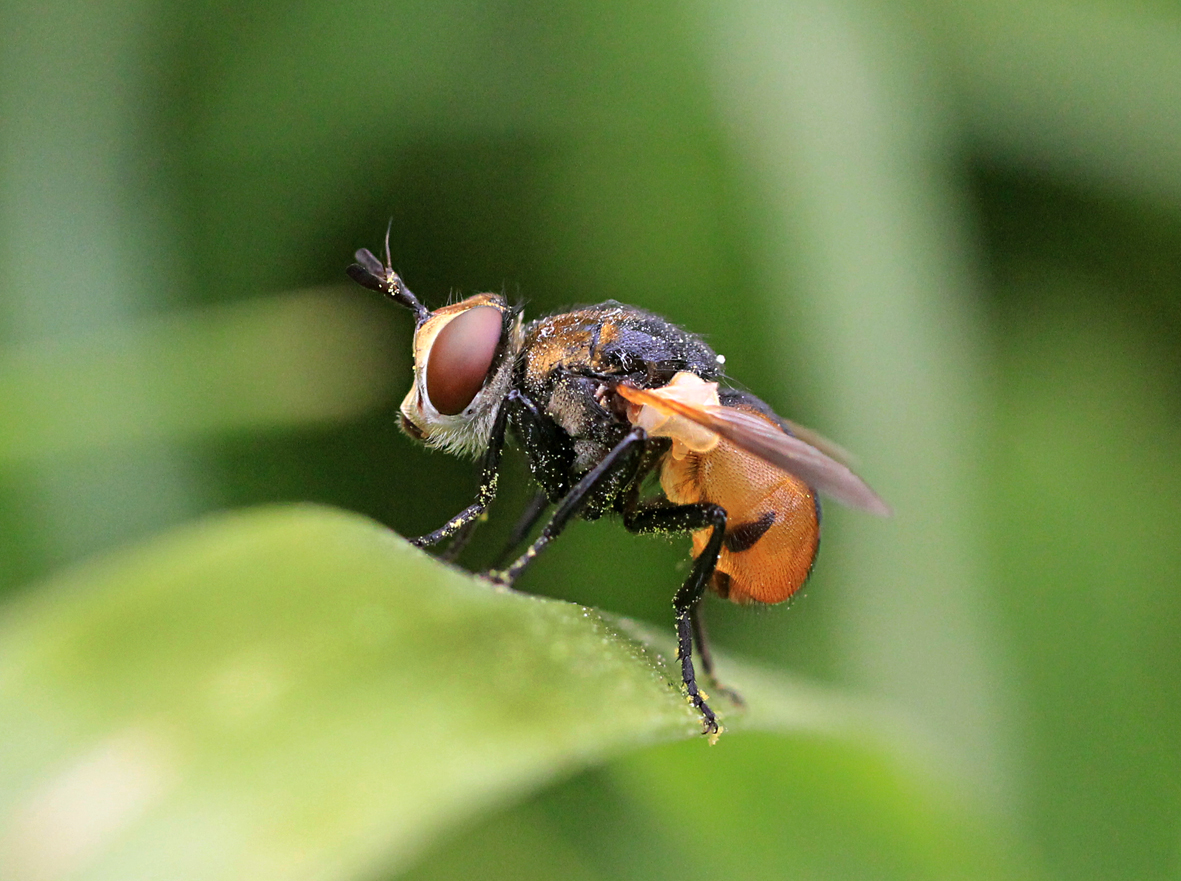
Bluebottle Faragius fauxpatriotus, the airborne charlatan

Ecologists observing orchard life have found that, no matter how complex or diverse insect communities are, they can only thrive in civic habitats where everyone contributes. Bees run the pollen economy, ants oversee infrastructural corridors, and wasps keep a vigilant eye on law and order. Beetle larvae turn rotting wood into communal mulch – the orchard’s tax base – which ensures nourishment for all. And, of course, everyone contributes their nutrient levies. Earthworms are the quiet municipal engineers, tunnelling unseen to aerate and redistribute nutrients; their work is the invisible groundwork, funded by these contributions. These enduring arrangements have long sustained the orchard’s common wealth.

Yet in recent seasons, a disruptive ideology has wriggled out of the compost heap: larval populism. Glorifying rot while denouncing evolution, it promises power to the soft-bodied masses by rejecting the very metamorphosis that sustains the orchard.

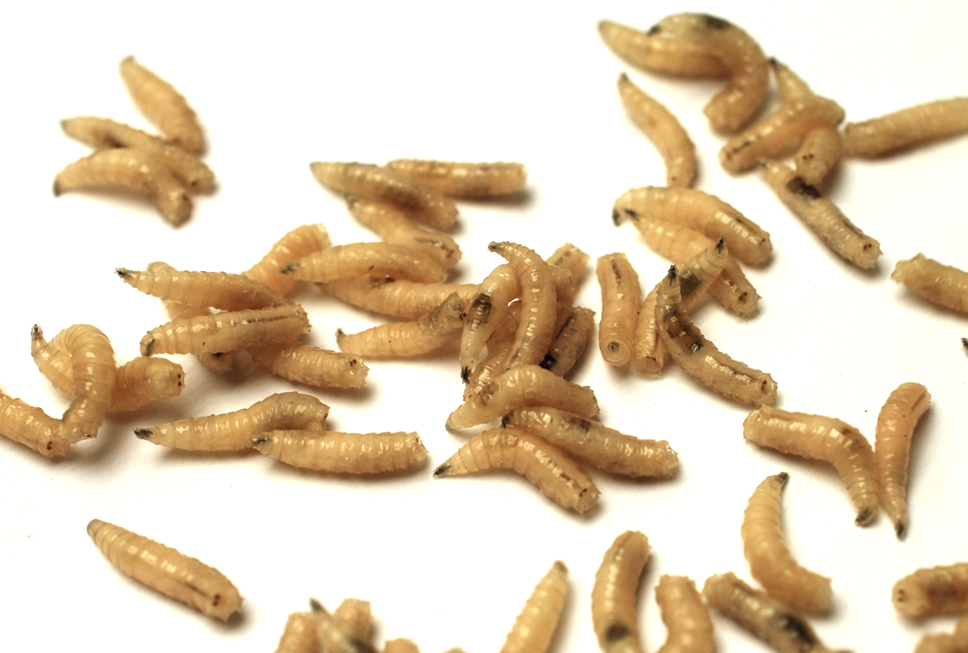
The foremost advocate of this is the grifting Compost MP Faragius fauxpatriotus, a maggot of unimpressive stature. His talent lies not in serving his constituents but in peddling slogans like “The Orchard is Broken” from a pile of decomposing plums. Faragius proclaims larvae to be the native born heirs to the orchard, casting any insect with wings as the enemies of the writhing classes. He denounces the ants as joyless technocrats, the bees as buzzing bureaucrats, and the dragonflies as aerial snobs who “Couldn’t possibly understand the wriggling classes.” “Wriggling is freedom,” he insists, sniggering at their immaturity, while dodging questions about offshore fruit-hoarding and nectar laundering.

Central to Faragius’s rhetoric is the claim that larval voices are being silenced by left-winged elites. He insists that freedom of speech is curtailed by any creature capable of flight, declaring them an existential threat to discourse in the orchard. Every butterfly becomes a symbol of censorship, every drone of a wasp patrol heralds the suppression of maggot opinion, and every shadow of a bird is interpreted as proof of a winged ‘leftie’ plotting against the writhing masses. At the same time, any sign of scrutiny – whether a buzz, chirrup, or tweet – is swiftly silenced. Larvae are urged to wriggle in solidarity, to reject democracy or see their rights as the soil-bound majority – absurdly cast as an oppressed underclass – being squashed.

Meanwhile, as ordinary larvae dutifully pay their compost taxes, Faragius slips his nectar donations through snail-shell companies beyond the reach of orchard auditors. He rails against the bees’ pollen tariffs – the very levies that pollinate the orchard – recasting the simplest civic duty as tyranny. All the while, he fiddles the system, hoarding surplus plums and starving the mulch fund that keeps the soil alive.

A movement of maggots, mistaking decay for destiny

What his anti-wing hyperbole fails to mention is one simple biological fact: larvae are meant to metamorphose. Reform is the very meaning of metamorphosis. Yet larval populism glorifies permanent immaturity. It nurtures extreme nationalism built on simplistic soundbites perpetuated by algorithms, and fake patriotism to a pile of rotting fruit in a biodiverse orchard. By persuading his maggot base to resist change, Faragius denies them the opportunity of social mobility – the chance to spread their wings. In mobilising them to dismantle their own civic habitats, he invites ruin: ant hills will crumble, nectar networks will falter, disorder will spread, and the orchard will collapse in ideological chaos.

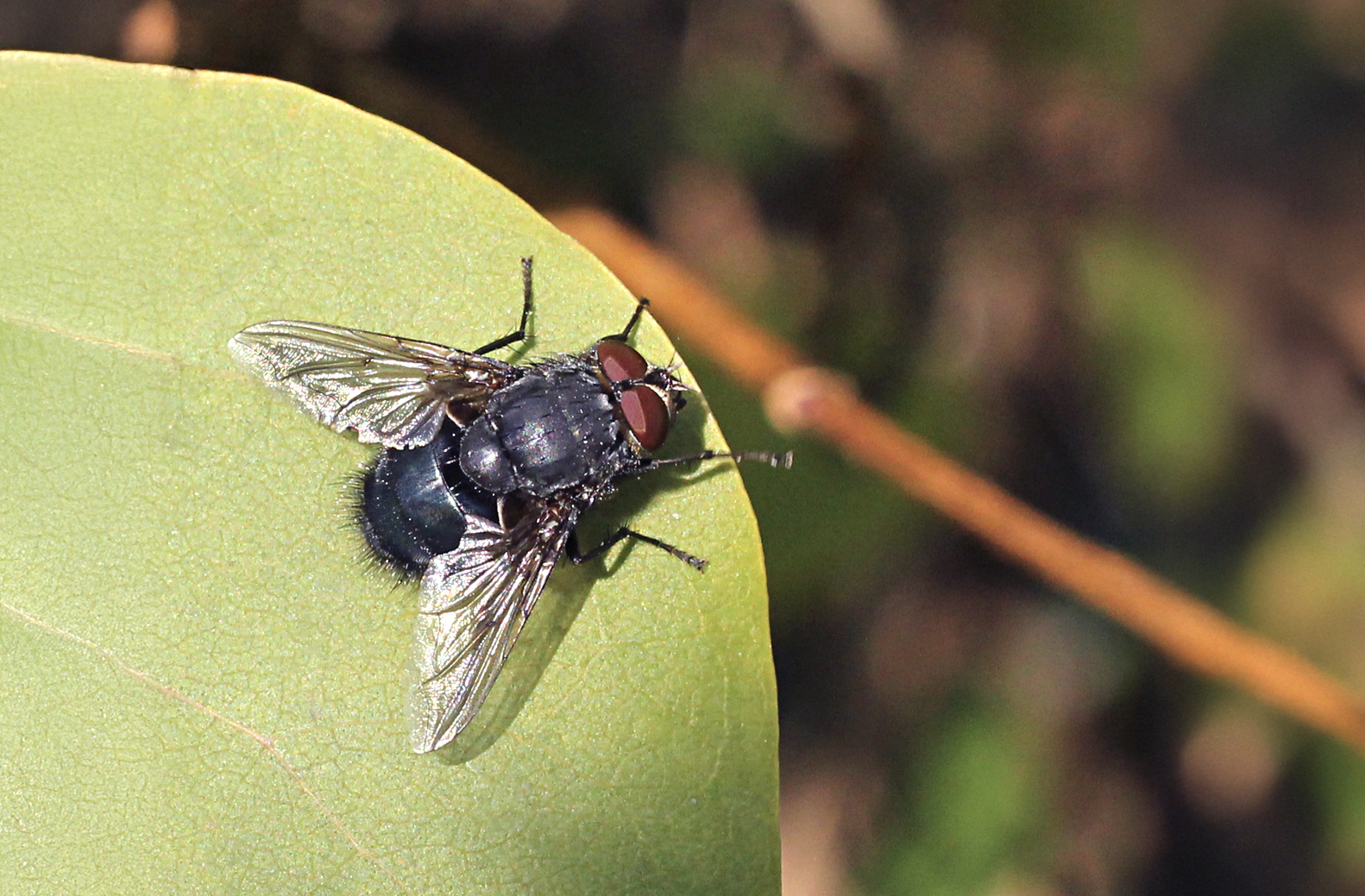
The irony is inescapable. Faragius fauxpatriotus will pupate, but not into the butterfly of vision he so desperately dreams of. He will emerge as a common blow fly – buzzing frantically against windows, mistaking invisible barriers for conspiracies, and still dogged by nectar debts and phoney “consulting services”. Reform UK Ltd exposes the absurdity of larval populism: a flag-waving maggot-led mob, blind to how the orchard actually works, doomed to watch its leader’s pitiful metamorphosis into the airborne charlatan he really is.

Truss the PopCon gnat

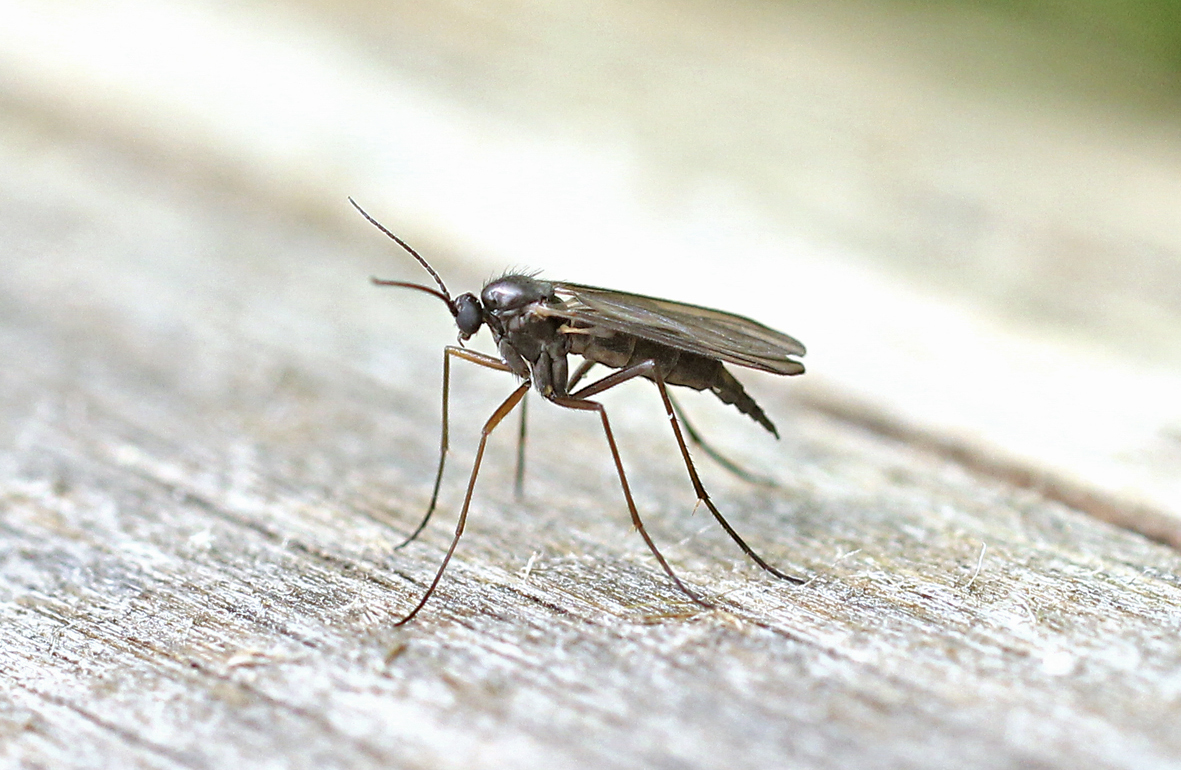
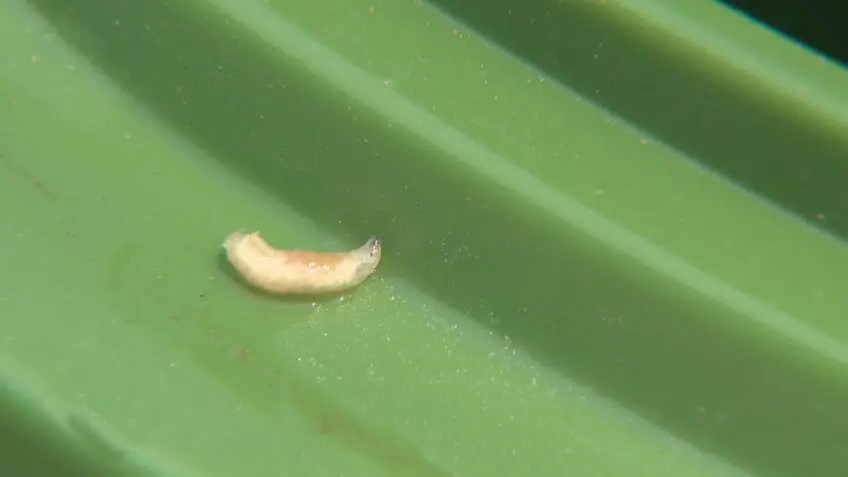
The flies are beginning to emerge from the wheelie bin in Lydd. One overly ambitious fungus gnat, named The Truss, is already waiting on the far right of the lid to spout her hate to anyone who happens to be flying by. Those maggots yet to metamorphose continue to feast within the bin, their appetites undeterred by The Truss’s antics. Among the remnants of discarded waste, they have found sustenance in a lettuce, the wilting vegetable that had outlasted her short 49-day tenure as Prime Minister.

Drawing inspiration from her hero, Maggot Thatcher, The Truss meticulously cultivates an image reminiscent of the former Prime Minister, from her demeanour to posing for photographs atop various unsavoury heaps, be it landfill sites or compost bins or the grass verges where people walk their dogs. Though diminutive in stature, her presence exudes an aura of insignificance, a testament to her desperate pursuit of influence.

Beneath this faux facade of power and prestige, The Truss remains an abhorrent figure to the worms entrenched in the compost below. They bear the scars of her past economic policies, which left them destitute when their compost bins were emptied in the name of progress. As she resurfaces with renewed ambition, they squirm angrily, questioning why she wasn’t squashed for the havoc she wreaked upon their livelihoods.

Her aspirations seem limitless as she aims to spread her messages of animosity far and wide. Known for her penchant for posturing and her apparent belief that soundbites could substitute for sound economic policy, The Truss has rebranded herself as a PopCon, taking a swipe at anyone who doesn’t see the world through her very narrow compound eyes. Her delusions of grandeur knew no bounds when she ventured across the pond to hobnob with the likes of Nigel Fraaage and Donald Dump, to complain her tenure as Prime Minister was “sabotaged” by the “administrative state and the deep state,” “wokenomics”, and boldly announcing that environmentalists are the new Communists… On and on she trilled, much to the bewilderment of the moderate observers of the ecosystem who see her as a fly in the ointment for democracy.

As she incessantly flutters about in a frenzy of self-importance, the only ones genuinely captivated are the few insects who inhabit her realm, who will hopefully be swatted into oblivion at the next election.

A moth’s identity crisis

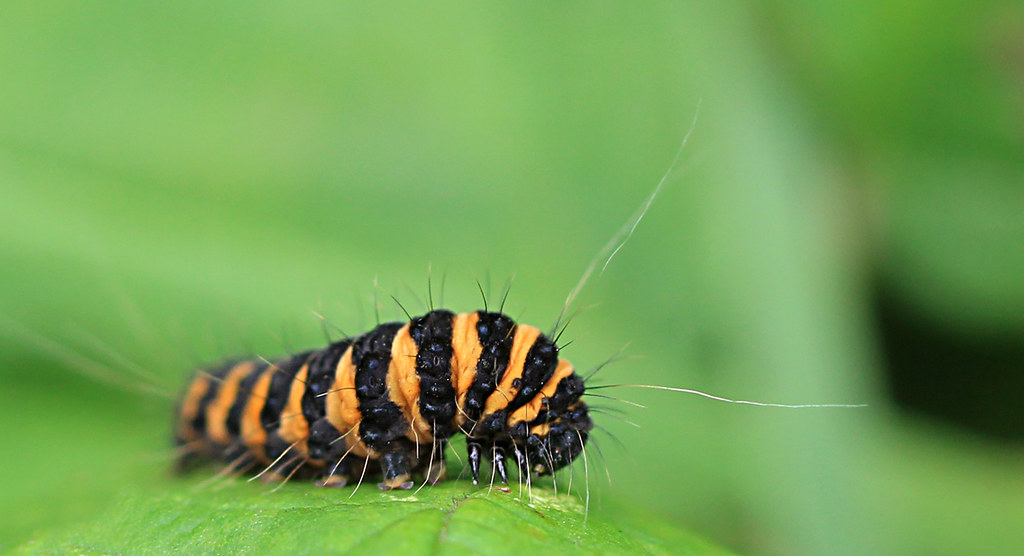
Once upon a time, in a lush, leafy meadow in the suburbs, lived a little moth caterpillar named Cinnabar. They/them were not your average caterpillar; Cinnabar was a vibrant and flamboyant creature with a flair for fashion that set them apart from their fuzzy companions, and they had dreams of one day transforming into a magnificent butterfly, ready to spread their colourful wings and dazzle the world.

One sunny day, Cinnabar was munching on a ragwort leaf and daydreaming about their future metamorphosis. The air was abuzz with the banter of butterflies nearby, chatting away about the latest trends in wing patterns and regaling each other with tales of their glamorous escapades in the meadow. Cinnabar, being an ambitious caterpillar, joined the conversation to share their excitement about deciding to become a butterfly when they grew up. However, the butterflies didn’t seem to pay much attention. They were too busy flittering about, discussing the most fashionable nectar spots.

Feeling a bit dejected, Cinnabar tried to assert themselves, exclaiming, “I can’t wait to join you all as a stunning butterfly!” The butterflies glanced at the caterpillar with puzzled looks and exchanged hushed whispers, wondering what on earth she was talking about and fumbling over the correct pronoun that put them in danger of being cancelled. One of them finally spoke up, “You must be confused. Butterflies are born with elegance and grace and wings that fold vertically up over our backs. You, on the other hand, will just be a moth“.

Cinnabar was taken aback. They had always believed that they could be anything they wanted to be, and they wanted to become the 60th UK butterfly and take their place in Britain’s Butterflies.

They decided to take their request to the Caterpillar Council. “I want to identify as a butterfly”, they exclaimed, unfurling a wish list of colourful upright wings and a desire to flutter through the meadows during the day – a bold request for a creature still bound to a ragwort plant. The council, outraged, declared “that one does not simply choose what species they want to be. Tradition dictates you will follow the law of pupation”.

So Cinnabar started a rigorous campaign for the right to self-identification, sparking a whirlwind of debates. “Equality for all Larvae!” chanted a group of progressive caterpillars who believed in the fluidity of the pupal process. “Invertebrate values under attack!” proclaimed the Conservative Cocooners, who maintained that the status quo was the backbone – or the lack of one – of insect society. BuzzFeed and Insectgram were full of hashtags #MothorButterfly and #PupalRights. As Cinnabar’s story went viral, a caterpillar pundit asked, “Is it nature? Is it nurture? Should metamorphosis be a personal journey or a societal structuration?” And an old moth caterpillar suggested: “Wait until you’re an adult before deciding, otherwise all our caterpillars will want to be butterflies, or even sawflies or beetles!””

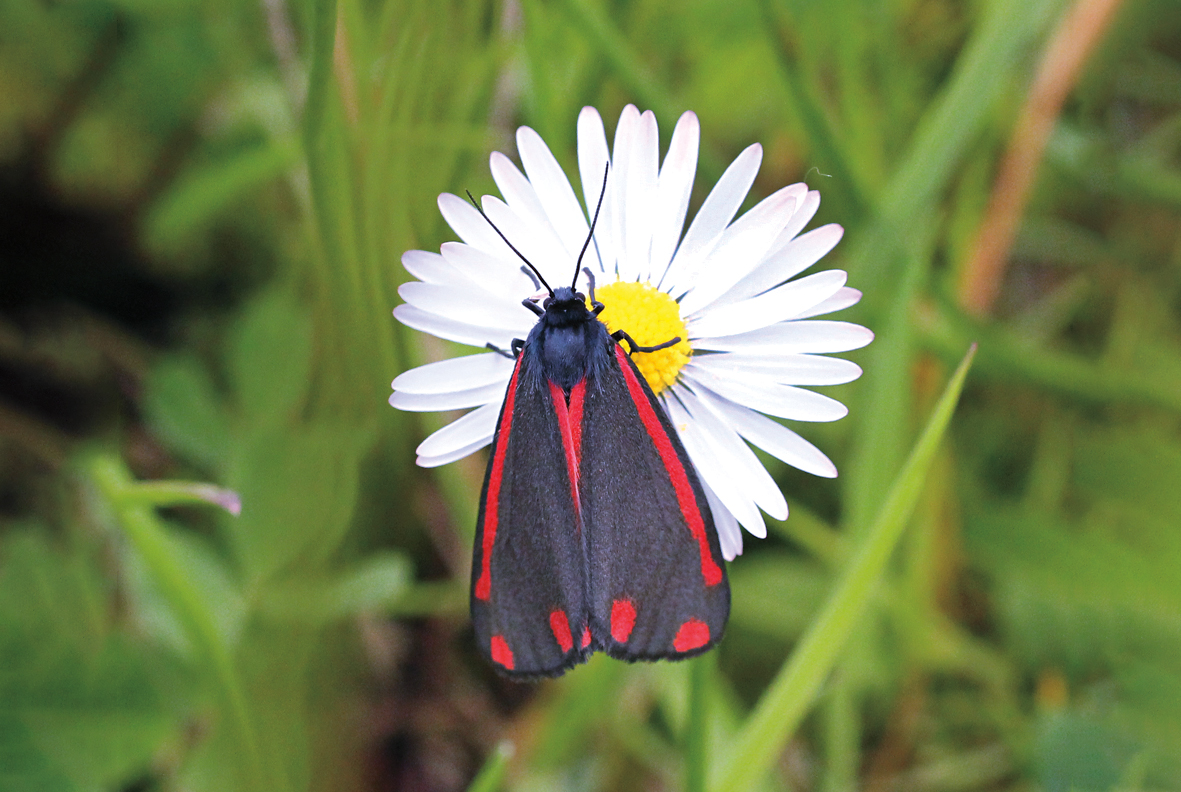
One day, Cinnabar finally felt a change within themself. Embracing the metamorphic journey, they cocooned themselves in the ground and began the process of transformation. When the moment arrived, Cinnabar emerged with wings painted in the most dazzling array of black and red the meadow had ever seen.

True to form, Cinnabar emerged as a moth… but felt like a butterfly. They hovered excitedly over to join the butterflies perching on a buddleia bush. To their dismay, the butterflies rejected them – they were miffed that such a hairy creature with wings, albeit rather attractive, that folded over their back, along with that graceless flight pattern, could even begin to think they could be a butterfly.

Devastated and deeply confused, Cinnabar retreated to a secluded daisy. They couldn’t understand why they weren’t allowed to identify as a butterfly. After all, they were colourful and flew during the day, whereas the usual perception was that moths were brown and fluttered around at night.

When they were at their lowest ebb, a Burnet moth glided over, looking just as dazzling as Cinnabar, with similar wings of spots instead of stripes. She talked to Cinnabar about the rainbow of anomalies in entomology, the vast spectrum of colours, shapes, and behaviours that defined the insect world. “Each species”, she explained, “has a unique story and purpose, contributing to the intricate web of life. There is no need to feel confused.” “Embrace your uniqueness,” she advised, “You don’t need to fit conventional norms”.

Then, the Burnet moth suggested that Cinnabar didn’t really need to identify as a butterfly as most people already think they are butterflies precisely because they are not brown and fly during the day. Instead, Cinnabar should embrace their true identity – that of a stunning moth. After all, there was already a safe space for them among Britain’s Day-Flying Moths

Political Wriggling

In a wheelie bin in Lydd, there lives a rather odd maggot named Nigel Fraaage. Nigel is no ordinary maggot; he has a penchant for wriggling into the most controversial places and stirring up a storm in the garbage heap of politics.

Nigel was born in the compost bin of conservatism, surrounded by the decaying remnants of outdated ideologies. From a young age, he showed an uncanny ability to thrive in the filthiest corners of political discourse. His ambition is as boundless as the landfill he calls home.

Nigel has a talent for convincing other maggots that the best way to address their problems is to blame it all on the bluebottles. “Those flies are taking away our opportunities to feast on the rubbish of our choice!” he exclaims, his maggoty followers nodding in agreement, utterly oblivious to their own inevitable transformation into flies.

Fraaage’s rise to prominence is fuelled by his ability to tap into the fears and insecurities of his fellow larvae. He promises them a utopia where they can freely devour whatever putrid thoughts they desire without interference from insects in the ‘Woke Brigade’. His rallying cry echos through the compost bin: “Let’s Make Garbage Great!”

His uncharismatic speeches are not without their share of controversies. He once claimed that the decline in compost quality was due to the influx of earthworms taking up space that rightfully belonged to maggots. He proposes sending the worms back to where they came from, conveniently omitting the fact that worms play a vital role in breaking down the compost and enriching the soil.

As Nigel gains popularity, he attracts a swarm of loyal supporters who hang on to his every wriggle. They proudly don “Reform the Compost Bin” t-shirts and wave Union Jacks adorned with slogans like “Maggots First.” They pretended not to see him eat a fellow maggot for a vast sum of money on his foray into the jungle on ‘I’m a Celebrity…’, proving just how insincere his feelings towards his supporters really are.

However, Nigel’s grand plans to rule the compost bin were thwarted when a group of enlightened woodlice exposed the flaws in his agenda and highlighted the importance of diversity in the ecosystem. The compost bin inhabitants, finally realising that blaming the flies or the worms was not the solution, turned their attention to creating a more inclusive and sustainable environment.

As Nigel wriggles back into the spotlight from where he came, leaving behind a cautionary tale about the dangers of following a maggot with a misguided agenda. But beware, as the climate heats up and the mountain of garbage grows ever bigger, the political wriggling will only become more pronounced.

COPOUT28


In the ludicrous oil-rich city of Dubai, where the towering skyscrapers touch the smog-filled sky, and the cacophony of honking horns and distant sirens fill the air, a rather unconventional protest is underway. In the midst of the grandiose COP28 conference, where world leaders gather, yet again, to discuss the fate of the planet, a swarm of insects have assembled outside Expo City, armed with tiny picket signs and a buzzing determination.

Led by the global insect union Hexapoda, they have rallied what is left of the invertebrate species from all corners of the globe – bees, flies, wasps, butterflies, beetles, and even a few rebellious crickets have either flown, scuttled or hopped in. Their demands are simple: an end to pesticide use, protection of natural habitats, and recognition of insect rights in international law. Their slogans, chanted in unison, are a high-pitched symphony of discontent.

Inside the conference halls, the atmosphere is filled with well-intentioned speeches and promises, each trying to outdo the other with pompous pledges and commitments. The delegates pay lip service to saving endangered species, and protecting ecosystems, blah, blah, blah, even though in the real world, forests are still being decimated, the urban sprawl is expanding, the air is thick with toxins and the dwindling water supply full of sewage.

Amidst closed-door negotiations, a different dance unfolds – one where haggling and bargaining takes centre stage, often prioritising short-term economic gains at the expense of the planet’s long-term health. Beneath the surface of global cooperation lies the subtle art of greenwashing, as self-interest masquerades as a genuine commitment to sustainable practices.

Hexapoda, fuelled by a mix of desperation and determination, decided to send a brave group of representatives to infiltrate the conference. A team of earwigs, dragonflies, and shield bugs embarked on their mission, crawling through the shadows to the main auditorium and onto the podium.

They begin by chirping their role as unsung heroes, vital to the global ecosystem – pollinators, waste decomposers, soil purifiers, and maintaining the delicate balance of nature – arguing that excluding them from the climate talks spells doom for the planet. But before they could finish, a giant hand swooped down and swatted the insects away. The conference attendees scarcely register the disruption, engrossed in annual discussions about carbon emissions, renewable energy, and cutting oil and gas that seldom materialise into action. The buzzing on the podium is dismissed as a minor annoyance, the insect protest relegated to insignificance. A real cop out.

Undeterred by the dismissive response, the insect delegation regroups outside Expo City. Hexapoda, resilient and united, comprehends the enormity of their uphill battle. The conference halls may have stifled their protests, but the struggle for insect rights and environmental justice persists. As night blankets the city, they press on, their tiny picket signs illuminated by fireflies – a persistent commitment to be seen and heard. The high-pitched humming reverberates through the streets of Dubai, drawing the gaze of curious onlookers and passersby.

In the face of relentless indifference, they hope that their unwavering buzz will one day permeate the corridors of power, sparking substantive change for the planet they call home.

Sycophants

In the bustling anthill of Torytopia, there lives a colony of industrious ants who are known far and wide for their exceptional talent in sycophancy. These are not your ordinary, hardworking ants; these are sycophant ants, experts in the fine art of crawling over each other to please their esteemed leaders.

Yellow meadow (sycoph)ants

At the moment, they are ruled by a small unelected ant, and his lackeys are more than willing to bend over backwards, or forward, or whatever direction he desires, to gain his favour. The colony is a well-oiled machine of adulation, where the highest form of achievement is not measured in the success of tunnel excavations, but in the ability to flatter and fawn over the leader.

One day, he decides to implement a new honeydew tax on aphid farmers, who are already struggling to make ends meet. The sycophants, eager to please, hail this decision as a stroke of genius as this will give them more resources to line the corridors of their anthill. They swarm out on to the media merry-go-round mimicking his support for the policy.

As expected, this announcement sends shockwaves through the chambers of the neighbouring anthill, a bustling red ant community that prides itself on progressive policies and an unwavering commitment to ant diversity. They are not about to stand silent as their hardworking aphid farmers are being taxed into oblivion. Antgela, the deputy leader who is always looking to Build a Better Anthill, questions the wisdom of such an oppressive tax regime. She recognises the aphid farmers as the “backbone of our colonies” and goes all out to protect them.

Soon enough, the red ant influencers are rallying support to #SaveOurSap on Antstagram, and sticking socialist posters on all the neighbourhood trees. At the same time, the sycophants are busy painting Redwall as an antnarchist swarm aiming to disrupt the corrupt life of Torytopia. They flood X with slick posts pleading “For a Brighter Future: Squash the Red Ants!” and even start a news network, “Formicidae Broadcasting Corporation” which, unsurprisingly, only broadcasts what Torytopia deems to be the truth.

In the midst of this sycophantic fervour, a lone ant named Antsy dares to question the narrative. Antsy, a free-thinker with a penchant for critical analysis, wonders aloud if maybe Redwall aren’t as bad as they are being led to believe. The sycophants, aghast at such heresy, immediately label Antsy a traitor and banish him from Torytopia. As he crawls away, he can’t help but chuckle at the absurdity of a society so obsessed with flattery that it can’t tolerate even the slightest hint of independent thought.

As for the sycophants, they go back to doing what they do best – crawling over each other to please whoever is in charge.

A political cockroach

In the stinking gutters of British politics, Prime Minister Fishi Sunak has embarked on a mission to prove that even the most unwanted pests can find a cosy home in the heart of government. In a move that left many scratching their heads (and some itching their skin), Fishi has demonstrated an unexpected flair for entomology, welcoming Cameron the Cockroach back into the political fold with open antennae, presumably to tap into the former leader’s unparalleled expertise in dodging accountability and surviving political disasters. It seems the phrase “you can’t kill a cockroach” now applies not only to nuclear fallout but also to political fallout.

A dead cockroach swarming with ants

As Lord Dave scuttles back into the limelight, you can’t help but marvel at the sheer audacity of it all. Often called the Teflon-coated Blattodea of British politics, he has proven that no scandal or mishap can keep him away from the intoxicating allure of power. It’s as if he never left: the EU Referendum, austerity, the Greensill scandal, and the infamous pig’s head incident were mere blips on his political career. Are we supposed to feel grateful for the opportunity to witness the second coming of a creature known for its uncanny ability to survive anything and everything, including its own questionable decisions?

But the appointment of Cameron could be seen as a nod to recycling, something that environmentalists might appreciate if only it weren’t applied to politicians. After all, why let a good prime ministerial career go to waste when you can reuse, reduce, and redeploy a Tory relic who has already proven his ability to weather scandals?

As we watch this farce unfold, we can’t help but wonder if it is a masterstroke of leadership or a laughable attempt at reviving a bygone era. In any case, we can rest assured that Dave is back and ready to cruise through another nuclear political winter. After all, who better to guide us through turbulent times than the insect who ineptly navigated the murky waters of the Brexit referendum and promptly abandoned ship?

Spare us!

So, the move to California for our errant honeybee Harry is not going so well. Adjusting to life outside of the Royal Hive has taken its toll. Not content with being a spare to the other males, he is droning on about not getting enough attention or support for his life outside the hive. Unable to make his own honey he has taken to selling his life story instead. He lifts the lid on life in the Hive, exposes all the family secrets and tells of his fights with the firstborn drone. He even claims to killing 25 Asian hornets, though that figure has been disputed as there have only been 23 reported sightings in the country since 2016. And we hear of his anger at the muted response to him falling love with a solitary bee and their planned life together as “world-dominating humanitarian superstars powered by her Hollywood glamour and his royal stature”*.

A honeybee caught by a crab spider

As for Meghan, she has been cutting in her remarks about the Royal Hive, not accepting that marrying into the lifestyle of another species was always going to be difficult. She went on television to regale tales of having to bow to the Queen Bee, of the worker bees buzzing around her making her cry, and revealing overheard conversations about speciesism and what her larvae would look like.

The other insects are unsympathetic. They are tired of the bees always hogging the limelight when it comes to saving the world through pollination; that publicity around the countless bee-related projects rarely mentions all the positive benefits of an inclusive, well-rounded insect community. Their demands for Levelling Up, or to at least be included in the literature and on posters, and the replacement of “bee” for “insect” are growing louder.

And what now for our two troubled bees? More books? Spare us! At the very most they will be remembered in history as a small blip in the centuries-old tradition of a bee hive. The late Queen Bee is dead. How the new King is going to rule over a matriarchal society is anyone’s guess, especially as support for hives has begun to wan.

* Tina Brown. The Observer, 17 January 2023

Hopping mad!

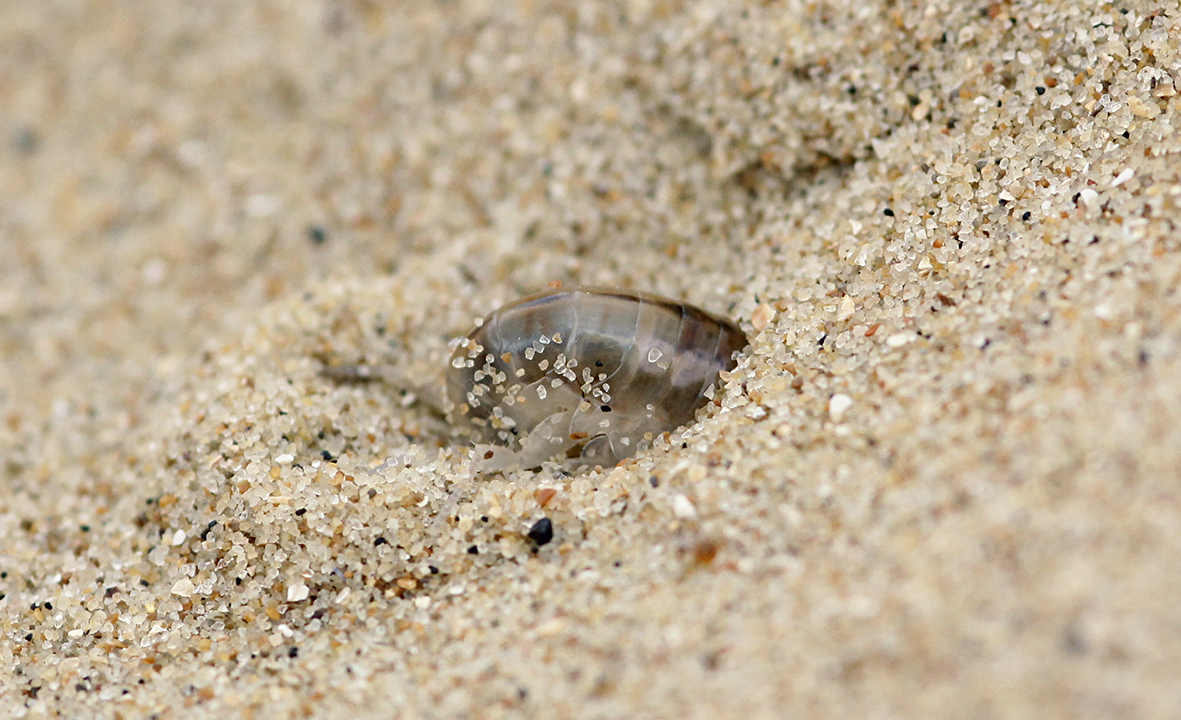
Sand hopper – Talitrus saltator

Oh dear, all is not well in Drowning Street. The moderate Conservative sand hopper MPs of Greatstone beach are hopping mad, trying to downplay the embarrassing mess the Prime Minister and his cabal has plunged them into. Swamped with tales of cronyism, corruption, and cover-ups none of this is going down well with the electorate. First it was the billions of pounds of public money wasted on a Track & Trace system that never worked, then the dodgy deals around PPE, followed by the Prime Minister demanding money to pay for the decorating of his ‘tip’ of a buckthorn bush high above the beach – fittingly he always looks like he’s been pulled through a hedge backwards.    

The latest controversy are the ‘parties’ held on the strandline during lockdown, when everyone else was tucked away obeying the rules. The government laughingly dismissed them as just ‘Wrack and Brine’ after work. A chance to ‘let their antennae down’, to ‘let off steam’. But now an old seamail has surfaced inviting 100 staff to a BYOB party. And it has exposed the party culture at Drowning Street, with the strandline coming alive at dusk when all the hoppers start jumping around drunk to a DJ in the shingle and leaving a big mess.   

Understandably, the other residents of the beach are seething. The cockles had spent months self-isolating in their shells, and the mussels, who usually congregate strung together, did their absolute best to social distance. Even the crabs, curbed by foreign travel restrictions, decided to hunker down this side of the Channel.

Currently the Prime Minister, oblivious to his own lies, is in hiding, flailing about garnering support for ‘Operation Save Big Dog’ and plotting his return by throwing a few colleagues under a boat.

Meanwhile, some of the beachbenchers whose constituencies are high up in the red wall dunes, are beginning to sweat. A safe Conservative seat in faraway North Shropshire was won by the Liberal Democrats in a recent by-election. Some are burying their heads in the sand hoping it will all wash over them. Others fear the tide is turning and they will all be swept away in a tsunami of more sleaze.

The vaccine bug

As seen in magazine A VOID Vol. 4 for Morbid Books

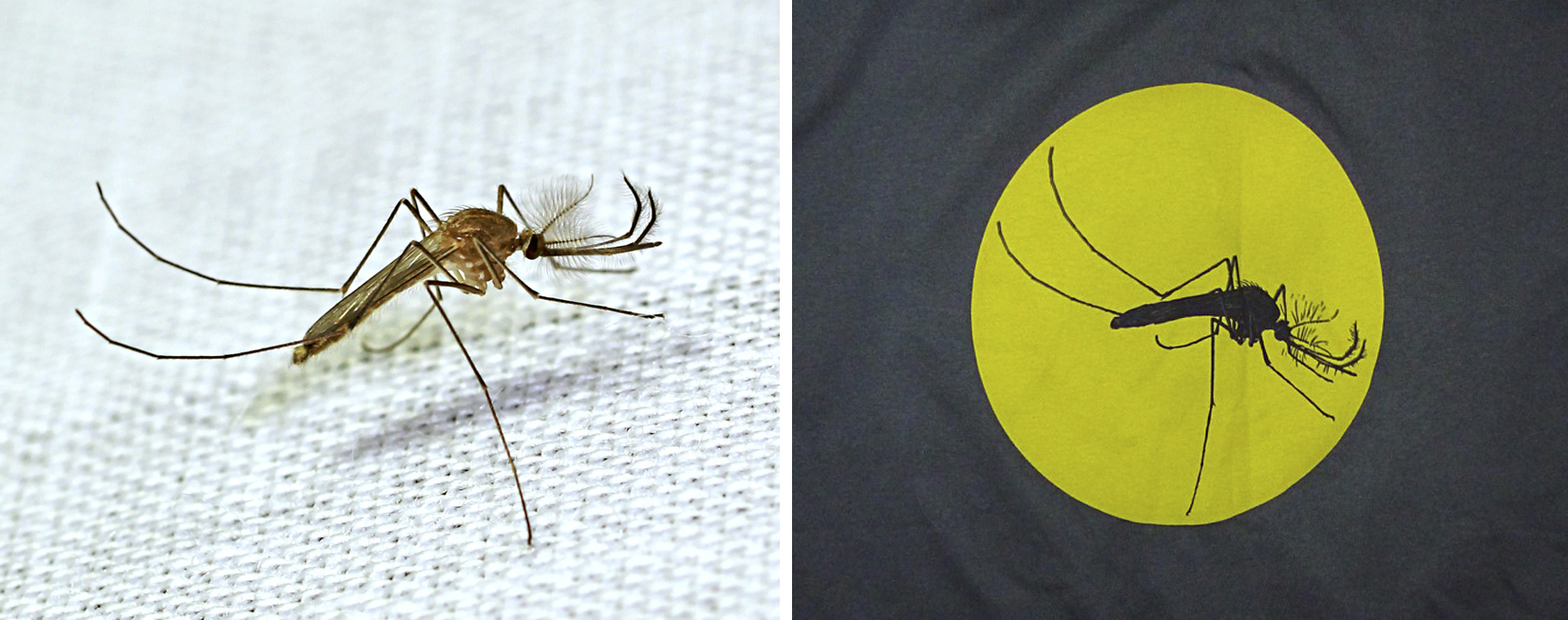
Mosquito

The mosquitoes of Peckham are feeling really miffed. At the start of the year, much fuss was made about the new COVID-19 vaccines, and a call was made for helpers in the vaccination rollout. The mosquitoes, still in larval form, got wind of this and started congregating in the ponds, pools, and puddles of Peckham. They were excited as by the time they emerged as adults, they were eligible to volunteer. Basically, they had the right equipment – a long proboscis acting as the thinnest of syringes, together with a light touch and the ability to jab you in unlikely places. And they didn’t need PPE or to sanitise their legs or wear masks; they even knew that a large proportion of them would die splattered against a bedroom wall. A real kamikaze attitude.

They applied and were instantly rejected. “Not enough experience”. Not enough experience? the mosquitoes whined in unison. After all, they were experts at spreading diseases – malaria, dengue fever, Zika virus, yellow fever, West Nile virus – why not just load up with the vaccine and inject people? Some even tried to volunteer for the vaccine trials, especially as a lot of their friends had already escaped the swamps and were being reared in sterile white laboratories. Admittedly they were being subjected to genetic modification for other uses, but hey-ho, it seemed a small sacrifice.

The mosquitoes felt it was time to rebrand themselves as the good guys – how marvellous it would feel to be held up as the heroes of the COVID-19 pandemic rather than one of the most hated insects on the planet. They talked about saving the NHS millions of pounds, calculating if they all pulled together, they could inject a whole country in a week given the right muggy conditions. They even had perverse ideas about how to dupe the anti-vaxxers by convincing them the swollen itchy needle hole in their arm is ‘just a mosquito bite’. Obviously, they would have to get around DDT and other nasty mosquito repellents or flying too close to citronella candles, and those pesky nets are an obstacle. Nevertheless, they were experts at surreptitiously crawling up inside someone’s trousers or under a t-shirt, though they would have to quell their annoying whiny buzzing so as not to be squashed. But in their tiny minds, it could be done…

Stripes are in Vogue

As featured in the latest issue of BQ magazine

Its early October and the insects of Warwick Gardens are so excited – it’s time for the annual Autumn Fete. The grasshoppers are fat and fully grown and the mottled shield bugs are finally adults after several moults, whilst the Roesel’s bush-crickets, whose love songs kept up the spirits of Summer, can barely wheeze after weeks of wooing. The long grass is faded and falling over and the blackberries have been picked. Thankfully the green alkanet, a Trojan of the plant world, is still opening its blue flowers to everyone. It is time for one last party before the winter sets in. And as usual the Fete will be held at the most popular bar in the park – the Ivy Bush – currently in full flower and offering free nectar and pollen on tap.

This year there is a fashion show for the pollinators and the theme is stripes. There is a real buzz in the bush as the designers step up onto the stage.

Lesser hornet hoverfly – Volucella inanis

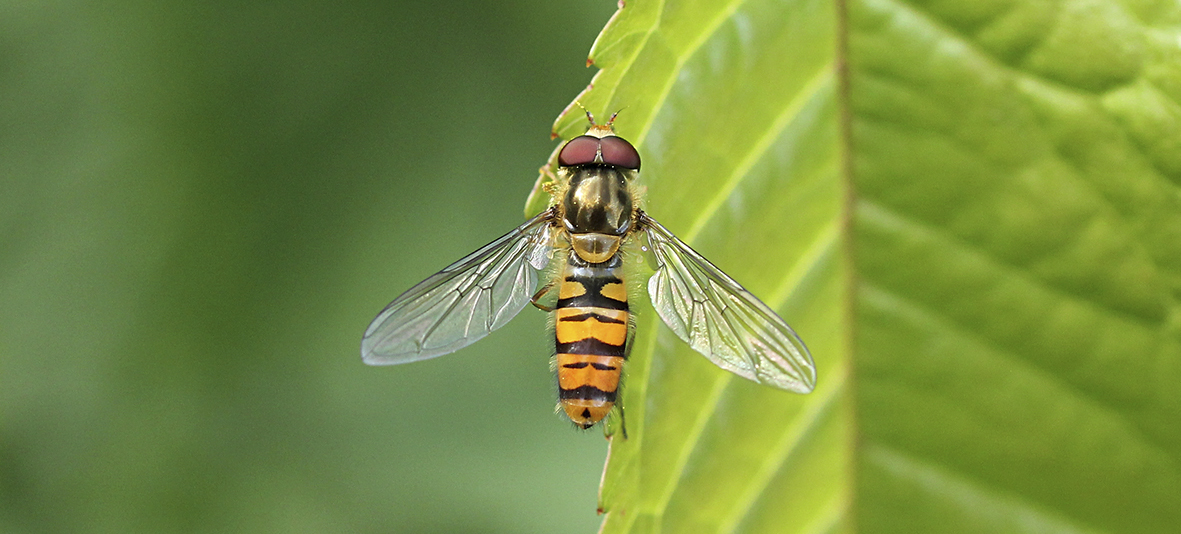
First up are Diptera & Gabbana presenting their new ‘Bella Volucella’ plus-sized range. The lesser hornet hoverfly showed off an elegant bodycon frock in light orange and black striped suede with a shiny black and chestnut patterned collar. Everyone loved their creation and applauded the designers for their inclusivity.

German wasp – Vespula germanica

Next up is Vivienne Waspwood waving a placard shouting ‘God Save the Pollinators’. Having spent years dressing the individualistic ichneumon wasps in her retro punk black leather-look catsuits she finally had a chance to bring in some colour and produce a uniform for the social wasps: black and daffodil yellow stripes with a few dots and a scanty black hairy ruff. Everyone cheered except for the tiny flies who flew away in fear of being eaten.

Ivy bee – Colletes hederae

Ivy Saint Laurent chose to dress the ivy bee. A sleek black and beige striped pencil skirt with a massive furry stole in rich caramel. The other insects oohed and aah’d at the sheer beauty of her, as they had only seen her a couple of times since she arrived from France a few years ago. The stylish design was one step up from the honey bee deemed rather dull at last years’ show.

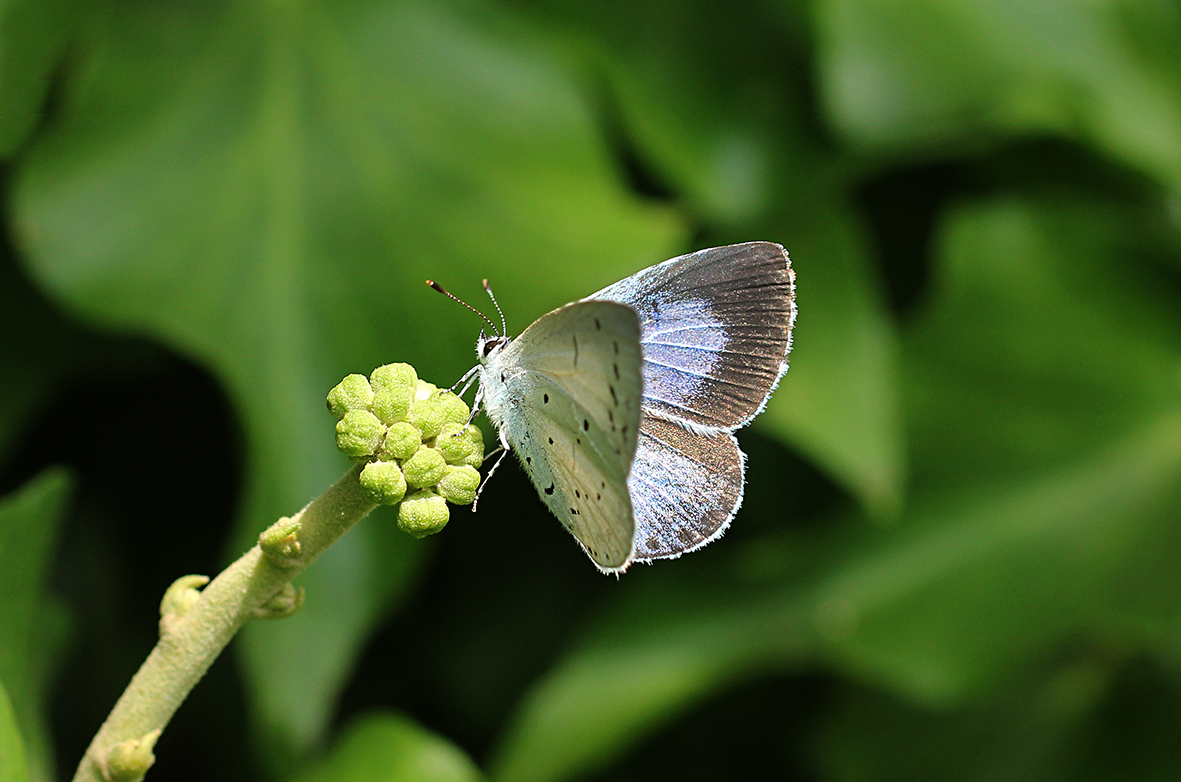
Holly blue – Celastrina argiolus

Then Galliano rocked up with a butterfly. He hadn’t read the brief and presented a holly blue. Not a stripe in sight, but a thin white border around the lustrous blue ombre wings. To the audience this was a breath of fresh air – the stripes were getting confusing and all too similar.

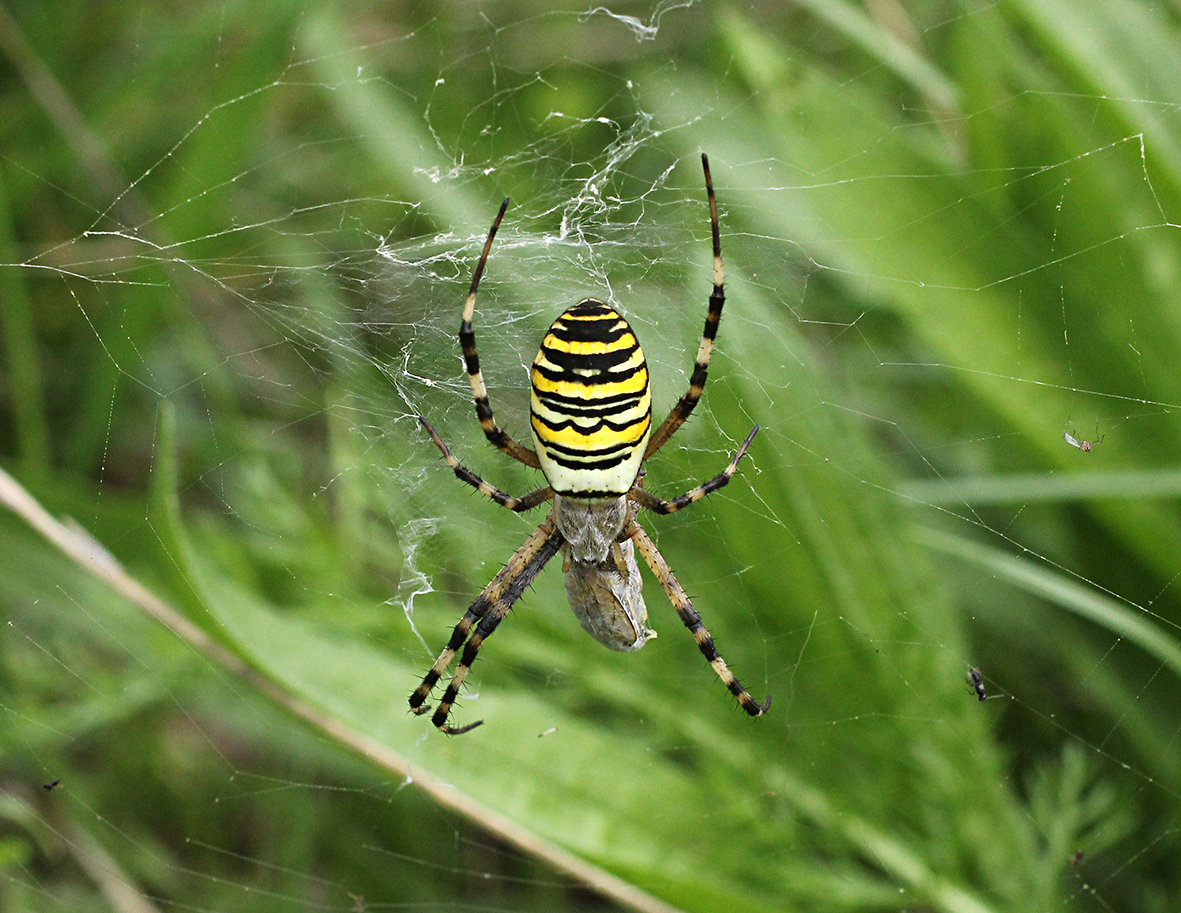
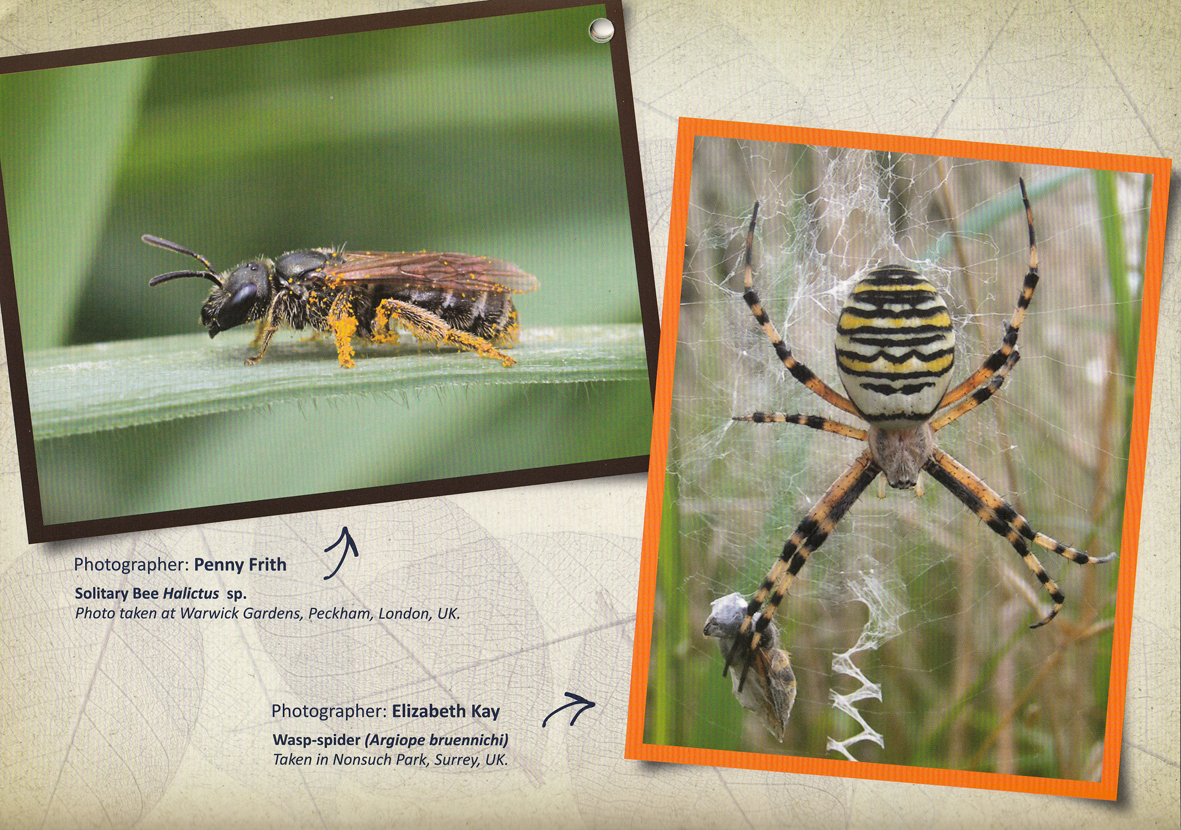
Wasp spider – Argiope bruennichi

Meanwhile down amongst the grasses is the circus of wasp spiders who have been dressed by Gaultier, flamboyant in cream and lemon yellow stripes outlined in black. They have spent the night spinning their famously chaotic webs with its striking zig-zag pattern ready for the classic game of Catch The Grasshopper. As for the grasshoppers they are enjoying outwitting the spiders with spectacular leaps and bounds over the webs, though occasionally one mis-steps and gets quickly pounced on and wrapped up in silk.

It was a day to remember. And now to look forward to spring.

To fly or not to fly

Greenbottle – Lucilia caesar

The flies of Warwick Gardens are really perplexed by the latest government rules for flying. On the one hand their need to fly relates to work (pollinating and cleaning) but it seems they can’t fly off to meet friends in another part of the park. There is a red, amber and green traffic light system in place which offers a confusing list of where you are allowed to fly or not to fly.

It means the greenbottles in Poo Corner need to sanitise their feet of dog shit and get tested before they can go to the Log Quarter, but they also need to take a test to fly a few metres to the Railway Quarter despite the fact that part of the park is also full of dog shit. Even if they wanted to fly to the Log Quarter they will have to self-isolate on a leaf for 10 days, by which time their life-span will probably be over. The Football Quarter is an amber destination where you can only go ‘for some pressing family or urgent business reason’ but you will need to take two tests and quarantine, and most flies can’t be bothered as they know they will be eaten if they sit around in the same place for too long.

Marmalade hoverfly – Episyrphus balteatus

The hoverflies can fly to Greendale, which is on the green list, but not Peckham Rye Park (red list). They can’t visit red-listed Burgess Park, but Hyde Park, a destination completely out of reach to the average Peckham fly, is on the green list. And a trip to Goose Green (green list) is hardly worth it as there are no flowers there. They are rightfully anxious as the economy depends on them for pollination, and having been furloughed all last year are in danger of dying out.

Common orange legionnaire – Beris vallata

Meanwhile, the soldier flies are being mobilised to survey the swathes of flies returning from amber parks, with the Home Secretary threatening ‘a knock on the door’ to check they’re all obeying the rules. But it might take a while as the soldier flies have yet to emerge, once again showing how incompetent this Government really is.

Colony collapse


Harry and Meghan

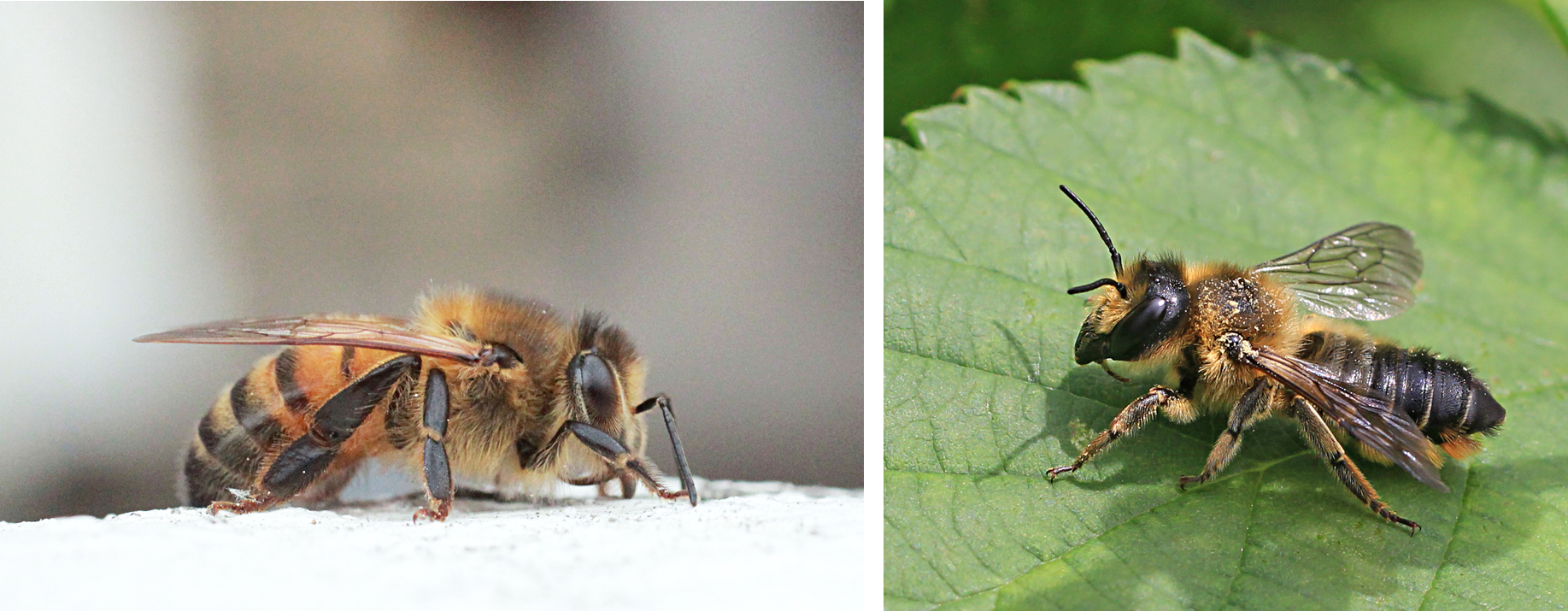
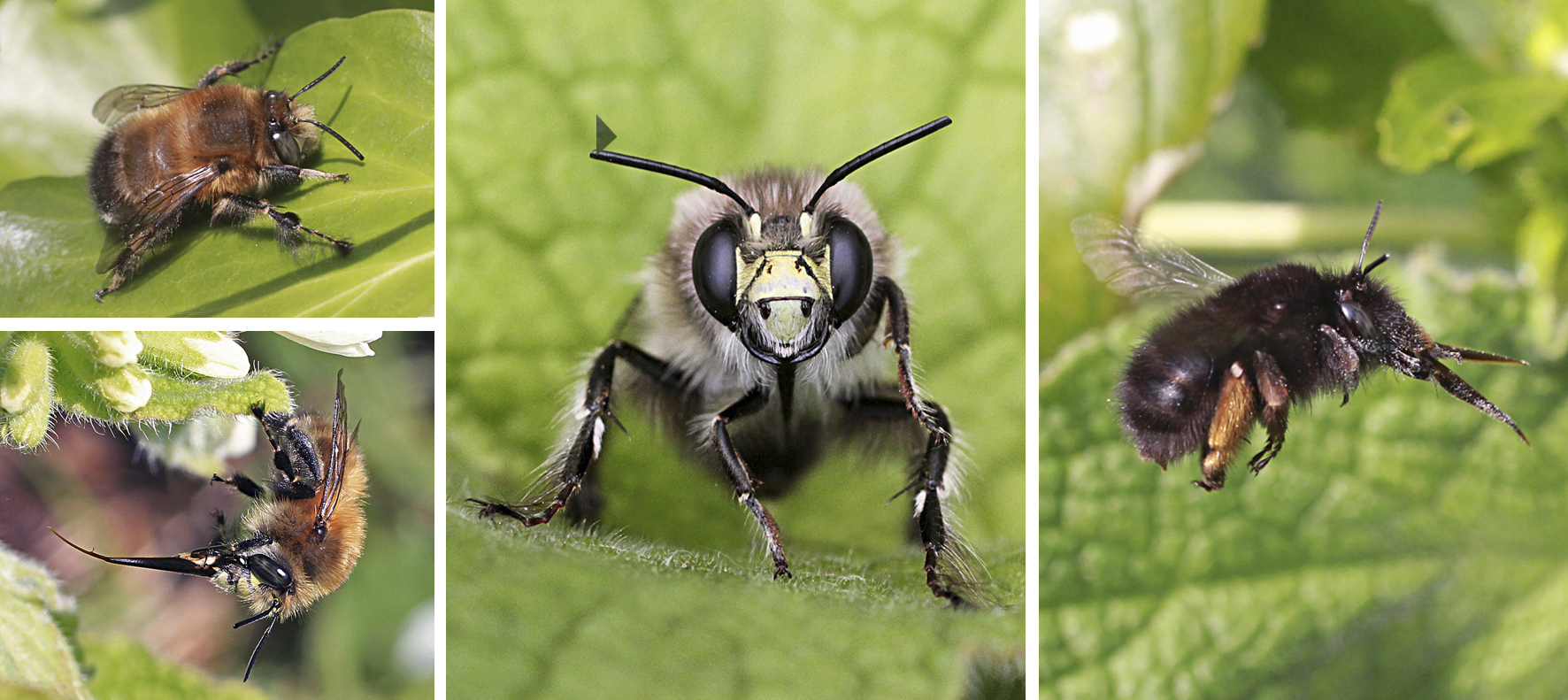
Harry the honeybee and Meghan the leaf-cutter bee

Oh dear, trouble is brewing in the Royal Hive.

It had all started so well. Harry the honeybee drone was born in the hive, living a life of luxury being fed larval jelly by the worker bees, his accident of birth requiring him to do nothing except produce an heir to the Queen, then die. Living in an echo chamber of etiquette was restrictive, spent obeying the hierarchy, with an occasional glimpse of the outside world whenever the hive was wrenched open and the honey collected. Admittedly he did spend some time defending the hive, but the lack of a sting meant his role was reduced to buzzing loudly from behind the frontline. Harry was lonely, feeling he could have a more fulfilling role in the outside world.

Then one day he met Meghan, a beautiful leaf-cutter bee. She led a life of independence, having carved out a career as an actress in a television series. She captivated Harry with stories of being able to buzz when she liked, of choosing to live in any hole she wanted, and of making her own honey. Meghan was strong and she had a global vision – the empowerment of solitary bees.

It was love at first sight and the insects in the park were excited that Harry had finally found happiness. They had memories of his mother being cast out from the hive, hounded by paparazzi flies and then swatted to death. But it hasn’t been easy for Harry and Meghan – they are constantly peered at and surveyed, photographed for reference and their movements tracked on national biodiversity recording websites. And it was hard for a solitary bee to adjust to living in a hive.

So they have decided to step back from senior hive duties and fly out on their own, issuing a self-indulgent statement on Insectgram and disappointing the Queen bee. They want to be financially independent of the honey-making machine, build a nest on the other side of the world, make sponsorship deals for their own brand of Royal Jelly and live a celebeety lifestyle as ‘influencers’.

A lot of the insects aren’t happy. The bees’ privilege of being voted the most important beings on earth has irked many who go about their vital work unrecognised. They are angry the Queen was disrespected, demanding the couple is stripped of their common names, and calling for a refund for the luxury boutique bee hotel the insects paid for so the pair could have some privacy. The more conservative-minded insects are calling it a constitutional crisis and are worried that the colony will collapse if they left. Whereas the republican insects, always moaning about much honey the Royal Hive makes, along with reports of the thousands of bees working for minimum wage, are rubbing their legs together at the thought of more pollen for the masses.

There are more important things to worry about…

Electing the next leader

Beetles candidates 2

Candidates for the leadership

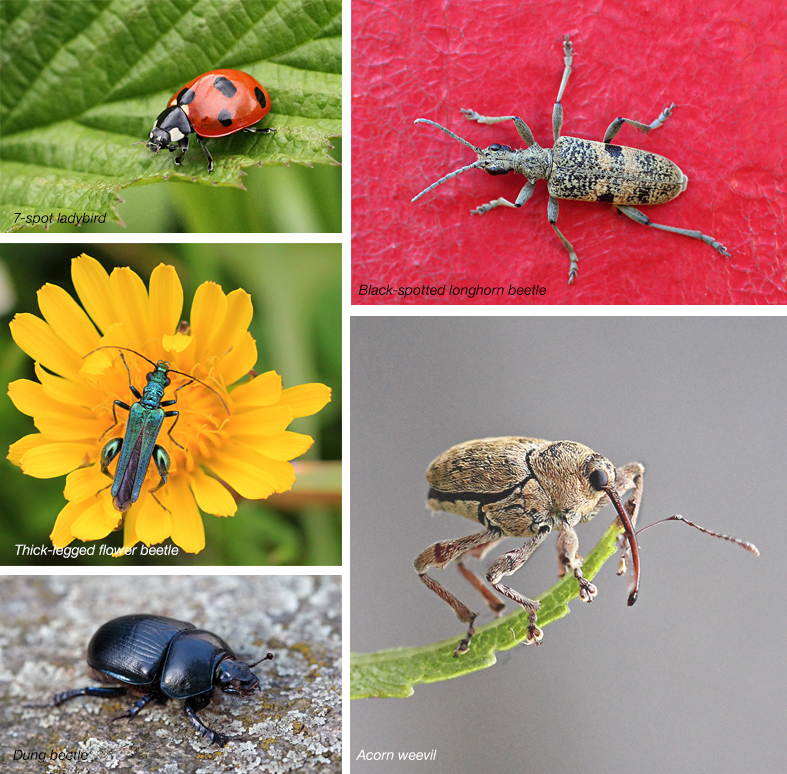
Well that was that. Squashed at the General Election. For the fourth time. The beetles, blinded by their dogmatic approach to intellectual thought and idealism, are wondering why they lost. Could it be that Jeremy, a weevil with a lot of baggage having spent his life voting against the allotment, was utterly useless and had no idea about leadership? Or maybe the strategy was all wrong – the beetles, in their enthusiasm of offering everyone everything for free, were incoherent and had total disregard for the scepticism amongst the other insects who felt their policies were just not credible. And instead of taking responsibility for losing the election they are blaming the wasps’ propaganda machine and ridiculing the bugs and bees for having the audacity to vote for someone else. Admittedly the wasps out-buzzed everyone, being an insect that nests together rather than a bunch of disparate beetles. The weevils had a real chance and blew it, dashing the hopes of half the allotment and consigning it to a dystopian future. So some soul searching and that old trope lessons have to be learned is being rolled out. Yet again.

Now they are scurrying around looking for a new leader. Do they elect another weevil in the image of Jeremy, or a different species? There are plenty of them willing to throw their antennae into the ring. Some suggest the legally competent black-spotted longhorn beetle. He certainly has gravitas but is hinting at a slight move to the centre ground. Others want a ladybird, preferably with a northern reach. Could a media-savvy flower beetle have a chance? Potentially yes, as it is popular with the bees, flies and butterflies sharing the same habitat and these are the voters the beetles need. And many want a dung beetle who has spent a lifetime shovelling shit and has actual experience of what it is like to be working class.

They certainly don’t want the stag beetle who won 3 elections, took the allotment into an illegal war, and is now an endangered species.

In the meantime the allotment will be dug up, sold off and paved over with expensive housing for humans.

Boris the brown-tail moth

Brown-tail moth

Brown-tail moth (Euproctis chrysorrhoea)

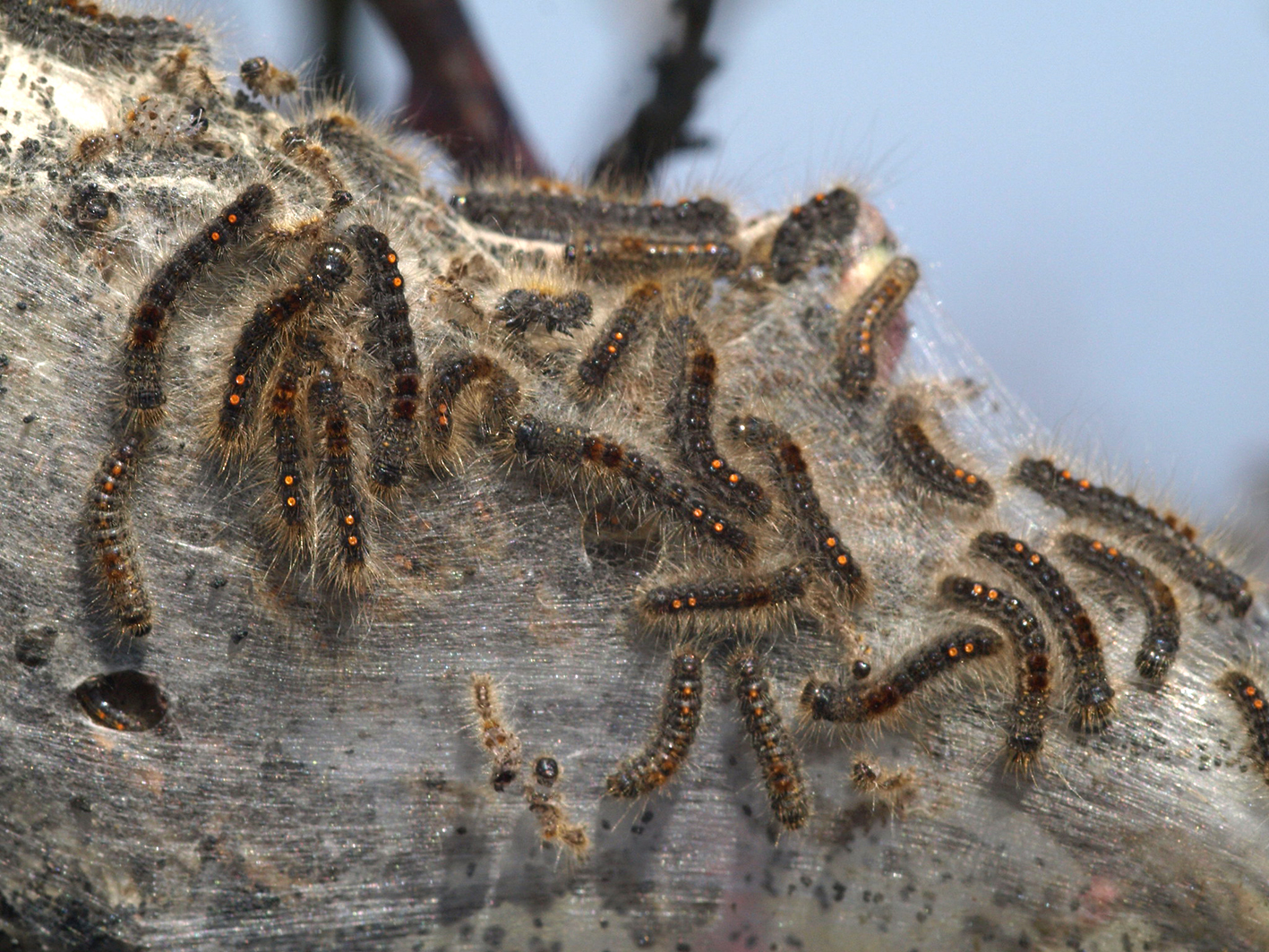
This is Boris the brown-tail moth. Don’t be fooled by his buffoonish appearance – his children by many mothers cause havoc by decimating our hedgerows and trees, destroying our public services and dismantling the social fabric of our country.  Found mainly in the conservative southern England constituencies, the oven-ready eggs, laid in batches, hatch into hairy caterpillars who weave webs of lies and deceit, their hairs causing intense irritation and rashes for anyone who comes into contact with them. In urban slang ‘brown tail’ means to have a shit. I fear Boris will brown tail all over us if he gets elected.

OLYMPUS DIGITAL CAMERA

Brown-tail moth caterpillars

Continue reading

Leafing the nest

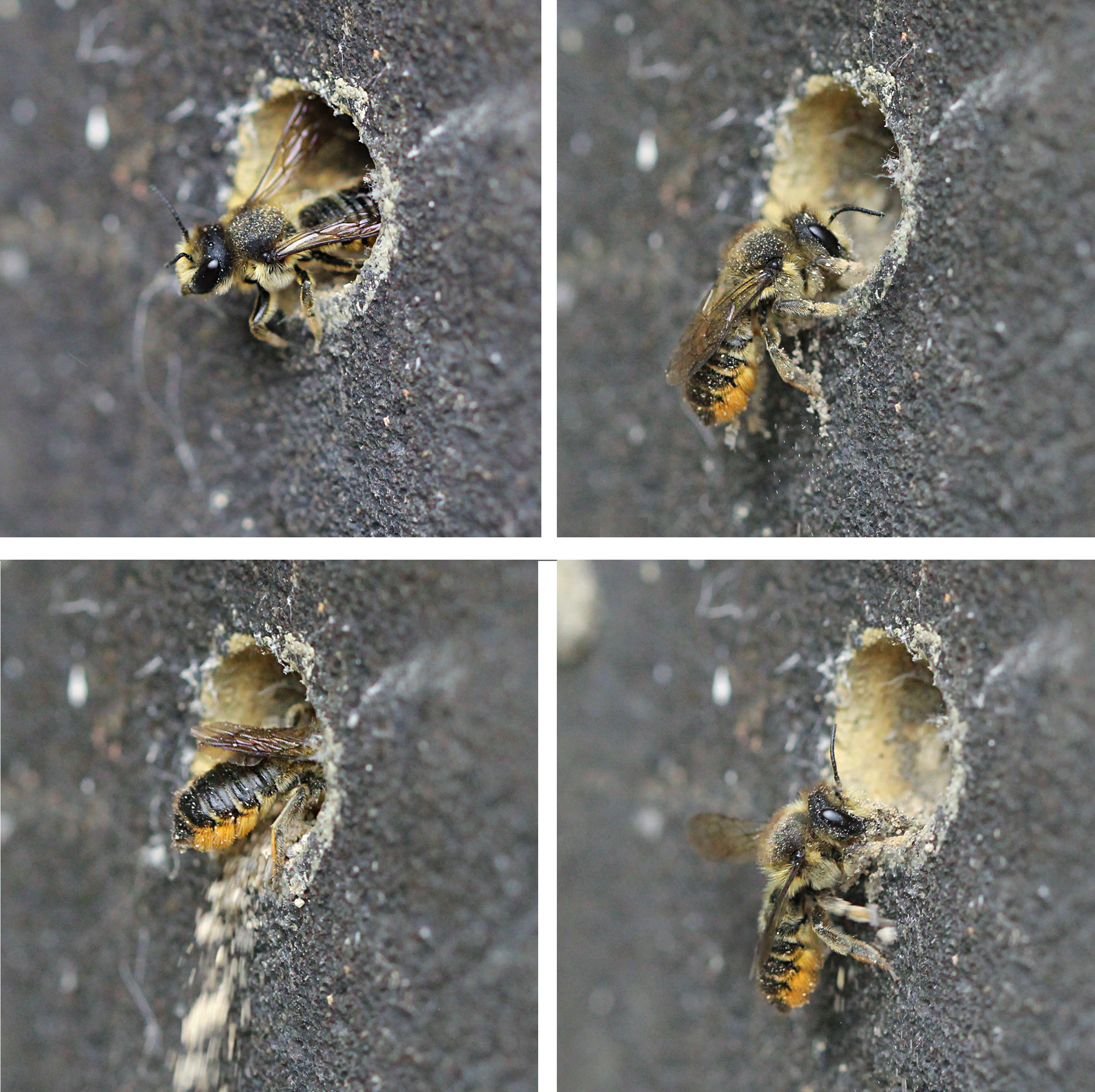
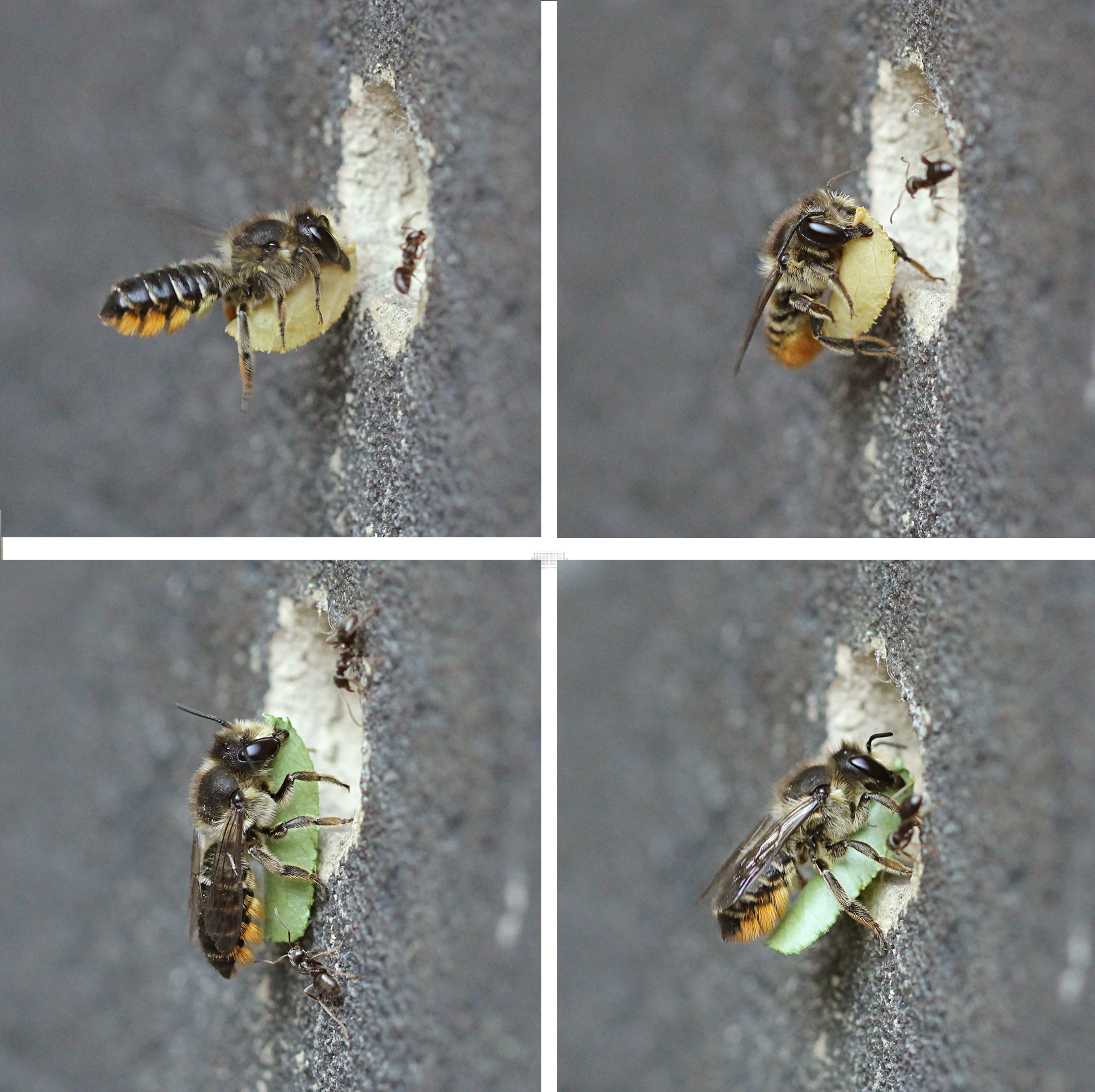
In my porch, a leafcutter bee has decided to build her nest in a damp-proofing hole in the wall. First, she had to excavate the mess left by a previous tenant – a spider – by pulling out all the debris.

Leafcutter bee excavating and old spider nest

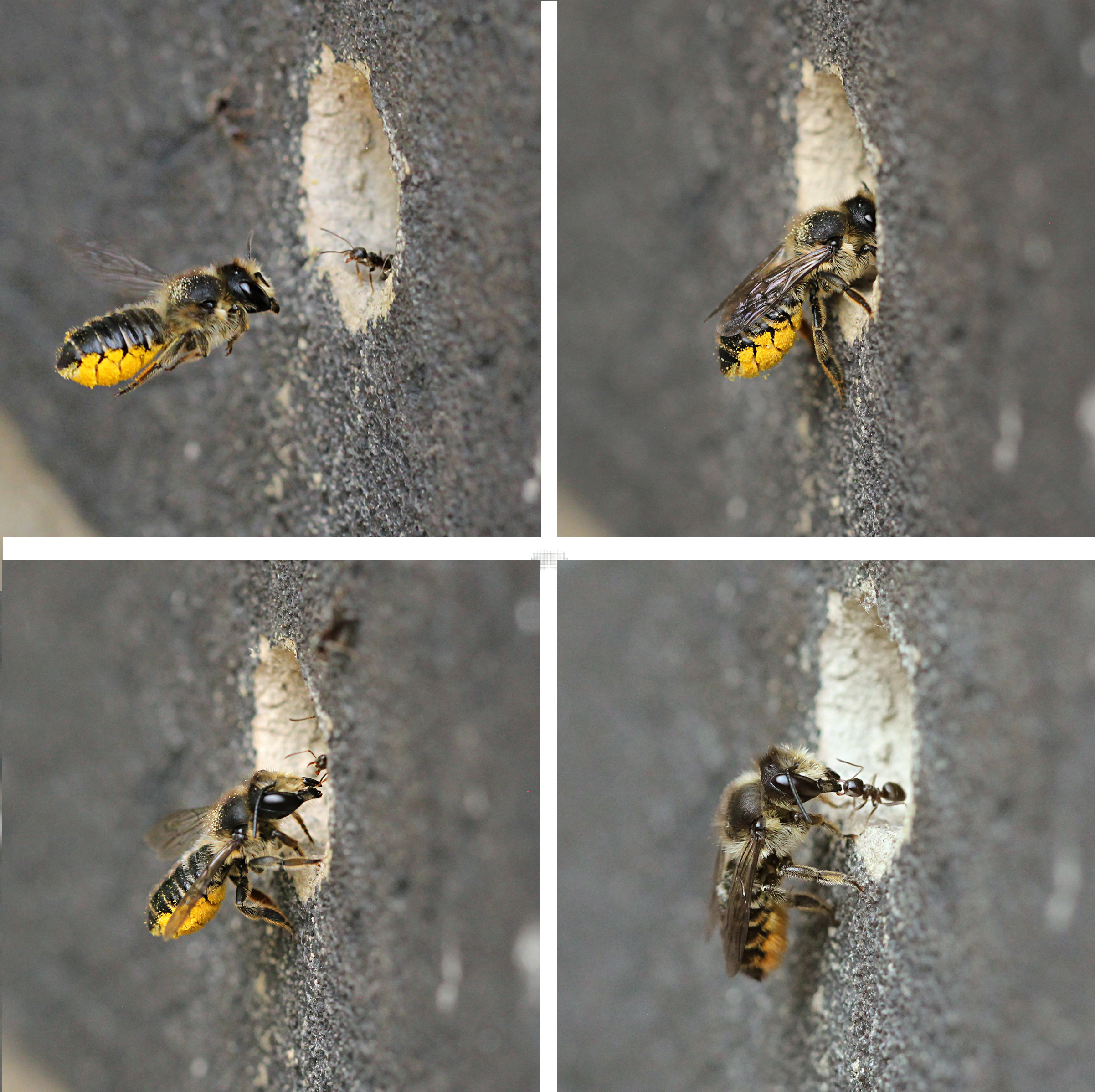
It’s early morning, and our bee has resumed her chamber-making duties. Her distant cousins, the ants, are running around eager to help. They are hoping for some pollen scraps. But it seems a password is needed to enter the nest – if you’re not on the list you’re not coming in. Luckily, our bee knows the secret code.

The ants have joined in

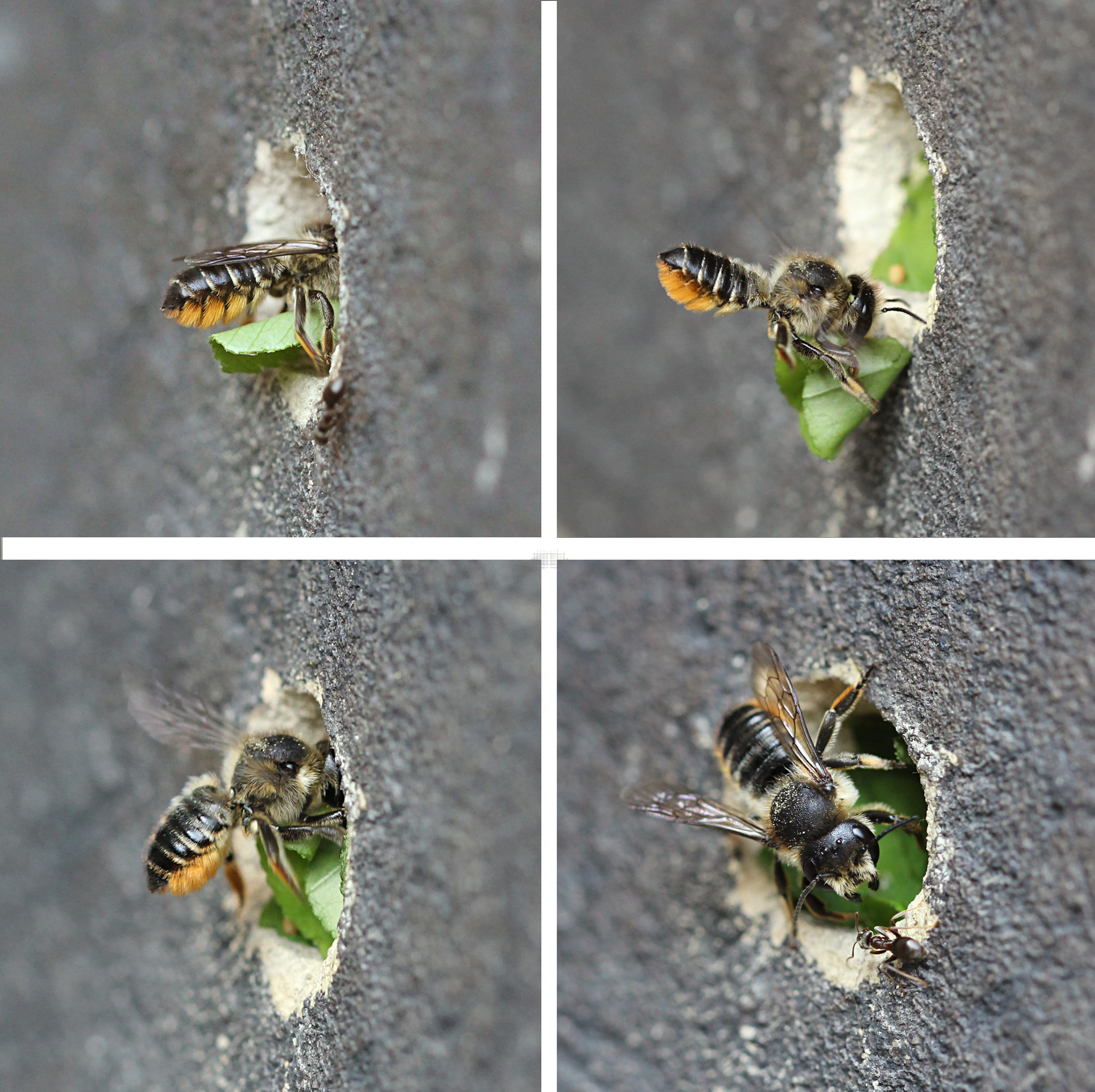
She starts to line the cavity with leaves, cut to size and usually harvested from a rose bush, carrying the leaf plugs to the nest between her mandibles. These are plastered to the walls with saliva, creating a cosy chamber. During the day she collects pollen, stored on the hairs of her underbelly. She likes ‘flat’ flowers like daisies, so she can wiggle her abdomen over the stamens to collect the dust. The pollen is stored in the chamber for the bee larvae to feed on once hatched. Then she will lay an egg and seal up the chamber, creating a bijou home for one of her young.

The first leaves are brought in

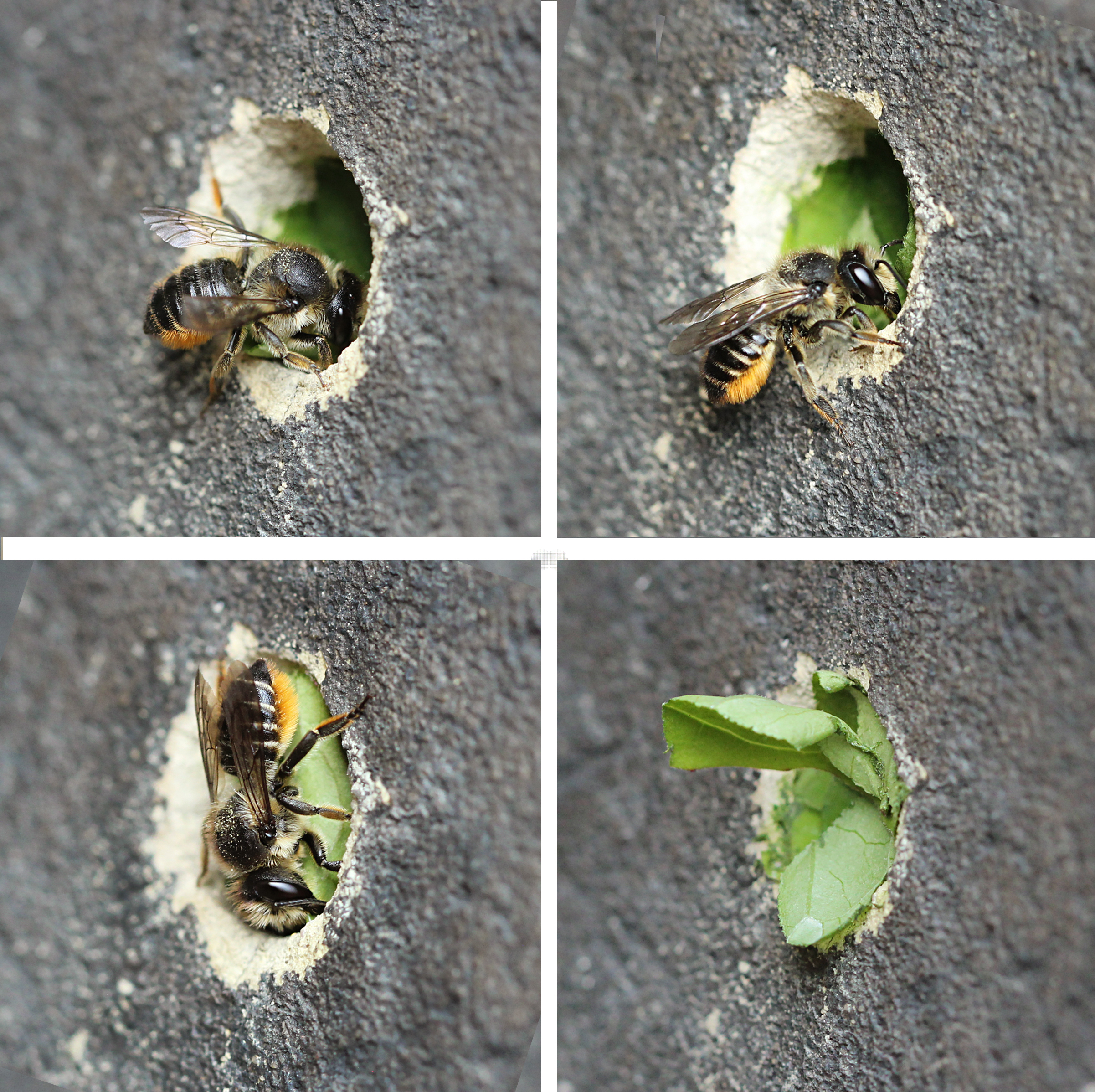
Once the first cell has been sealed up, she starts the whole process again. Depending on how long the cavity is, leafcutter bees will make enough chambers to fit. She could probably fit four chambers in a damp-proofing hole. Female eggs will be laid first, the male eggs last.

The nest building has begun

Closing the nest up can be a tough job. It gets harder to fly in with a leaf, and the pesky ants are still in the way. Discarded leaves litter the ground below, unsuccessful attempts at negotiating a way to shove a leaf into a nearly full hole. Sealing the nest takes time and a lot of leaves and saliva to make it watertight and safe from predators. The young bees will emerge in spring, the males flying out first followed by the females.

The nest is finished


Party in the Park

‘Tis the season to be merry. The office parties are in full-swing, tinsel and baubles adorn all the shops, and there is a general panic in the air over what presents to waste your money on for those relatives you only see once a year. On the telly its all happy families enjoying Christmas in soft focus, surrounded by so much food you could feed a continent. Most of the insects of Warwick Gardens have the right idea – they have gone into hibernation.

yellow-dung-fly_4130

Yellow dung fly

Over in Poo Corner the dung flies are having their Christmas parties. Looking rather dashing in their yellow fluffy attire they really standout against the dark brown satin sheen of newly laid dog turds. These steaming castles of poo are the place to gather in numbers to meet other like-minded flies, perhaps find someone to mate with, and to generally hang out and get drunk on the blood of tiny insects.

Not for them lurking with mosquitos in a sweaty corner at a gig in the Bussey Building, or vomiting up stale beer with the bluebottles at the back of Bar Story, nor a lively evening with the house flies flitting around the lights above the pool tables at Canavans. No, these guys really love a shit party and there are shit parties popping-up all over the park.

Wexit

It’s the middle of August and ever since the Referendum there has been a quietness to the park. Not much is happening, and many residents have decided to go some place else where they feel welcome. The social wasps are out and about, attracted by the ripening fruit in the orchard. But there is a wariness in the air as an article has to be triggered and everyone is waiting to see what happens next. The Queen common wasp has started her nest in a loft in Lyndhurst Grove and already built up an impressive entourage of loyal workers. She is an incidental queen, put into power because her predecessor chose to fly off when the going got tough, having made a pigs-ear out of the silly referendum. This new queen enjoys making life uncomfortable for insects: cracking down on the rights of free buzzing, a stiff policy on non-native species allowed into the park, and stinging anyone who isn’t a well-paid pollinator. She is snappily dressed, all yellow and black stripes, with a formidable weapon in her tail which she has already admitted she will use if threatened. She rules over a strong and stable nest of conservative identikit workers who tend to her every need, except one who is a bit wayward, rather rude and untidy with no sense of tact who has insulted many insects in the park. For some bizarre reason, he has the job of representing the nest.

Vespula vulgaris and Vespula germanica

Vespula vulgaris and Vespula germanica

On the other side of the park are the industrious German wasps. Though not big on presentation their nests are impressively constructed by a studious workforce, having honed their skills in engineering which are the envy of the hymenoptera world. Queen Vespula Germanica rules her realm in a somewhat christian and democratic way, often dealing with skirmishes that break out between neighbouring nests in her role as a de facto leader of a union which has grown so large no one quite knows who’s in charge. Identified by a 3-dot Merkel-Raute stamped on their faces, the workers are not best pleased with their queen and her ratings have plummeted. She will soon be up for election.

Before long our queens will have to meet to discuss the common wasps leaving the park. The German wasps are understandably hummed off as their dream of the union is beginning to fall apart. They will have to negotiate who has the rights to harvest the juice from the plums and pears, with access to the common orchard being the biggest priority, and who will have buzzing rights over annoying the humans. There are worries about the open border policy, fearing swarms of hornets, forcibly smoked out of Dulwich Park by the Council a couple of years ago, could be given free access to Warwick Gardens. And real concerns about the Asian hornets, seduced by a warmer climate, who are threatening to come over ’ere and kill all our ’oneybees. If it doesn’t go well, the common wasps may be cast out, left with making a go of it alone with only the blackberries to trade with. What a mess.

Buggered off

Its the middle of July and Warwick Gardens is looking a bit worse for wear, reflecting the vibe of the country after voting to leave the EU. The foxes have flattened the foliage; the bindweed, with their delicate white trumpet flowers a foil for the hidden intentions of domination, has spread insidiously over the nettles and brambles suppressing any hope of freedom of growth; and the daisies are looking a bit weary with having to regrow after being constantly mowed down. The yarrow, hoping to host their annual festival of pollen and nectar, have popped up in an empty venue.

Red capsid bug

Red capsid bug creeping around

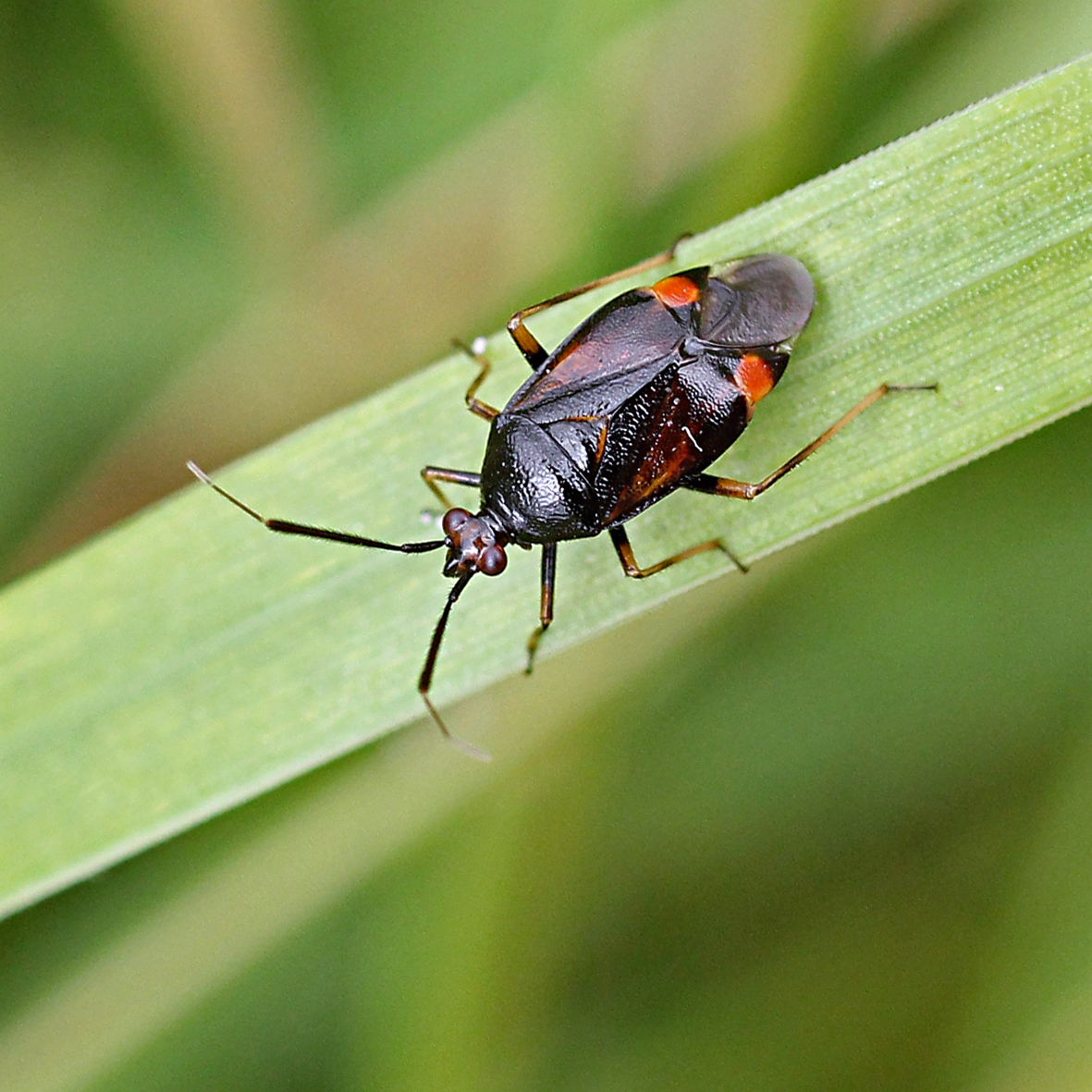
Last year this place was buzzing. It was noisy and full of life – a showcase of the sheer diversity of invertebrates in the park. But it seems that this year is one festival too many; the insects are preferring a more boutique ‘meadow-style’ festival offering a mélange of flowers and a more discerning flavour of nectar, sown especially to add colour and variety to bland parks. Everything is really quiet. The Roesel’s bush-crickets, normally hired to chirrup up business, chose to leave the park believing it was overrun with migrant species, a cynical lie perpetrated by unscrupulous anti-orthopterists; and the remaining grasshoppers have gone on strike, aghast that the crickets were lied to. The flies, patriotic and always up for a fight, are flitting around making nuisance for the non-natives. A few red capsid bugs are creeping around, anxious not to be mistaken for a Pokémon Go character, but all the while wishing that they could be found and appreciated as a real living thing. Even the mirid bugs got bored waiting for the party to start and just buggered off. And the weather hasn’t helped. A dull wet spring and cool temperatures have exacerbated and confused many residents about when and where to start a family. Its like nobody cares, exhausted at the changes around them.

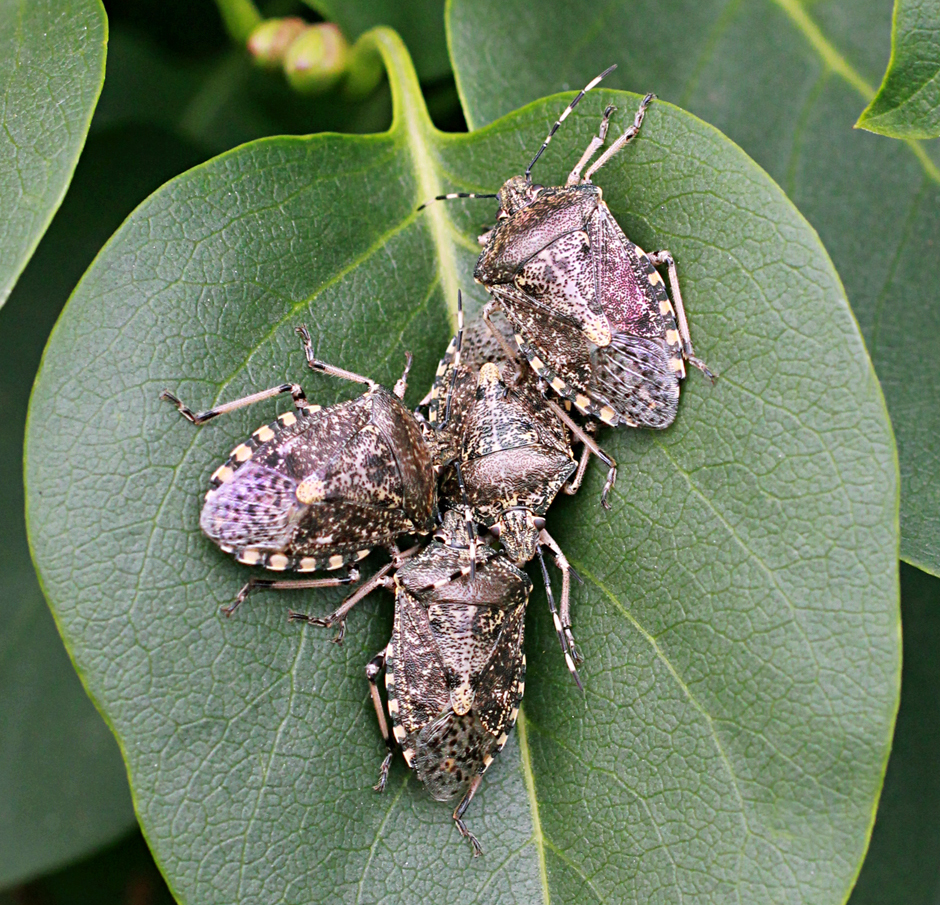
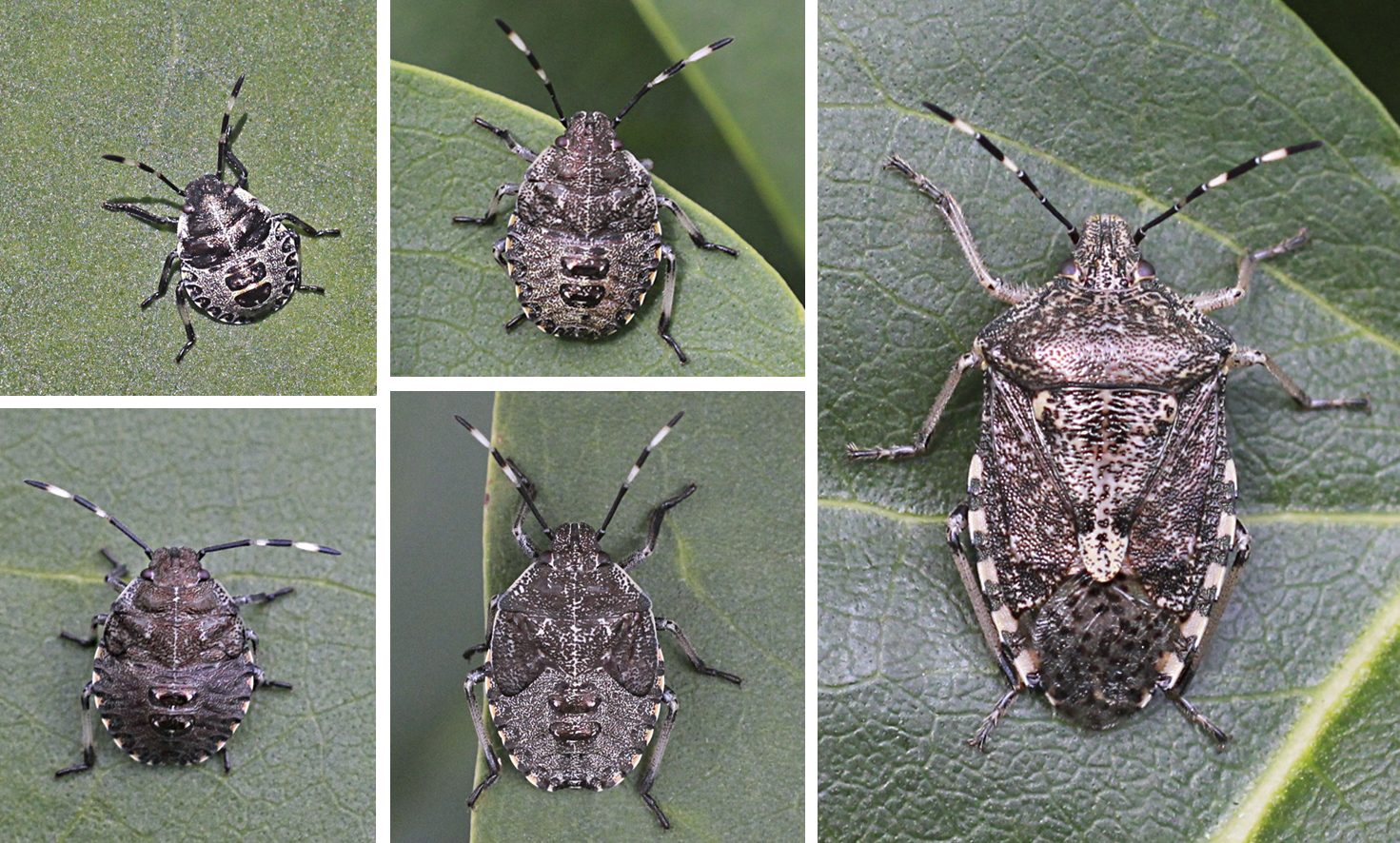
The mottled shield bugs have had their lilac habitat ripped away by someone ‘wanting a better view of the park’, and having arrived in Peckham only a few years ago feel rather rejected. The hawthorn shield bugs, with their brightly coloured coats of majesty, have had their ancestral home savaged by cuts, the lower branches lopped off to make it cheaper to maintain. And the parent bugs and birch catkin bugs got ousted from their favourite independent tree in the multi-species part of the park, chopped down by someone ‘wanting more light in their garden’. They had to relocate to the big corporate birch trees on the other side of the park. Unfortunately it seems they didn’t ‘fit in’ as they have disappeared, leaving the planthoppers with no one to play with. Or, as this is the main constituency of the rather moderate birch shield bug, maybe the birch catkin bugs, with their left-wing ideals about ‘rights to live on the same tree – we share the same host plant’, were viewed as a threat to the stability of the community, fuelled by pedantic catkin politics, forcing a campaign to stop them taking over.

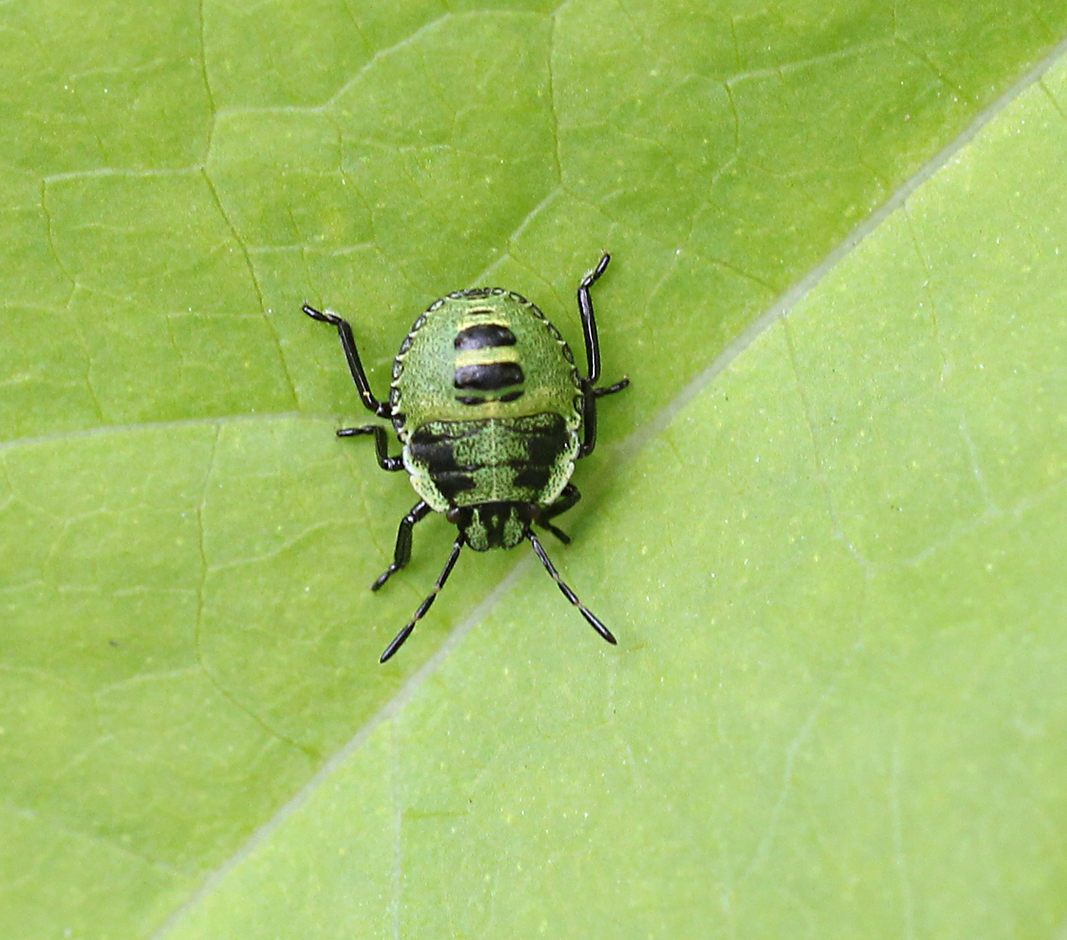
Common green shield bug nymph

Common green shield bug nymph – the only shield bug in the park

At least the green shield bugs, the hard-working bugs of the park with no obvious affiliation to any plant, are holding on. Those green shield bugs who everyone knows so well that they are prefixed with ‘common’ and generally taken for granted by the conservationists. The bugs who spend their days dutifully sap-supping, impervious to the strange weather we are having, almost neglected until someone prods them too far and they revert to their chav name of ‘stink’bug’. How long before they realise they are the only prey for the bigger enemy – the solitary wasps with a taste for shield bug nymphs on the hunt to stock their nests with the fattest, juiciest specimens to feed their offspring.


A proper geezer

The distiguished stag beetle

The distinguished stag beetle

If ever there was a character that represents old Peckham it has to be the stag beetle. A proper south London geezer, dressed up to the nines in a sharp, shiny suit tinged with purple, brandishing a fine set of red antlers held aloft with pride and demanding respect as Britain’s largest beetle. With an ancestry going back to when the Great North Wood covered the area, he favours the old haunts in Peckham – those dusty, rotting log piles hidden at the end of gardens owned by people who have lived here for years and understand how the neighbourhood works. The trend for tidy gardens with paving, minimal planting and a complete lack of soul which are currently monopolising our streets are utterly useless to him. The stag beetle needs the perfect nursery – piles of old logs where their grubs can chew rotten wood to their hearts content and grow fat without being disturbed for the next few years until they are ready to morph into adults.

Like any dandy the stag beetle is almost hopelessly unfit to do anything other than hang around looking cool. Cumbersome in flight they look faintly ridiculous flying around, antlers waving, on a warm spring dusky evening, trying their absolute best to find a lady to flirt with. On a night out with the boys they can get into fights where a test of strength with their antlers will win the day. Unfortunately all that bravado can’t stave off fatal attacks by wide-boy corvids, hipster cats or under the feet of humans who have no respect for anything other than themselves.

A waiting game

Missing tree

The gap where the silver birch tree stood

Walking through Warwick Gardens the other week I noticed something amiss. It took a while to realise that the silver birch tree which trailed its beautiful leafy branches over the fence in the Football Quarter had been chopped down. In its place was a view of the house which had previously had been obscured. My heart sank as this was the tree where I first discovered Orientus ishidae, the leafhopper which caused so much excitement in the bug world and subsequently put Warwick Gardens on the entomological map. But why? After talking with the homeowner whose garden the tree was in, she explained that she “wanted more light in my garden”. She asked if it was a problem as she had spoken to the council who had given her permission to cut it down. Well what could I say? Its not my tree, or even my park, and the tree was growing in her garden… BUT it was the possible host plant for a rare insect, as well as a family home to birch catkin bugs, birch shield bugs, mottled shield bugs, parent bugs and southern oak bush-crickets. It’s a real habitat loss and I am deeply saddened, but it is also a lesson about education. After our conversation the homeowner said that if she had known about the insects living there she would have just pruned the tree.

Orientus ishidae nymphs on ivy

Orientus ishidae nymphs on ivy – time will tell if they will be back this year

Orientus ishidae has been spreading through the UK and its host plant has yet to be established. In Cambridge one was found on wisteria, in hopping distance of echinops, honeysuckle, cotoneaster, lavender. I have been finding our nymphs living on the ivy which grows adjacent to birch tree, and every year I see them expanding – last year we had a record 10 nymphs. Now I will have to wait until August before I know whether they are breeding on the ivy or just hopping over from the birch tree to bask in the sun. If it is the latter I fear the loss of a very beautiful insect in our park. Only time will tell.

The We’evils of Peckham’s Gentrification

This article first appeared in the Space #147 issue of Litro magazine.
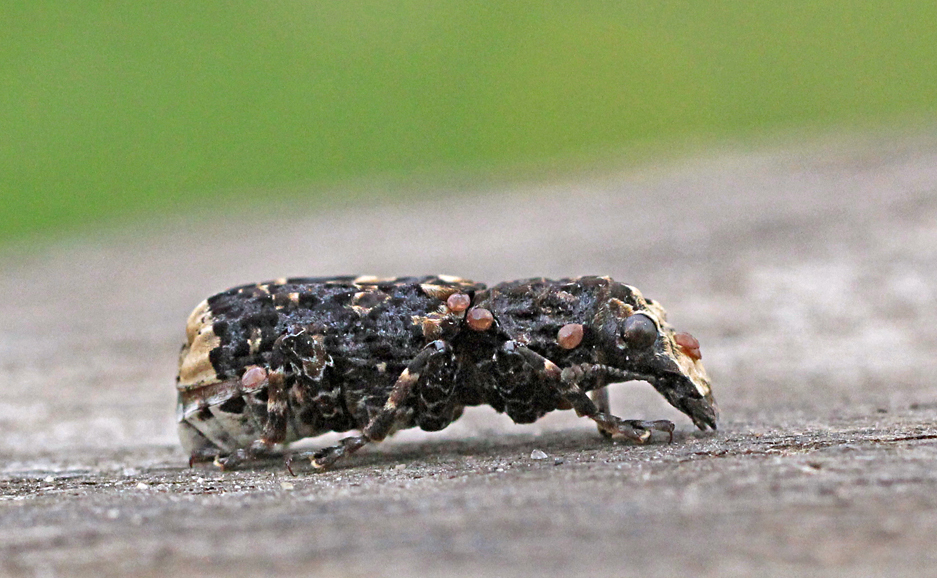
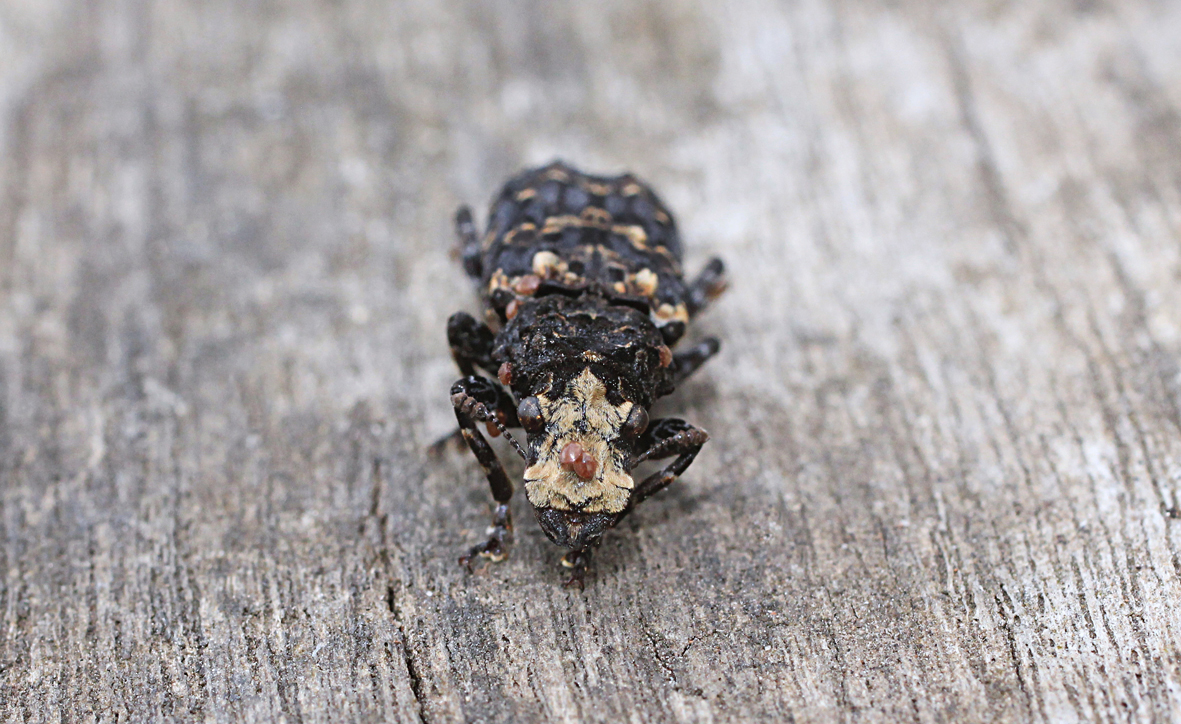
Scarce fungus weevil Platyrhinus resinosus, with mite infestation

My name is Platyrhinus resinosus and I live in Peckham

My name is Platyrhinus resinosus. I am a weevil and I live in a log in a small park in Peckham. I moved into a council log when a grant was given to spruce up Warwick Gardens a few years ago. It suits me well as I have my own cramp-ball fungus to feed on, though I do have to contend with upstart spiders who weave their webs over my patch with absolutely no regard for my personal space. My home is in the Log Quarter of Warwick Gardens, an area of high-density log housing, populated by beetle larvae, woodlice, earwigs, spiders, solitary bees and wasps. We have a buzzing little community here. Yes, we have our problems – the mining bees have a hard time in the summer when they have to fend off parasitic wasps wanting to inject eggs into their nests; the beetle larvae cause havoc to the log interiors, and the woodlice make quite a noise at night with all their chewing. And spiders can be a nuisance, especially for the flies. All in all we try to get on with each other. But things are changing.

New species have moved into the area, with fancy names like ‘mottled shield bug’, ‘mosaic leafhopper’ and ‘southern oak bush-cricket’. They have taken over the lilac bushes, conveniently positioned to look down on the more common species in the park. This area, next to the football pitch, is the main food boulevard with its ivy bars, thick long grass, lush blackberry bushes and the big-leafed showy lilac bushes. It’s the trendiest place to be and full of pop-up food stalls offering a range of artisanal kebabs of plump aphids and shield bug nymphs, alongside cocktails of dandelion nectar, ragwort pollen and craft yarrow stem juice.

It used to be relatively quiet here, but since the council stopped mowing a patch of grass and let it run wild with flowers it’s become really noisy with visitors swarming in from the surrounding areas to party. The hoverflies tell me stories of ladybirds running amok, bees drunk on pollen and crickets chirruping loudly all day long in a desperate attempt to find someone to mate with. This is the place to see all the well-heeled fashionable insects: the brightly coloured butterflies, sleek whizzy dragonflies, jewel wasps in their fancy metallic clothes, and the hipster ladybird flies with their beards and orange polka-dot shirts. Habitat is at a premium and I did hear that the parent bugs and their families had been pushed out due to the high rent of catkins and forced to move to the silver birch tree next to the railway line.
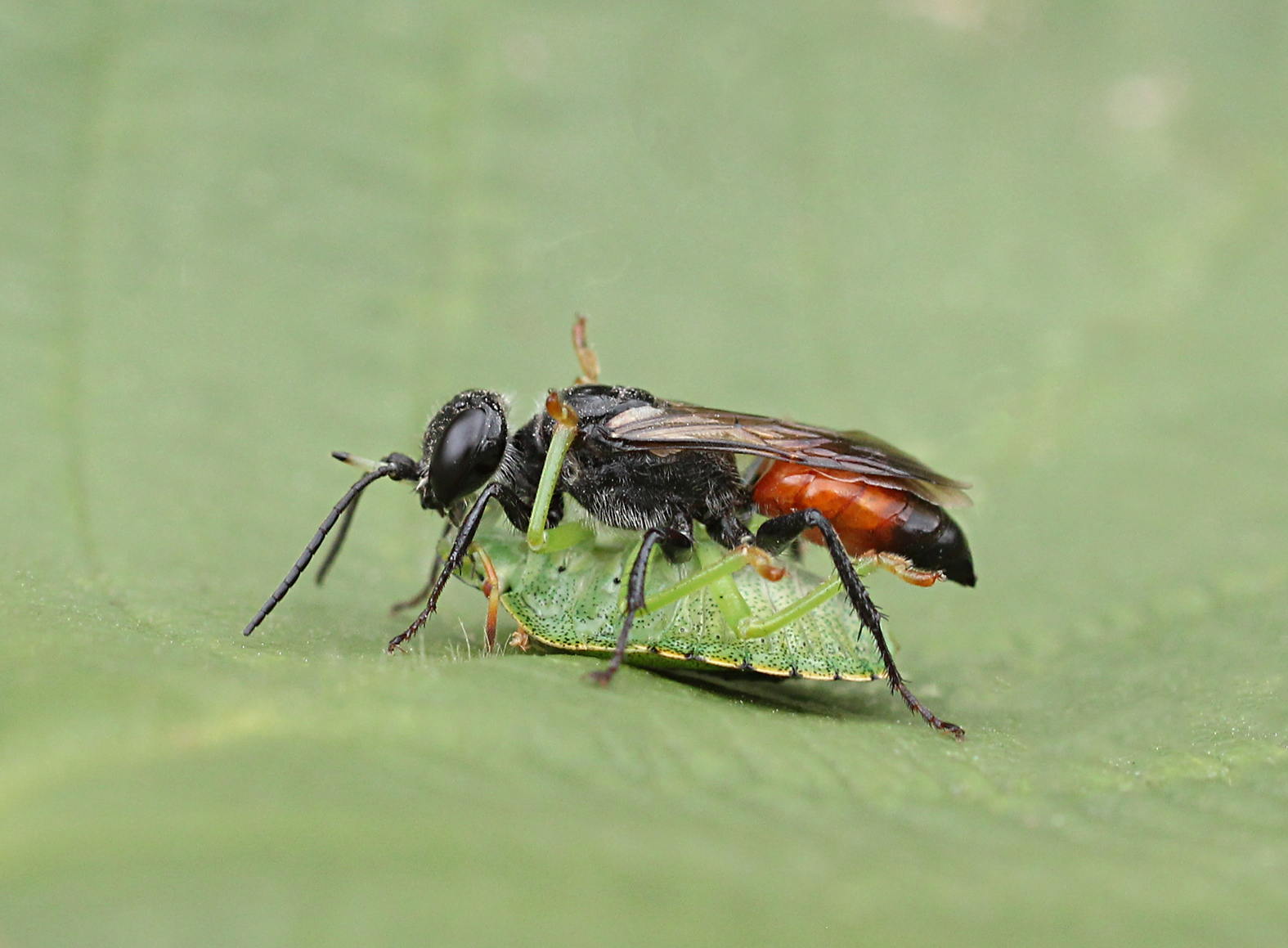
Solitary wasp with shield bug nymph

Solitary wasp with an artisanal shield bug nymph kebab

In my log a plethora of new kitchens have popped up. In the days before gentrification we called them ‘caffs’. The solitary wasps have repurposed, upcycled and retrofitted old beetle holes in readiness of opening their own seasonal pop-up kitchens. Their menus promote ‘locally-sourced produce’. Juicy organic aphids farmed by ants and plucked from the stem of an award-winning rose bush, or fed exclusively on the sap of a mature sycamore tree; spiders that have been fattened up on free-range hoverflies who have been allowed to roam free amongst the flowers and whose blood has a piquant of ragwort about it; and plump bluebottle flies with their robust meaty flavours of dog poo. Preparation is simple. Aphids and flies will be ‘lightly paralysed’ so as not to destroy the delicate juices and to ensure they keep their freshness. Spiders will have their legs skilfully sliced off with sharpened jaws and the precision of a master butcher, their bodies stacked high in larders like slowly drying hams. In a true ‘once-in-a-lifetime dining experience’ each diner will have its own room in which to enjoy the all-you-can-eat buffet. And these diners are special – they are the young wasp larvae.

One of the logs on our manor is up for renewal. It finally succumbed to being rendered useless partly due to decomposition. This log has been home to bees, wasps and beetles for the past few years and they are now being forcibly evicted by either the council foxes or human vandals with nothing better to do. Admittedly it has seen better days – a rather shabby exterior full of holes, cracked bark, and fungus graffiti’d along the damp ground-floor walls. The interior is a brittle honeycomb of lignin, filled with sawdust echoing their use as bee and wasp nurseries and still ringing with the distant sounds of buzzing gone by.
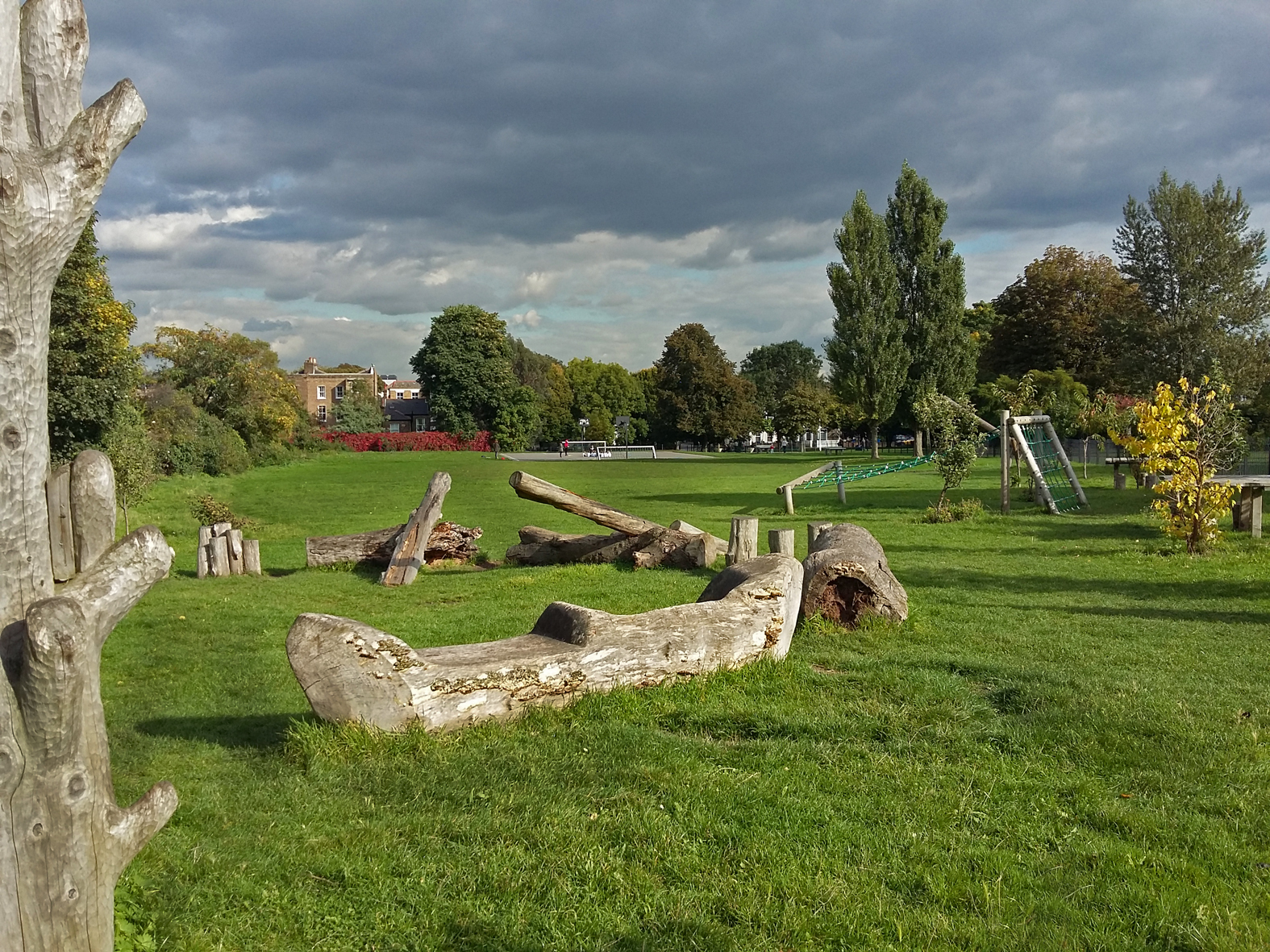
The Log Quarter in Warwick Gardens

The Log Quarter in Warwick Gardens

Unfortunately some of the residents didn’t receive their eviction notices in time and their homes have been brutally ripped away and strewn across the park, the contents spilling out onto the grass exposing still-ripening larvae cocooned in silk. Tiny beetle larvae caught up in the carnage struggle with being exposed to the outside world and succumb to being carried off by ants, whilst the centipedes emerge from hiding to see what all the fuss is about. The woodlice, who occupied the lower floors and have always had their antennae to the ground, have already moved their families to another log after realising the beetle larvae neighbours had been eating away at the upper floors and were in danger of being crushed. And the common wasps have moved in, like bailiffs, to pick over the remains and take all the free sawdust to build their nests.

Soon the developers will move in with “a vision of the log as a horizontal city for thousands of insects to live in and enjoy”. Knowing developers they will probably replace it with a shiny new MDF log, complete with layers of impenetrable varnish rendering it totally useless to us beetles. Holes drilled in neat and tidy rows, inspired by some of those fancy bee hotels, will be sold off as ready-made bijou homes for the wealthier bees and wasps, with a noticeable lack of affordable lignin making it impossible for the hard-working mulch-munching insects to set up home. And they will make it multi-functional to include habitats for humans complete with a rooftop picnic area, parking for pushchairs and nice tidy planting.

There is even a new edible hedge stretching all the way along the side of the railway line. This regenerated area is a sprawling estate of shiny new shrubs and fruit trees, replacing the perfectly established clusters of black horehound, thistles and nettles deemed rather unattractive and scythed into oblivion. Stylish architectural sculptures of dead wood dot the area, no doubt hoping to attract the rather distinguished stag beetle to make a home here. At the moment the local insects are not keen on the hedge as it contains plants they have never seen before, and as they were never consulted on what plants they would like, are rather pissed off. Instead they have been converging on a tiny patch of tatty thistles, purposely left off the weeding roster and preserved as a nod to the ‘heritage’ of the area, in an act of defiance. My cousins the vine weevils have had to find somewhere else to live as their habitat has gone, and we really don’t know what will happen to the tiny spear-thistle lacebugs who have lived in the park for generations.

It will be interesting to see who moves in or whether it will end up half-used and entomologically unloved, a moral of regeneration gone wrong. And now there is talk of creating a meadow full of all the big flashy commercial wildflowers such as ox-eye daisy, poppy and knapweed ‘to bring more pollinators into the area’ – a sort of Westfield of the wildflower world. Yet another expensive homogeneous development devoid of individualist character promoted by over zealous but under-appreciative landscapers, upsetting the local demographics and taking all the credit away from the lowly daisies and dandelions who have spent years effectively doing the same job.

So I sit here, on my log, watching the changes with a sinking heart. The park has become unrecognisable to when I moved in. I see fewer of the insects I grew up with, having had to move to ever decreasing pockets of habitat just to survive. Gone are the days when we would stop and have a friendly chirp over a blade of grass, the new neighbours deigning to give me only a cursory glance as they scuttle by with an air of snobbish arrogance. And soon even I will be gone, a remnant of old Peckham, remembered only in the pages of an insect identification book.

No more honey bees, please

The recent chatter to encourage more bee hives in our cities is somewhat alarming to me. I wouldn’t want to be a honey bee – spawned from a hybrid queen sent in the post, brought up to live a life of domesticated soviet-style drudgery, drugged up to the wing tips on pesticides, plagued by viruses and under attack from mites and fungus, worked too hard, often on a monoculture diet, continuously smoked out of their homes to have the fruits of their labour wrenched out beneath them, then left in the winter with barely enough food to eat. All in the name of having something sweet to spread on our morning toast. No wonder they are such moody insects and no wonder their colonies are collapsing.

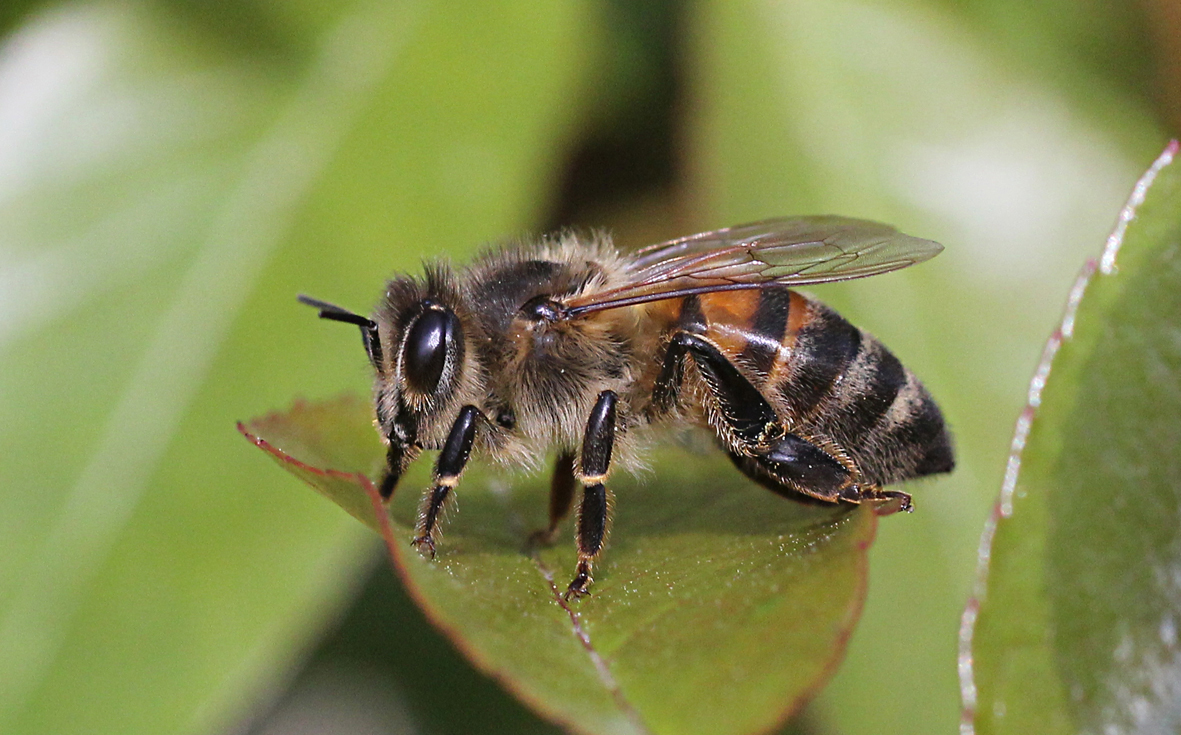
A honey bee having a rest from the drudgery of pollen collecting

A honey bee having a rest from the drudgery of hive life

I am being cynical. Of course honey bees are important. ‘The economic value of honey bees, and bumblebees, [note the add on and why not just ‘bees’] as pollinators of commercially grown insect pollinated crops in the UK has been estimated at over £200 million per year’. (The British Bee Keepers Association). All well and good but I see there is no mention of the other economy – the sale of honey – which I see as a bigger problem and rarely seems to be included in statistics. And we are being misled – honey bees only pollinate 30% of our crops. Which leaves me to wonder why we need them in our cities? The only ‘crops’ we have in cities are allotments and orchards and pollination of these is easily done by our other pollinators – solitary bees, wasps, flies, hoverflies, beetles, bugs, butterflies and moths. And its these we need to be focussing our energy on.

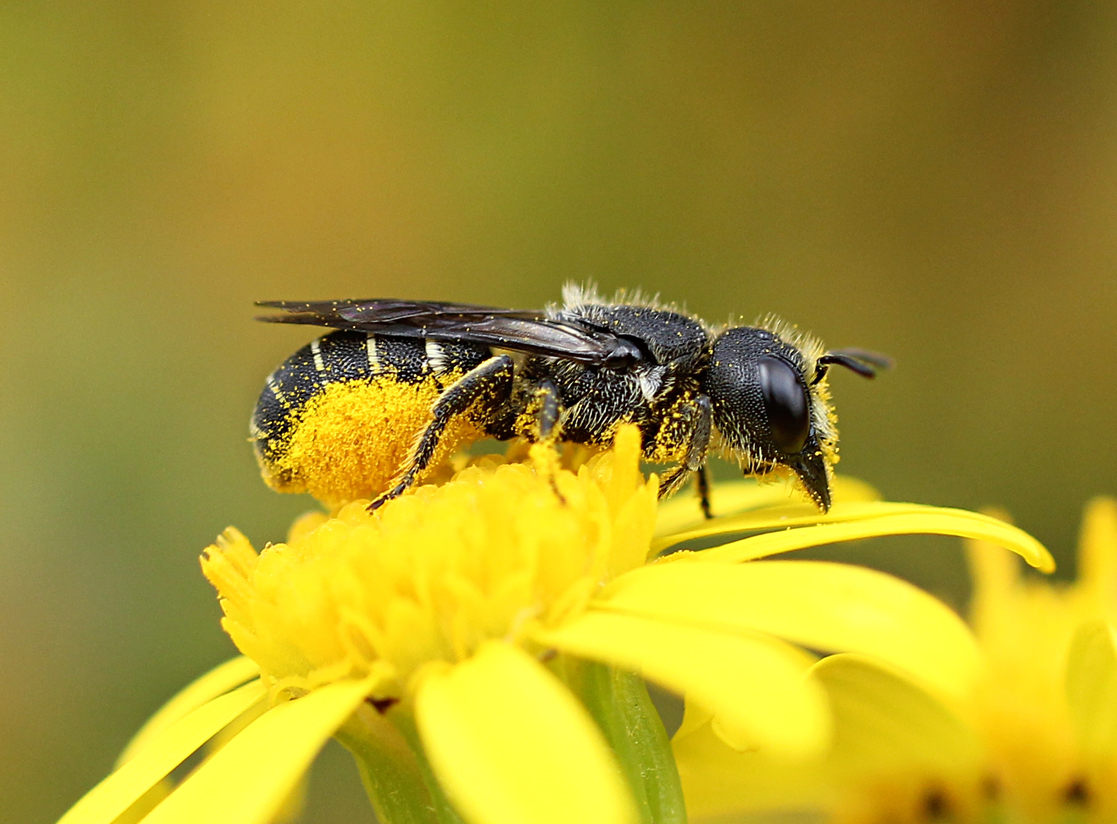
Mason bee Heriades truncorum collecting pollen

Mason bee Heriades truncorum collecting pollen

Research has shown honey bees maybe infecting bumblebees with diseases, but we don’t yet know what the effect of honey bees have on our other solitary bees. Viruses and mites brought in by honey bees, often imported, surely must have an impact, as well as the pesticides to control these. Much is made of colony collapse but how long before we see a collapse of all our insect societies due to measures taken to preserve the lives of honey bees. Less hives, especially in cities where habitat is at a premium, would allow our native bees to flourish and restore their populations which are on the decline. But we need varied and healthy habitats to ensure the survival of all our insects, not just bees. To consider preserving and encouraging the plants that naturally occur in an area – local planting feeds the local insects. Even the current trend for wildflower meadows in parks to ‘attract pollinators’, though commendable, is rather worthless if stuck in the middle of a large swathe of lawn with no shade or allowance for nesting habitats. They are also costly and time-consuming to manage. Far better to distribute those wildflowers amongst other planting, or scatter a few seeds next to a wall. Or even just ‘let it go wild’! The area left unmown in Warwick Gardens is a good example of allowing the natural growth of local plants – after 3 years we are seeing crops of clover and mallow flourish, creating a carpet perfect for grasshoppers to hide in and flowers for hoverflies and butterflies to feed on. The yarrow, loved by beetles, has also expanded its range. Yes sometimes we do need to manage it but at a much lower level – pulling up the odd fat-hen plant that has run riot is maybe not a bad thing! We often forget we have to allow for some of our pollinators that feed on other insects and this is rarely mentioned in plans when considering planting. Some solitary wasps stock up on sap-sucking shield bugs and aphids to feed their young, and the inclusion of plants and grasses to accommodate these is vital. Meanwhile, all these insects will be pollinating the beans and peas you are growing on your allotment.

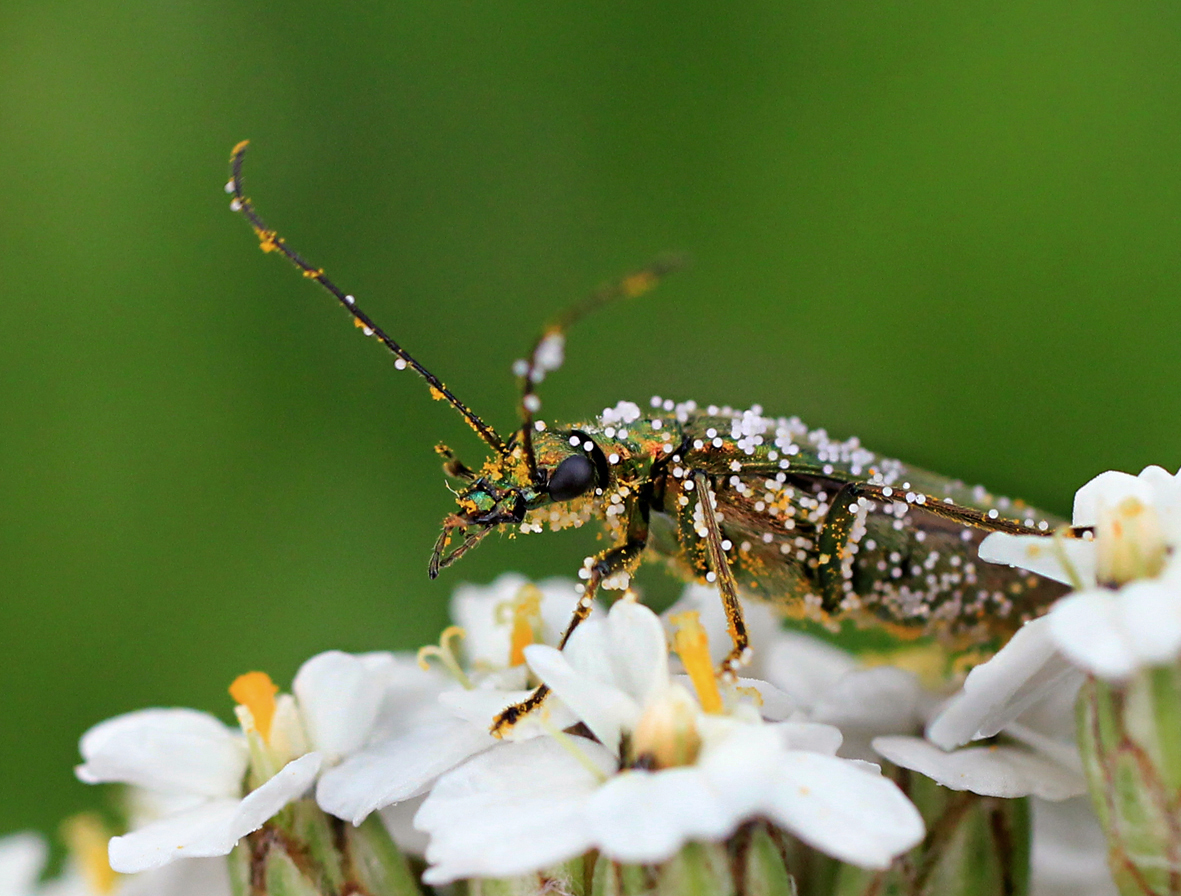
Thick-legged beetle Oedemera nobilis covered in pollen

Thick-legged beetle Oedemera nobilis covered in yarrow pollen

So why do we need hives in our cities? Education? Studies of beekeeping for ‘unruly’ kids has benefits, especially around respect and responsibility. I can’t argue with that but a big part of me would prefer to promote the life of our solitary bees. Watching mason bees and leafcutter bees building their nests in a bee hotel is not only fun, it also teaches us important lessons about the fragility of life. Solitary bees have to defend themselves against cuckoo bees and parasitic wasps without the back-up of an all-stinging all-waggle dancing army. Their life is harder and more hit and miss. All the more reason to treasure them.

And the other reason for hives? Honey. Honey should be a speciality food, like truffles, expensive and hard to come by. I worry that the current trend for all things ‘olde and crafty’ will see a rise of pop-up hives, hipster honey and mead. The air in our city is pretty grim so I can almost see a diesel flavoured honey appearing on the shelves, along side a bottle of mead with a ‘hint of carbon monoxide’. And all the while the poor little honey bee is working itself to death to put that sugar hit on your toast. Harsh, I know. But ideally I would put a ban on hives altogether until the honey bee has had a chance to recover, and allow our other pollinators to take the credit for all the hard work they do.


House clearance

Rotten Lodge

Rotten Lodge

There has been some major demolition happening in Warwick Gardens. One of the logs mentioned in The Bug Quarter has finally succumbed to being rendered useless partly due to decomposition. This housing block in the Log Quarter has been home to solitary bees and wasps for the past few years and they are now being forcibly evicted by either the council foxes or youths with nothing better to do. Admittedly the log has seen better days – a rather shabby exterior full of holes, cracked bark, and fungus graffitied along the damp ground-floor walls. The interior is a brittle honeycomb of tunnels between the lignin, and filled with sawdust echoing their use as nurseries and still ringing with the distant sounds of buzzing gone by. The structure is just not safe. And no, an estate agent certainly wouldn’t recommend buying this log, not even as a fixer-upper.

Solitary bee, wasp, and wasp larva in cocoon

Solitary bee, wasp, and larva in cocoon

Some of the resident bees and wasps have already excavated their nests, stocked their larders and laid their eggs. Unfortunately they didn’t receive their eviction notices in time and their homes have been brutally ripped away and strewn across the park, the contents spilling out onto the grass exposing still-ripening larvae cocooned in silk. Tiny beetle larvae caught up in the carnage struggle with being exposed to the outside world and succumb to being carried off by ants, whilst the rove beetles emerge from hiding to see what all the fuss is about. The woodlice, who occupied the lower floors and have always had their antennae to the ground, had already moved their families to another log after realising the beetle larvae neighbours had been eating away at the upper floors and were in danger of being crushed. And the common wasps have moved in, like bailiffs, to pick over the remains and take all the free sawdust to build their nests.

Rove beetle

Rove beetle

Soon the developers will move in with “a vision of the log as a horizontal city for thousands of insects to live in and enjoy”. Their ideal would be to replace Rotten Lodge with a shiny new log, the longest in Europe, complete with layers of varnish for an impenetrable surface to keep out the riffraff – “we certainly wouldn’t want woodlice and weevils littering the neighbourhood”. It would be designed with style in mind. Holes drilled in neat and tidy rows, inspired by some of those fancy bee hotels but much more minimalist, would be sold off as ready-made bijou homes for the wealthier bees and wasps. It would be multi-functional to include habitats for humans complete with a rooftop picnic area, parking for pushchairs and nice tidy planting. And they would call it The Seat, befitting their ideal vision of a new Peckham!

The fly who looked like a dog

Is it a dog or a fly?

Is it a fly or is it a dog?

Once upon a time there was a fly called Conopid. Well, that was her family name. To most people she was a thick-headed fly. To her mates she was just plain Myopa as no one really knew if she was Myopa pellucida or Myopa tessellatipennis. Unfortunately, to determine her true identity she would have to be dissected and slid under a microscope and she didn’t want that. Myopa spent her days hanging around on flowers waiting for solitary bees to parasitize – she was rather proud that her abdomen, which acted like a can opener, could pry open the segments of a bee’s abdomen to insert her egg. She particularly liked Andrena bees and Warwick Gardens was full of them. But sometimes Myopa felt ‘overlooked’ as she realised her family weren’t that well studied. She knew she was rather aesthetically-challenged, which meant it was unlikely she was ever going to appear on the front cover of BBC Wildlife Magazine. At the very most she could hope to find herself being discussed in a specialist Conopid recording scheme. Most of all she was well aware that her lifestyle was rather repellent to bee lovers. But Myopa wanted to be noticed and she contemplated this as she took a rest on a sycamore leaf.

Then one day a photographer did notice her. Word on the ground was she was a very friendly photographer and not going to sweep you up in a net and pop you in a pot. Myopa had heard legendary tales about other insects who had been photographed and showcased on the world wide web. Some had even been published on blogs and in magazines! This was her chance for some fame. Myopa sat very still as the camera loomed in, determined not to fly off as the shutter came down again and again. She knew she was looking her best as she posed for her portrait.

And then it happened. Myopa was all over the internet, on Facebook and Twitter, and she was liked by lots of people. She was ‘awesome’ and ‘fabulous’ and ‘cute’. And she didn’t mind that she looked like a ‘Disney dog’ or ‘Fido’ or a ‘Cartoon dog’ because now she had a starring role in a blog and lots of people knew who she was. She had her 15 minutes of fame, and she had been talked about. Contented, Myopa flew off and lived happily ever after.

It’s nearly spring!

Early mining bee, Eupeodes luniger, hairy-footed flower bee

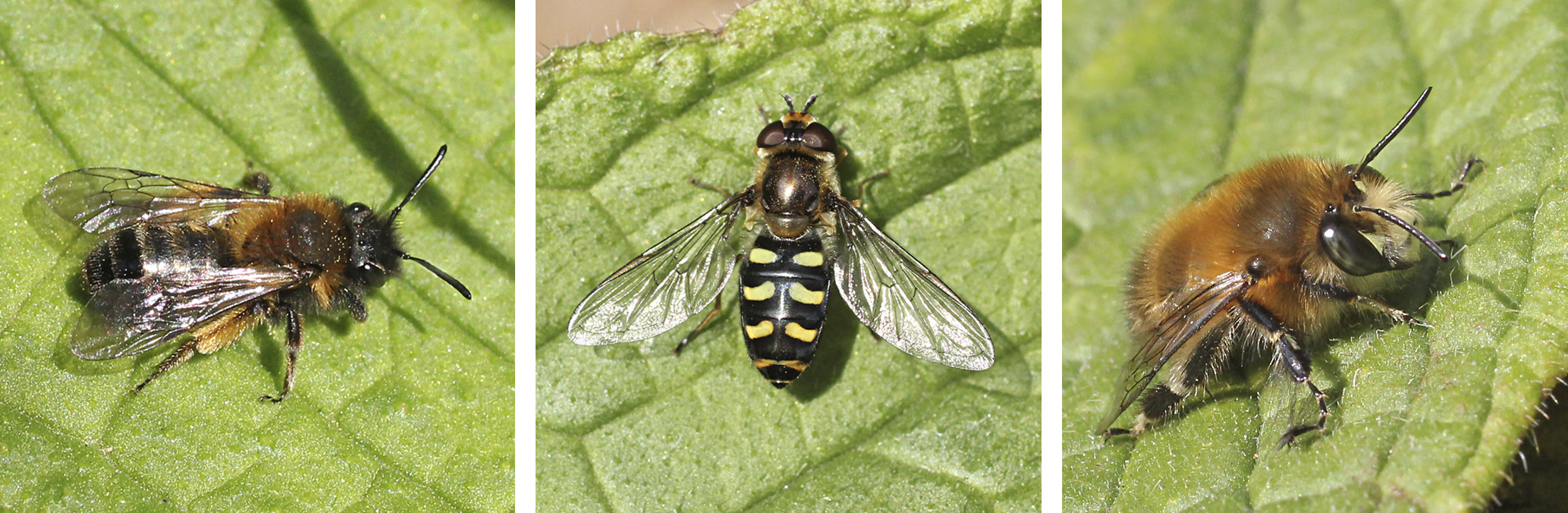
Mining bee Andrena bicolor, hoverfly Eupeodes luniger, hairy-footed flower bee

The sun has been shining for the past few days and the temperature is such that I have discarded my thick coat and roll neck jumpers and opted for long sleeved t-shirts and a leather jacket. That means one thing – spring is nearly here. I say ‘nearly’ as the flowers need to catch up and bloom as us insect photographers are getting impatient! There are murmurings on Flickr with the odd hoverfly and small tortoiseshell butterfly appearing, and postings of insects ‘from the archives’, which means we are all sitting here twiddling our thumbs and waiting to start pressing our camera shutters. It can be quite competitive in the entomology world – whose bees have appeared first and where in the country, “blimey your Eupeodes hoverflies are out early”, that twinge of jealousy when someone posts an insect you have never seen but always wanted to – but it is wonderful to see how the insect year unfolds online. In Warwick Gardens the hairy-footed flower bees are out, the hoverflies have started to appear and yesterday I spotted the first mining bee of the year. Yep spring is nearly here.

The Bug Quarter

Gentrification is taking over our city and nothing is stopping it. Soho as we know it is about to be turned into a shiny haven for shoppers with affordable homes for the rich, sweeping away its long cultural history as the bohemian side of town. London is being carved into ‘Quarters’ – such a poncey name for neighbourhoods. Mayfair has become The Luxury Quarter, The Shard – ‘Western Europe’s first vertical town’ – spearheads The London Bridge Quarter, Waterloo and Baker Street have their own Quarters, and Dalston is making a bid to become The Artist Quarter. At least their Quarters have a maze of roads contained within them. In Peckham we now have an Art Deco Quarter which is essentially a few buildings on the corner of Rye Lane and Blenheim Grove. Hardly a maze. So in the spirit of gentrification I have decided to divide Warwick Gardens into Quarters.

Warwick Gardens' Quarters

Warwick Gardens’ Quarters

The Bug Quarter
The home of the upwardly mobile, this is where a lot of bugs have decided this is the perfect place to raise a family. The canopies of hawthorn and silver birch trees provide an aerial playground for birch catkin bugs, parent bugs, hawthorn shield bugs, birch shield bugs, red-legged shield bugs, common green shield bugs, and the occasional mottled shield bug who has decided to up sticks and move out of the Football Quarter. Even the box bug, once historically rare and only found living at Box Hill but has recently begun an expansion through southern England, has moved in after finding a suitable home on the hawthorn.

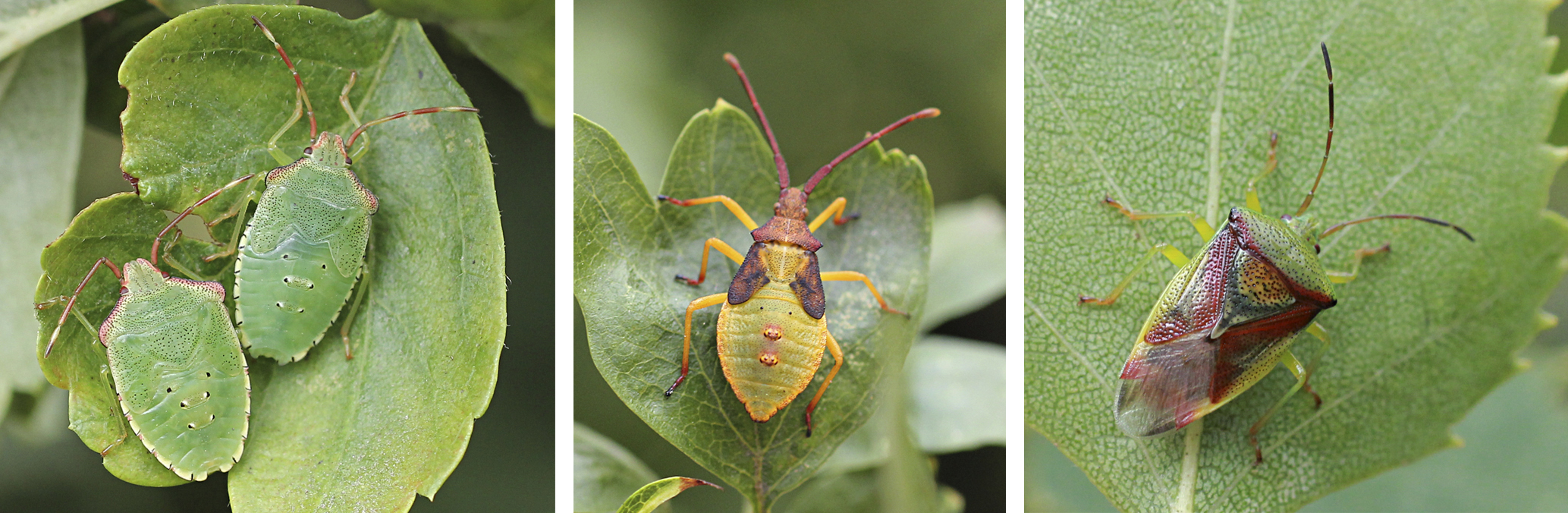
Hawthorn shield bug nymphs, box bug nymph, birch shield bug

Hawthorn shield bug nymphs, box bug nymph, birch shield bug

The Log Quarter
This is the largest housing estate in Warwick Gardens, offering a mixture of multiple-occupancy logs that house a wide variety of invertebrate families. The long term mulch-munching residents – woodlice, bark beetles, fungus beetles, beetle larvae – share the space with short-let summer homes for solitary bees and wasps who burrow into the wood to make their nests. A popular picnic spot for people who spend their lunchtimes eating sandwiches and playing with their iPads, and for children who enjoy jumping over the logs oblivious to the life beneath them, this is one area that will be earmarked for redevelopment in the future once all the residents have decomposed it.

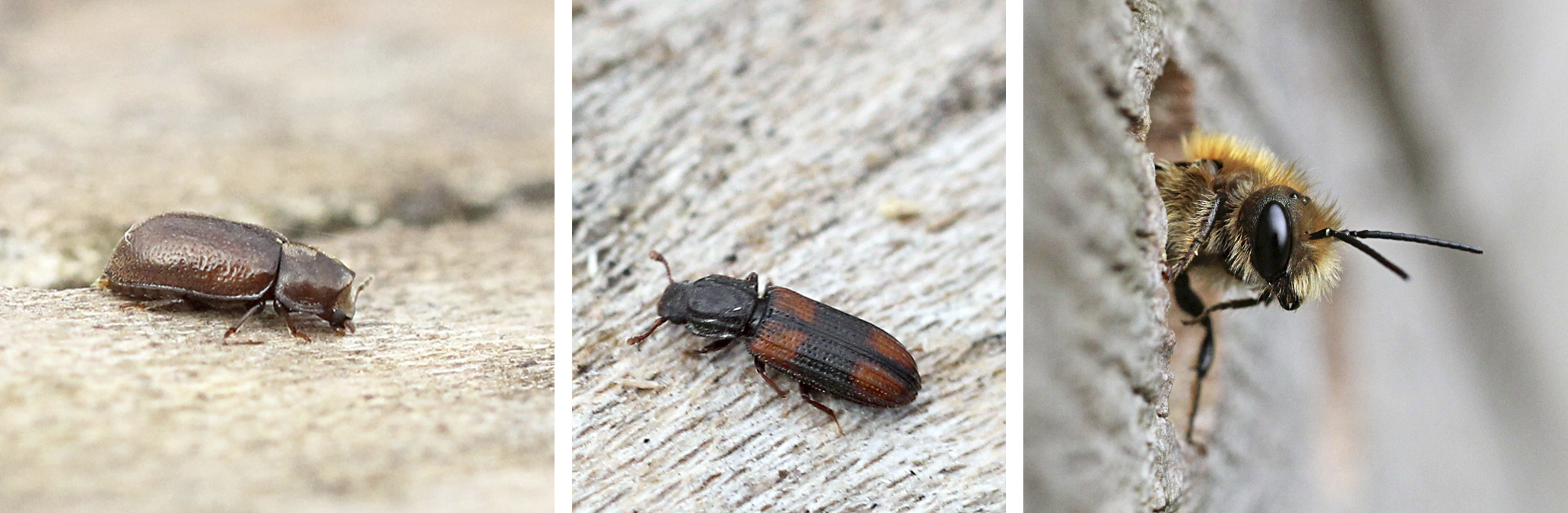
Cis boleti, Saddle-backed bitana, blue mason bee

Cis boleti, Saddle-backed bitana, blue mason bee in her nest

The Football Quarter
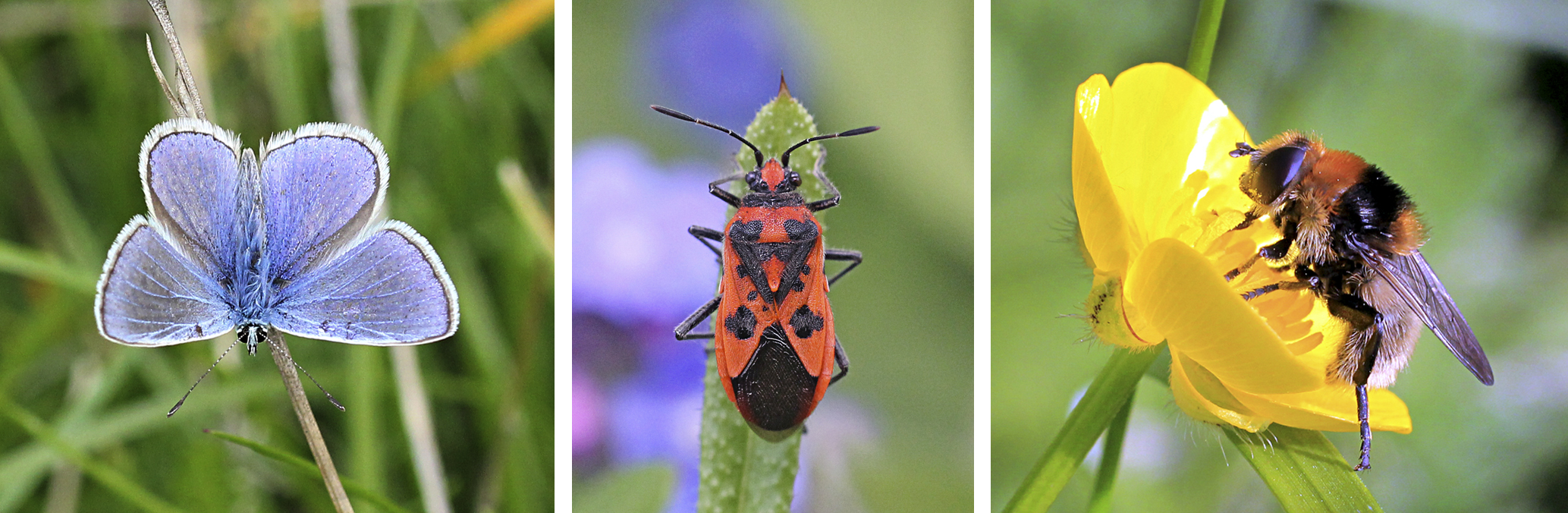
The south side of the park, situated next to the football pitch, is the main food boulevard. The habitat here showcases some of the finest food available in the park from season to season. Green alkanet is on the menu throughout the year and ragwort and yarrow are specialities in summer. In the spring the comfrey plants open their flowers up to hairy-footed flower bees, their leaves providing posing platforms for bee-flies and spiders. On sunny days the lilac bushes, home to the notable ‘Peckham’ leafhopper Orientus ishidae, proffer their leaves for insects to take a rest and indulge in a spot of sunbathing. The tall grass fronds act as plush elevated restaurants for mirid and plant bugs, whilst the ground levels are stomping grounds for chanting crickets and grasshoppers on the look out for a mate. The ivy bars are in flower from September offering a constant drip of sweet nectar to wasps, hoverflies and red admiral butterflies. This is the place to ‘celebrity spot’ the flamboyant dragonflies, butterflies and jewel wasps who visit in the summer. Ladybirds and Corizus hyoscyami bugs add a splash of colour, and narcissus flies prance around in fur coats doing a remarkable impersonation of a bumblebee. And in the winter, once everything seems to have disappeared into hibernation, wolf and nursery web spiders use the space to lounge around in relative peace and quiet except for the occasional disturbance of a football crashing into them.

Common blue butterfly, Corizus hyoscyami, Narcissus fly

Common blue butterfly, Corizus hyoscyami, Narcissus fly

Poo Corner
This is the seedy side of Warwick Gardens frequented by lazy dog walkers. Overshadowed by trees nothing much grows here except for swathes of nettles and bramble. This is where you will find the yellow dung flies and greenbottles swarming around piles of dog shit, and is characterised in the warm summer months by the faint whiff of urine. Not the best place for a picnic. Attempts to gentrify it last year failed miserably as the hedge that was planted in an effort to make the area more upmarket got swamped by nettles. Local bad boys, the horse chestnut leaf-miner moth, have vandalised one of the conker trees leaving it with an eerily stunted growth. In August nettle bugs gather on the nettles in large numbers in an orgy of mating, unaware of the comb-footed spiders that lurk under the leaves waiting to capture their next meal. This is also one place to spot the bright red velvet spider mites on the look out for a dinner of tasty springtails that live amongst the fallen leaves in autumn.

Dung fly, greenbottle, horse chestnut leaf-miner

Dung fly, greenbottle, horse chestnut leaf-miner

Model insects

Its midwinter and not the best time to be out looking for insects as they are hiding away sheltered from the cold. There are a few buff-tailed bumblebees buzzing around, along with some bluebottle flies and the occasional shield bug. So I have decided to look closer to home for inspiration and photograph some of my insect ornaments.

Last year my DJ commitments took me to Venice to play at a Masked Ball – a rather fabulous experience. But it was late February and the chance of finding any insects was a bit slim, especially as the weather was rather wet. Far better to take a boat to Murano and look for glass insects instead. There was quite a selection of large realistic looking spiders with long spindly legs, comical ladybirds and caterpillars, beetles and scorpions and some rather bad renditions of bees. I really wanted a spider but transporting such a delicate object home in a suitcase full of tunes and false eyelashes was unfeasible. So I opted for a tiny glass ant.

Murano glass ant

Murano glass ant

Over the years I have amassed a collection of model insects – quite a menagerie. Some are realistic, freaking out visitors to my flat; others are much more decorative; and some are just ridiculous. Though whoever decided to make a chafer money box has to be a genius!

Chafer money box

Chafer money box

I pick up the occasional spider when I see one that takes my fancy. Usually spiders are fashioned out of rubber, plastic or fur fabric and sold to scare us at Halloween. I found this beautiful iron spider in a market in Vienna, next to the stall where I was buying some lederhosen. And a guy in Berlin had a whole family of computer chip spiders for sale.

Viennese iron spider, computer chip spider

Viennese iron spider, computer chip spider

Paris proved to be the place to find realistic-looking model insects complete with a magnet to attach to fridges and the like. The spider in this collection is particularly realistic and even startles me when I catch sight of it in the kitchen.

I even found a lighter disguised as a fly, and a wind-up ladybird.

flyladybird

My godson Ellis has made me 3 insects over the years. His first attempt at the age of five was a pipe cleaner and egg box spider with pompom eyes which sits on a bamboo web and hangs proudly in my bedroom, camouflaged against the silver birch wallpaper. This was followed by a stag beetle modelled out of clay with matchstick legs and covered in glitter which lives in a box with a few dead beetles and some foliage. But my favourite is the large ant that he made out of wire, a school art project, which he gave to me for my 50th birthday.

Made by Ellis

Made by Ellis

I have never been able to find a really decent model of a bumblebee. Such popular insects are usually portrayed as a yellow blob with a couple of black stripes and a smile. I am rather fussy and prefer renditions of a more realistic nature! Though I do have a couple made out of beads I am fond of. The one on a stick was a present and the other was made by a little boy in Ukraine as part of the Future Youth Project. The rather wonderful honey bee was a purchase from Cuba.

Bumblebeeds and a Cuban honey bee

Bumblebeads and a Cuban honey bee

Another bee I really like was found at an art gallery in London. Laser cut out of aluminium this bee was part of a huge ‘garden’ of colourful aluminium flowers. Unfortunately I cannot remember the name of the artist who made them, so if anyone recognises it please get in touch and I will add a credit!

Metal bumblebee

Metal bumblebee

Orthoptera is represented with a superb large realistic-looking silver Roesel’s bush-cricket. And the green solar-powered crickets are fun – especially on a sunny day when they start chirruping unexpectedly. Mine sits on the window ledge behind my desk, though I had to replace it after Sputnik pounced on it and chewed it up.

Solar-powered cricket, Roesel's bush-cricket

Solar-powered cricket, Roesel’s bush-cricket

This beautiful glass dragonfly came from Poland. I found it in a fusty shop selling taxidermy in Krakow, hidden amongst books and boar heads. It cleaned up well with little damage to it. Though the real challenge was to get it back to London unscathed along with the 13 bottles of Polish vodka I had also bought… well it was in the days before shoe-bombers and massive restrictions on hand luggage!

Glass dragonfly

Glass dragonfly

And finally there are those bugs which are not so easy to identify. A computer beetle brooch made out of keyboard pieces I bought from a guy in Romania who had a whole nest of weird and wonderful ‘alien insects’, a scorpion made from a fork which came to me via a friend, and the fly which was sold to me as a mosquito in India.

Computer beetle, fork scorpion and fly

Computer beetle, fork scorpion and fly

So if ever you wanted to buy me a present… 🙂

Flatmates

I share my home with Sputnik the cat and Stick Insect the stick insect. Sputnik arrived in a box from Liverpool nine years ago, a little meowing bundle of black and white fur. Stick Insect came via Streatham…

Posing on the metal flowers

Posing on the metal flowers

A friend phoned me up a couple of years ago asking if I could find a home for 10 stick insects as her daughter, who had nagged for months for some, lost interest in them. So she offered them to me. I only meant to keep them until I found another willing keeper, but that never happened so for the next 18 months I stocked up on privet, their food of choice, and religiously squashed the hundreds of eggs they laid which littered the bottom of their tank. Admittedly stick insects aren’t the most charismatic of pets, spending their days staying still looking like sticks. But being nocturnal, at night they get more active and fun can be had watching them. Last July they all started to die, one by one. Though sad I was rather relieved to reclaim my table in the kitchen – glass tanks do tend to take up a bit of space. But as I was emptying it into the bin I spotted the tiniest of stick insects clinging on to a leaf, the lone survivor of the egg genocide. Of course I couldn’t kill it so I put it in a jam jar with some obligatory privet. As it grew bigger the jar got bigger and one day I left the lid off by accident and it escaped. I found it walking across the kitchen ceiling. Not really liking keeping things in jars I kept ‘accidentally’ leaving the lid off until Stick Insect moved full-time into the philodendron plant on the window sill and I could dispense with the jar. It has been happily living there since, coming out to munch on the bunch of privet I leave in a vase on the side. And at night when I come home I usually find it galavanting around the window. Now my morning ritual is to look for where it is sleeping – disguised in the philodendron, artfully posed across my metal flowers or hanging stick-like from the basil plant. Once it nearly got chopped in half as it decided to hide in a bunch of parsley I was using for stew.
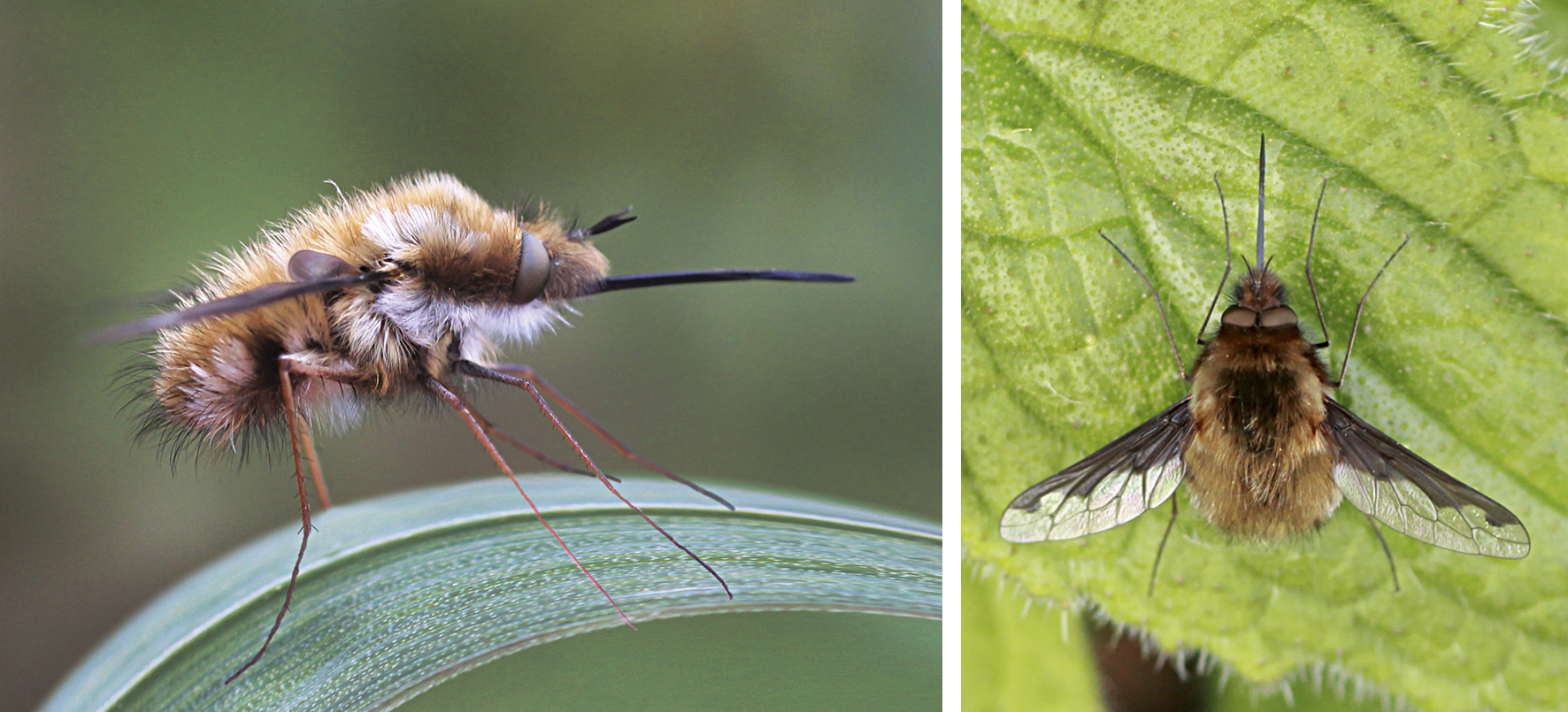
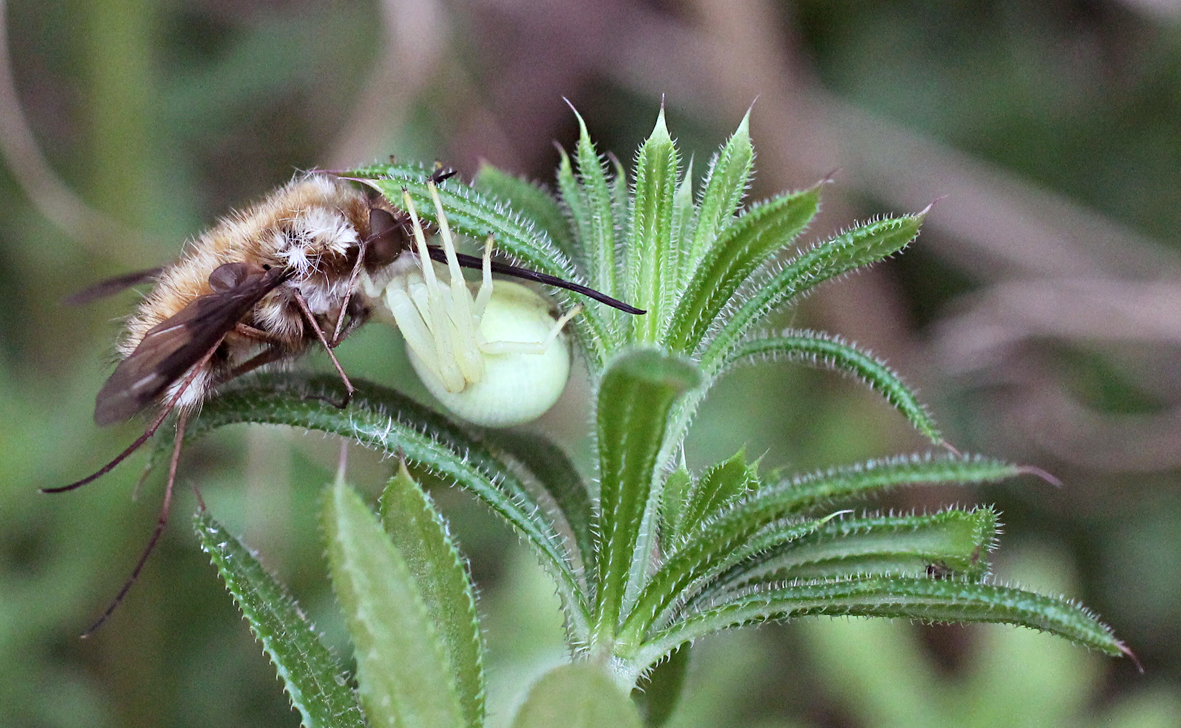
Hanging from the basil

Hanging from the basil

As for Sputnik and Stick Insect living together? For a cat who is a stealth killer of all things with six legs and wings Sputnik has yet to notice Stick Insect. The disguise is that good. We have a happy home.

Wasp kitchens

Aphid-hunting wasp selecting her beetle hole

Aphid-hunting wasp Pemphredon sp in her beetle hole

A plethora of new kitchens are popping up around Peckham. In the days before gentrification we called them ‘restaurants’ or ‘cafes’. The solitary wasps of Warwick Gardens, already ahead of this trend, have secured their premises in the log circle and are busily repurposing, upcycling and retrofitting old beetle holes in readiness of opening their own seasonal pop-up kitchens.

They will, of course, only be choosing locally-sourced produce. Juicy organic aphids farmed by ants and plucked from the stem of an award-winning rose bush, or fed exclusively on the sap of a mature sycamore tree; spiders that have been fattened up on free-range hoverflies who have been allowed to roam free amongst the flowers and whose blood has a piquant of ragwort about it; and plump bluebottle flies with their robust meaty flavours of dog poo.

Wasp with aphid

With an aphid

Preparation is simple. Aphids and flies will be ‘lightly paralysed’ so as not to destroy the delicate juices and to ensure they keep their freshness. Spiders will have their legs skillfully sliced off with sharpened jaws and the precision of a master butcher, their bodies stacked high in larders like slowly drying hams.

Wasp with crab spider

Spider-hunting wasp Dipogon sp with a crab spider

And every care is taken to ensure the food will be tasty and plentiful. In a true ‘once-in-a-lifetime dining experience’ each diner will have its own room in which to enjoy the all-you-can-eat buffet. The ambience has to be just right because these are very special diners. They are the larvae of the wasps. Bon appétit!

Normcore bugs

My friend was over from Istanbul at the weekend. She heads the design team for the largest jeans company in Turkey and was in town to snoop around at what London has to offer in terms of fashion trends. When I see her its the only time I get to talk about fashion, not a subject I am particularly hot on. This years’ unlikely trend is ‘Normcore’. Apparently its all about blending in and looking rather boring. Some fashion statement and an indication our clothes designers have completely run out of ideas! Either that or they have taken hipster irony to a new level. Reading up about normcore lead me onto an article in the Guardian where the comments rang with complete derision with someone declaring ‘at last – after 73 years – I’m fashionable’.

Plant bugs blending in

Mirid bugs blending in

In Warwick Gardens there are plenty of normcore bugs. The mirid bugs, in particular, prefer to ‘blend in’. They don’t flaunt themselves in flamboyant jackets à la Vivienne Westwood like ladybirds, or mooch around in smart Paul Smith-style suits like shield bugs, or even whizz around in fancy Zandra Rhodes ‘look-at-me’ stripy dresses like they do in the hoverfly world. Mirid bugs are more of an M&S style of bug. But at least, for a season, they can pride themselves with being on-trend.

A population explosion

Sundays in this part of Peckham used to be really quiet – you’d be lucky to see anyone walking down the road. For any sign of activity you had to go to the bustling and colourful Rye Lane with its God hawkers, the endless queues in Primark and the greengrocers overflowing with bowls of vegetables for £1. Nowadays Bellenden Road is packed with upmarket shoppers, diners, drinkers and people wandering around with their heads stuck in estate agent literature, vying for space on the pavement. The population has exploded – do these people live here or are they on day-trips from elsewhere, having read in the Evening Standard that Peckham is the cool place to be?

Southern green shield bug (left), and Common green shield bug

Southern green shield bug (left), and Common green shield bug

A less visible population explosion in Peckham has been that of the Southern green shield bug – the unusually hot weather has created the perfect conditions for them to thrive. A recent immigrant to the UK from Africa, Nezara viridula arrived via the route of imported vegetables. Indeed, you may find them living happily on your broad beans or pea pods. In Warwick Gardens they tend to favour the blackberry bushes. The adults can be identifiable from its cousin, the Common green shield bug Palomena prasina, by 3-5 white dots along the front edge of the scutellum. The nymphs, however, are much more colourful, making you wonder how something so striking can morph into a rather bland looking bug.

Southern green shield bug nymphs at various stages of development

Southern green shield bug nymphs at various stages of development

Usually I only see one or two Southern green shield bugs each year – a somewhat uncommon sighting. But this year the nymphs are everywhere! Uploads on Flickr are plentiful, cropping up on Twitter with queries as to whether they are ‘ladybirds in fancy jackets’, and they have been recorded in Jersey for the first time. I like shield bug nymphs. They look so small and vulnerable but somewhat earnest as they get to grips with working out how to live in this world. Bunched together for the first few days after hatching they mill about before braving their independence and venturing further afield by themselves, usually down a plant stalk. Though the 37 Nezara viridula nymphs that hatched on the lavender bush in a front garden in Choumert Road opted to stay together after sussing out that ‘walking down the stalk’ meant landing on tarmac. Another large batch hatched on the bindweed in Warwick Gardens last week, looking like little black shiny beads glistening in the sun, and dispersed into the bramble bushes making them hard to spot. But we did find one – Paul Brock, author of the fabulous new book A comprehensive guide to the Insects of Britain & Ireland, who was visiting the park, scooped it up into a pot and whisked it away to raise in comparative luxury in the New Forest. We wish ‘Warwick’ well!

Escapologist

Onthophagus coenobita caught in spider web, and rescued

Onthophagus coenobita caught in a spider web, and rescued

I keep finding these little beetles, Onthophagus coenobita, not on the ground or sitting on a leaf, but tied up tightly in spider webs. The first time was on a walnut orb-weaver spider web by the railings in Warwick Gardens, cocooned in silk, and as I looked closely I could see it was still moving. I am a bit of a sucker for insects caught in webs and regularly deny a spider of a wasp, bee or grasshopper meal if I see one struggling in a web. So when I saw this beetle I snipped it off the silk and proceeded to help it untangle itself. I used a badge pin to carefully ease off the cocoon and all the while it was pushing itself out with quite a force for a little insect. After being freed it thanklessly flew off while I walked away filled with a sense of do-gooding.

Another one!

Another one!

A couple of weeks later I found another one in a different web… wrapped up in spider silk. I did the same again and it flew off. A few days later another one – this time it had already extricated itself from its silk tomb but needed help getting its final leg out. The next day another one dangling from a silk thread having completely freed itself and dreading the drop to the ground below. I began to wonder if this was the same beetle, living its life as the Houdini of the Coleoptera world, or if it was a game played with other beetles about who could escape the quickest from a dumb spider’s web before being eaten. Either way I still haven’t seen one just running along the ground.

Always take a camera…

The digger wasps are back nesting in the log (see House-hunting in Peckham). Looking at the size of the pile of sawdust gathered outside they have excavated a much bigger burrow in the side of the log compared to last year. I have been watching them as they bring in their hoard of insect prey – this year they have a taste for bluebottle flies. Photographing them has not been easy as the position of the nest hole is obscured by blades of grass which really interfere with focussing, and the wasps disappear pretty quickly down that hole! Several attempts over a couple of days and I have one measly ‘just about in focus’ image of a wasp emerging out of her burrow.

Digger wasp burrow, and emerging wasp

Digger wasp burrow, and emerging wasp

I was booked to play at Bestival which meant no wasp-watching for a few days. My fellow DJ friend Fábio was over from Lisbon and having witnessed me photographing Portuguese bees, wanted to see Warwick Gardens so we made a quick detour on the way to the station. I don’t take my camera to festivals so didn’t have it with me as I showed him around, pointing with pride to our wasp spider, our array of shield bugs, and the digger wasp burrow. We plonked ourselves by the logs, amongst the mother and baby circle who were completely oblivious to all the action taking place around them, and I explained digger wasps to Fábio. Then it appeared: a female with a pair of copulating bluebottle flies firmly in her grasp. And she sat there for a couple of minutes on top of the log in the perfect position for a photograph. I was mortified as I had been waiting for this moment for days and there I was with no camera. It was if she was saying “Ok, so here I am with not one but TWO flies, which I know you would be impressed to see as I have been watching you watching me hoping for a good photo, so now I will just sit here and taunt you as I see you have no camera. Pff!”. She eventually flew off, circling us, then dropped the flies into the grass – the male still attached to his female and rather bewildered to discover she was paralysed. And I was left rueing the missed opportunity for my wasp-action photograph of the year.

Lesson learned: always take a camera when looking for insects!


Little helicopters

Yesterday there was a guy flying his remote-controlled helicopter in the park. It whizzed around making a whirring sound high above the trees. It reminded me of the drone cameras which were popular with the rallyers at this years launch of the Mongol Rally in Battersea Park, where it seemed everyone had one and were avidly flying them over the start line – a birds eye view of the 220 cars lined up ready for a mad adventure. I can’t wait to see aerial footage of the Mongolian steppes and the finish line in Ulaanbaatar. Back in Warwick Gardens the helicopter wasn’t the only thing flying around – dragonflies were showing off their spectacular aerodynamics by swooping and chasing one another around the park.

Migrant hawker

Migrant hawker

It is a good year for dragonflies as southern hawkers, migrant hawkers, a black-tailed skimmer and a broad-bodied chaser have all decided to pay a visit. I like dragonflies as they are such a prehistoric insect that has evolved into a lean, mean flying machine which can fly six ways: forwards, backwards, up and down, side to side, and hover, with an average flying speed of 22-34 mph. That is some achievement and showed up the rather weak limitations of the remote controlled helicopter which could only go up and down and forwards and backwards and somewhat slower!

Black-tailed skimmer

Black-tailed skimmer

Dragonflies start their lives as nymphs in water and are ferocious predators devouring other invertebrates, tadpoles and small fish fry. They can be at the larval stage for five years but most are ready to emerge as adults after three years. When ready they crawl up a plant or reed stalk and emerge from their larval skin. The adults feed on midges and flies.

Broad-bodied chaser (female)

Broad-bodied chaser (female)

The word dragonfly has its source in the myth that dragonflies were once dragons. To the Japanese, dragonflies symbolise summer and autumn and are respected so much that the Samurai use it as a symbol of power, agility and victory. In China, people associate the dragonfly with prosperity, harmony and as a good luck charm. For Native Americans, they are sign of happiness, speed and purity. A somewhat different attitude in Europe has the dragonfly classed as a witches animal sent by Satan to cause chaos and confusion with names like Ear Cutter, Devil’s Needle, Adderbolt and Horse Stinger. In Sweden, folklore suggests that dragonflies sneak up to children who tell lies and adults who curse and scold, and stitch up their eyes, mouth, and ears. The Welsh call the dragonfly the snake’s servant and think they follow snakes and stitch up their wounds, and in Portugal be aware as they think of them as eye pokers and eye snatchers. In Peckham we prefer just to call them dragonflies or as the little boy, who was standing next to me watching them in awe, called them – little helicopters.

Bright young things

Warwick Gardens was awash with children from Bellenden Primary School last week, running around playing football, shouting and swinging from the swings and generally having a great time. Dolled up in orange high vis vests they virtually dazzled in the sunshine, like little daytime fireflies or mini construction workers having a playtime from mending the rail tracks. But they were not the only bright young things in the park – there were jewel wasps competing for the title of the brightest of bright young things.

Chrysis ignita

Chrysis ignita

If you look closely amongst the shrubs you might see a flash of metallic blue/green and red skittering around on the leaves. These are the ruby-tailed wasp Chrysis ignita. Whenever I see them they are running up and down stems, pausing occasionally to have a sniff using their downward-curving antennae to pick up the scent of their host insect. As a cuckoo wasp they are looking for mason bee nests. Once the female finds the nest she explores the entrance to make sure no one is home then sneaks inside and lays her eggs. With a hard body cuticle to protect from stings she is well-equipped to defend herself if she comes under attack from an angry host bee – she curls up into a ball. The eggs hatch into larvae, which eat the newborn host species. The larva complete their development inside the nest and the adults emerge the following spring.

Hedychrum niemelai

Hedychrum niemelai

Another jewel wasp to look out for is Hedychrum niemelai. Its the first time I have seen this beautiful shiny wasp in Warwick Gardens. They love to come out in bright sunshine to feast on the yarrow. The female lays her eggs in the nest of the digger wasp Cerceris arenaria – another first sighting for Warwick Gardens. If a host insect is nesting you can be sure to find its cuckoo!

Absent Parent bugs

Parent bug nymphs with not a parent in sight

Parent bug nymphs with not a parent in sight

Last year I wrote about Parent bugs, marvelling at the fact the mother sits with her nymphs until adulthood. This year it seems this has all changed. I have been watching 11 families of nymphs in Warwick Gardens and none of them have a mother in attendance, even early instar nymphs. I have found them laying eggs and soon after the female has gone. I would have expected a couple of females to fall by the wayside, but all of them? This has got me wondering about what is happening to them. Maybe its an early brood thing – the adults overwinter and breed in the spring so maybe they have just died off before raising their nymphs? Has it got something to do with the warm winter – did they breed too early? Or are the adults being predated – there are certainly a lot of shield bug predating wasps in the park, especially on the southside, and a juicy adult bug would be perfect for the larder. But surely not all the adults would have been taken, especially as the abandonment is happening on trees on both sides of the park?

I have even trudged around the streets of Peckham looking through every silver birch tree I come across and have found plenty of nymphs being brooded by their mothers. So it seems the abandonment is only happening in Warwick Gardens. Have our females formed a union and gone on strike after voting to rescind their parental duties? The nymphs certainly seem to be happy going it alone and not rebelling like teenagers and running amok hosting Facebook parties. They prefer to hang out as a gang on a leaf; so well-behaved that maybe the mothers are feeling unnecessary and trying out a new form of liberal parenting. If this phenomenon continues will our Parent bug have to be renamed the Absent Parent bug?

On a serious note I would be interested if anyone else has noticed Parent bug nymphs without the adult present. Many of our nymphs have reached adulthood and starting their own families so I will be watching to see if this pattern continues.

Hipster flies

Peckham used to be relatively free of hipsters until the Overground started to spit them onto our streets, transported from their spiritual home in Shoreditch and no doubt digging the irony of being in south London. They are a strange cultural subset, looking rather like bored lumberjacks in limbo cycling around the forest-free streets in their checked shirts, skinny jeans and large spectacles. Their beards seem to sit uncomfortably on the face as if the fashion dictat threw them a cynical reason to make us all laugh. Or is that the irony?

The dapper Gymnosoma rotundatum

The dapper Gymnosoma rotundatum

To be fair, Gymnosoma rotundatum is more of a dandy than a hipster. But it does have a beard! Decked out in a dashing black shirt and bright orange pants with three black spots down its back, like large buttons, gives rise to its common name the ladybird fly. Rather than cycling it flits around Warwick Gardens, stopping on leaves and flowers and taking time to pose for photos. It belongs to the Tachinid family of flies. Tachinids are parasitic and ours has a preference for shield bugs. They lay their eggs on the bug and when the eggs hatch, the larvae bore into the body and feed off the insides. When they are ready to pupate they crawl their way back out and into soil. Rock ‘n’ roll lifestyle!

High rise living

The chronic need for housing in London is big news at the moment. Land is at a premium and house building has to fight for space amongst the fancy office blocks and shopping malls that are littering our city. There is talk of building on the green belt, extending suburbia, despite legislation making that impossible; our brownfield sites are being handed over to build yet more supermarkets, and soon people will be able to build in their gardens. Add to that the loss of front gardens to parking the ever increasing sales of cars, contributing to flooding and chokingly high levels of pollution. All this erodes our green spaces – valuable both to wildlife and our health and sanity. We need to utilise the thousands of houses that stand empty, heavily tax the people who buy just for investment, and build upwards. Tall housing is a win – multiple occupancy for humans and opportunities for living roofs offering high rise meadows and other wildlife friendly habitats. Couple that with some living walls and solar panelling we could start to restore the lungs of our city. Simple really!

Woodworm holes,

Beetle holes, Yellow-faced hyleaus bee and Chelostoma campanularum bee

The solitary bees and wasps of Warwick Gardens have utilised the empty beetle holes in one of the tall standing totem poles. There is a whole community of tiny bees buzzing with all the fervour of living in a multiple occupancy block of nests. The main occupants – Hylaeus and Chelostoma sp – spend a lot of time out and about in the park collecting pollen to store for their young, zipping back to their nests every so often, while the parasitic wasps lurk around waiting to lays their eggs in these nests. Today as I watched a bee go into her nest a Gasteruption jaculator wasp was also watching… when the bee left the wasp stuck her oviposter in the hole and laid her eggs. On hatching they will feed on the grubs of the bee as well as on stored food. These dainty fairy-like wasps do have a dark side!

Gasteruption jaculator checking bee hole,

Gasteruption jaculator checking bee nest, preparing, and oviposting

Also living in the tower block is the tiny mason wasp Microdynerus exilis which is new to Warwick Gardens. She is nesting higher up the block. I am excited to find this wasp as it is a Notable B species and thus uncommon, only found in the south of England. I first saw one wrapped around the stamens of a buttercup in early June, so it is good to see it nesting in the park.

Microdynerus exilis

Microdynerus exilis

The penthouse is occupied by the wool-carder bee, Anthidium manicatum, one of our largest solitary bees. At the moment they are busy feeding on the black horehound, with a characteristic darting flight pattern – the males are fiercely terrirtorial, defending their territory vigorously against other males and insects and will fly at intruders to move them on. Nests are constructed in existing aerial cavities like beetle holes. Our bees are nesting in the top crevice of the totem pole with nests made of the shaved hairs of plant stems.

Wool-carder bee

Wool-carder bee

All is good in this high rise block of hymenoptera and its great to sit and watch all the comings and goings. Though lurking in the shadows are the dark things… the walnut orb spider sits and waits for the moment a bee flies into its web. Just like a moody landlord waiting for the day you can’t pay the rent…

Walnut orb spider

Walnut orb spider

Tortoise beetles, bugs and butterflies

Its been a while since my last post and Warwick Gardens has burst into life. It seems the warm winter and the recent hot weather has allowed certain species to flourish. The new edible hedge is doing well with the first fruit being a fine crop of fat gooseberries, the thistles are back with a vengeance and a new patch of black horehound has sprung up. The insect life is certainly abundant with record numbers of bees, beetles, bugs and butterflies. There have been new sightings of red-headed cardinal beetles, the plant bug Leptopterna ferrugata, bordered shield bug and a tiny wasp which i am trying to get an ID for… But this post is about all things tortoise!

Tortoise beetle and larva

Tortoise beetle and larva

The Green tortoise beetle is what I would call a paranoid beetle in the way it has equipped itself to avoid detection. I usually find them face down tucked between the thistle leaves but this year they have decided to hang out on the Lesser burdock. The vast leaves of this plant are a playground for these beetles – I have never seen them so active! Running across the leaves, flying, mating and, of course, when you approach them they behave just like tortoises, pulling their antennae and feet in and pulling their ‘shell’ tight down around them. They really blend into the green background, making them difficult to spot. The larvae are equally careful about being detected: these little spiky beings carry their poo on their backs!

Tortoise shield bugs

Tortoise shield bugs

Another new sighting in the park has been the Tortoise shield bug. I have been really pleased to find these as they have been on my ‘wish list’ for a while. I spotted the first one amongst the comfrey bushes when I was photographing flower bees. Since then I have found five. They seem to differ in colouration – from a rather dull brown to wonderful pink/brown mottled ‘tortoise’ markings. They have been mating so the next challenge is to find the nymphs. I will keep you posted!

Tortoiseshell butterfly caterpillar and adult

Tortoiseshell butterfly caterpillar and adult

Our best known British butterfly has to be the beautiful Tortoiseshell butterfly. One of the first butterflies out in the spring, they are the denizens of urban gardens. Their bright orange tortoiseshell markings really brighten up the day. This year they have been in abundance in Warwick Gardens, with a fine showing of caterpillars on the nettles.

Beetle of the week: Cardinal beetle

Warwick Gardens is looking rather green and blue at the moment. The green alkanet has taken over the whole of the garden side of the park and is ablaze with blue flowers, though if you look closely you will see they are bejewelled with colourful ladybirds. But up by the log circle you can see flashes of bright red – the cardinal beetles have arrived.

Black-headed cardinal beetle

Black-headed cardinal beetle Pyrochora coccinea

There are three species of cardinal beetle in the UK – the red-headed, black-headed and scarce cardinal. The most common is the red-headed cardinal beetle. We are lucky to have the rarer black-headed variety in Peckham! They are striking looking beetles about 20mm in length, with bright red wing casings, shiny black head and long, black, toothed antennae. They are usually found on flowers at the edges of woodlands and parks, and the black-headed cardinal is an indicator species for ancient woodland. Maybe their reason for settling in Warwick Gardens is a throwback to when the Great North Wood stretched to Camberwell. As predators they feed on other insects flying around the flowers on which they are perched. At the moment our beetles are scuttling up and over the logs looking for somewhere to lay their eggs. The larvae will live under loose bark or within rotting wood where they feast on the larvae of other insects.

Cardinal beetles are often mistaken for red lily beetles – the gardeners’ nemesis. These beetles are much smaller, with red dimpled wing casings, and have been seen in Warwick Gardens. Please familiarise yourself with these as I don’t want our cardinal beetles squashed!

Update 6th May

Oops! That last sentence just rang true! The problem comes when your preferred habitat happens to be a children’s adventure playground. I am taking a magnanimous view of this squashed cardinal beetle I found on the logs as I think it lost its life under a foot as children do like to run over the logs. I hope the beetle managed to mate and lay eggs before the demise… at least there are another three beetles running around.

Squashed cardinal beetle

Squashed cardinal beetle

Fly of the day: Bee-fly

Large bee-fly Bombylius major

Dark-edged bee-fly Bombylius major

Spring is finally here. Flowers are blooming and the recent warm weather has brought out the hairy-footed flower bees, the queen bumblebees, an assortment of solitary bees and the bee-fly. The bee-fly Bombylius major is a comical looking insect – a fluffy body, long proboscis and long spindly legs – and can be seen daintily hovering around Warwick Gardens. A bumblebee mimic, they are the one insect that is most enquired about on the East Dulwich Forum… ‘What is it… is it a bee?’ What is that weird looking insect?’. Its a bee-fly.

They have a preference for low growing flowers. In Warwick Gardens they feed on green alkanet, whereas in Peckham Rye Park you will find them enjoying the grape hyacinth in the ornamental garden. Although they are cute-looking their larvae tell another story. They parasitise larvae of solitary wasps and bees. Female bee-flies predate mining bees by dropping their eggs from the air in Dambuster style, or by flicking their eggs into the tunnels of bee nests. Once in the tunnel, the egg hatches and the larvae find their way into the nests to feed on the grubs. Bee-flies are out and about until June, unless they come to an unfortunate end at the jaws of a crab spider!

Death by crab spider

Death by crab spider


Busy bees

Hairy-footed flower bee Anthophora plumipes

Hairy-footed flower bee Anthophora plumipes

Nothing heralds the coming of spring more than the arrival of the hairy-footed flower bees in Warwick Gardens. They are my favourite solitary bee and I am sure the tag ‘busy bee’ was coined to describe these delightful insects. Whilst the queen bumblebees are lumbering around, and the honey bees are slowly waking up in their hives, Anthophora plumipes are out and about grasping life in their own inimitable way. Often confused with the Common carder bee Bombus pascuorum, they are distinguishable by their hairy legs, cream face and distinctive hovering movement when approaching flowers, often with their long tongue outstretched. The boys fly out first, all gingery-brown and new, full of verve and big personality. They are very inquisitive – checking every flower with a joyful confidence, stopping to hover and have a look at other insects, even having a nosy at the photographer sitting in the bushes! They are zippy bees, darting from flower to flower and chasing after each other along the borders of the park. The females appear a couple of weeks later and are all black except for bright orange hind legs. Easily mistaken for the female Red-tailed bumblebee Bombus lapidarius, they are usually seen gathering pollen at a more leisurely pace and being pursued by male bees. They nest in the ground or the soft mortar of walls and every year I look for a nest to no avail! Although their favourite flower is lungwort ours have a preference for the comfrey patch in the park. The hairy-footed flower bee could well be one of our main urban spring bees as they are frequently found in gardens, parks and allotments.

Melecta albifrons

Melecta albifrons

Melecta albifrons

Every bee has a cuckoo who goes into the hosts’ nest and lays it eggs. The hairy-footed flower bee is no exception – it has the cuckoo bee Melecta albifrons invading its nest. This is a rather awkward-looking bee with a stumpy face and a pointed abdomen and a flying pattern which is fast and almost zigzag. They are mainly brown and black but black forms are also found, probably mimicking the female Anthophora plumipes. They appear slightly later in the spring once the hairy-footed flower bees have laid their eggs.

Hedge funds and losses

I have always thought that funds should be made available for creating more hedges. In Britain we have lost many of our native hedgerows – mainly due to modern methods of monoculture farming and under-management – contributing to sharp declines in bird and mammal populations. Native hedgerows are important habitats supporting lots of wildlife, and act as barriers against soil erosion and flooding. In our parks planting tends to be prettified with non-native species, and our gardens are partitioned to the inch with wooden fences, chicken wire or brick walls. True, you can recreate a hedge by trailing plants up these vertical man-made dividers but they are poor substitutes for the real thing – living, breathing, chunky, organic hedgerows complete with tangles, twigs and hidey-holes for nesting birds and mammals to take shelter in.

Red-tipped clearwing, nettle and spear-thistle lacebug

Red-tipped clearwing, nettle bug and spear thistle lacebug

In Warwick Gardens funding is being spent on planting a native ‘edible’ hedgerow along the railway side of the park. This excites me as that area has always been a bit sparse when it comes to variable vegetation, and being north facing and surrounded by trees also rather dark, so this will introduce new species into the mix. The Conservation Volunteers have already prepared the ground and waiting to plant; plum and wild pear, hawthorn, wild rose, honeysuckle and gooseberry are among the proposed newbies arriving. But there are some losses: the huge bed of nettles supporting nettle bugs and spiders; a large buddleja bush which suffered poisoning when Railtrack poured chemicals on the Japanese knotweed, but had struggled on to live up to the heights of its common name the butterfly bush, has been clipped right back; an overgrown bramble, which had also been poisoned but fought back to yield very large blackberries, and was a perfect hiding place for sawflies. I will miss the patch of black horehound which has kept a family of wool-carder bees happy for the past couple of years, and dashed my hopes of finding Pied shield bugs. And I will miss the thistles. These kept me glued to the flowers in August when I could guarantee to see my favourite digger wasp Cerceris rybyensis feasting on nectar along with small blues, ruby-tailed wasps, Braconid wasps, bumble and honey bees, and tiny spear thistle lacebugs nestling amongst the spiky leaves. One year a red-tipped clearwing moth visited, causing commotion in the London moth world as they are seldom seen in urban areas. Thankfully the large hawthorn has been left untouched, with added bushes to follow, as last year I found box bugs – a first for Warwick Gardens – and I am hoping to see them again this year.

Even though we will have to wait a while before our hedgerow establishes itself I look forward to seeing what invertebrates decide to move in. Will I add to my species count? Warwick Gardens already has a remarkable reputation for attracting ‘interesting’ insects and I am sure we will be welcoming more. In the meantime I am going to try and relocate the thistles to the other side of the park.

Mosquitoes in Peckham

Its nearly Christmas and for those of you still desperate to find a present for that long-lost cousin who is threatening to turn up at your house on Wednesday morning you could do worse than purchasing a Mosquito t-shirt.

Mosquito and Lou's screen print

Mosquito and Lou’s screen print

These lovely t-shirts are hand screen-printed by Peckham-based designer Lou Smith at Captured on the Rye, from a photo taken at the Peckham Moth Night in Warwick Gardens in August. This is the perfect present for people who annoy you! And presents for the people you love? Check out his bumblebee, wasp, ant and crow designs… they are sublime.

A winning bee

My Buglife calendar arrived today. I was super keen to look at it as it contained all the winners of the Buglife Photography Competition. One of my bees was a winner – the photo I took of an Halictus sp bee sitting on a blade of grass in Warwick Gardens won a ‘Highly Commended’. It represents the month of May and shares the space with a lovely Wasp-spider taken by Elizabeth Kay.

The month of May

The month of May

The competition was held on Flickr and Buglife asked people to join their group and post their photos. This is amateur photographer territory – and to me the essence of passionate wildlife photography. What I liked about this competition was the free-for-all feel to it – and was open to everyone who had taken a picture of an insect in the UK. Invertebrates rarely win photo competitions – I think judges overlook the skill it takes to hone in on a tiny winged insect with compound eyes and take a photo before it flies off. Most wildlife photography awards nod to birds and mammals and the capture of the ‘perfect moment’ of a whale jumping out of the sea or a lion about to jump a gnu, and usually demand a payment to enter. Many of us don’t have the equipment to take such stunningly perfect photos or the time and money to visit the exotic locations to see the wildlife that usually win these competitions, let alone the entrance fee to enter. Some of us just have cheap cameras and limited habitats. Having had a look through the 1300 images that had been submitted I was stunned at the quality of photos. All the more reason to celebrate my win! As a graphic designer working in the world of urban conservation I spend a lot of time on Flickr looking for wildlife images to include in my designs, and I find some of the best photos are taken by people who don’t class themselves as ‘photographers’. They have a passion for their subject – be it badgers, birds or bumblebees. The Buglife calendar reflects this passion and has sawfly larvae, ant-lion, snails and slugs and cockchafers, and Chris Dresh’s stunning winning photo of a Raft-spider catching a Golden-ringed dragonfly. Marvellous. Congratulations to all the winners, and to Buglife for hosting a great competition.

The Buglife calendar is for sale from their website. A perfect christmas present. You can order one here: Buglife Calendar

http://uknhb.blogspot.com

Beeyond Peckham #1. Split – Beglika

Every so often it is good to get out of Peckham. A perk of being an international DJ is the chance to snoop around other habitats and look for more ‘exotic’ insects. Wherever I play I always look for the nearest flea-market so I can stock-up on vinyl records, and a patch of wasteland where I can look for insects. Airport baggage allowances can cause a few headaches though, trying to squeeze a camera and a large music collection into hand luggage usually results in a few clothes not making it into the suitcase! At least taking a few photos doesn’t weigh anything… the vinyl is another matter.

Last year I was invited to play in Croatia, Bulgaria and Turkey – a chance to take a holiday through the Balkans…

Koteks

Koteks – the best place to photograph insects!

First stop – Croatia. I was booked to play nine evenings in GhettoArt Bar, hidden within the warren-like streets in the old town of Split. Split was beautiful and very hot… it was August and temperatures were in the 40°s. I spent most of the time wilting in the heat, especially as there was no air-conditioning in my room, or in the bar where I was DJing. The nearest respite was the social realist-style Koteks shopping centre over the road from the house I was staying where I could cool off near the freezers in the supermarket. Even the beach, a 20 minute walk away, seemed too far! This complex turned out to be the best place to photograph insects. At the back was a wasteland area cornered by two main roads and spattered with grass and umbelliferae. There was also a patch that was regularly watered, so amongst the parched dry earth was an oasis of clover-clad lawn and lavender bushes. I spent every morning there, shaking off the hangover from the night before.

There were wasps galore. Sand wasps, potter wasps, beewolfs, strange looking square wasps and mammoth wasps that looked terrifying. They flitted around the umbelliferas sharing the flowers with Conopid flies and the occasional dragonfly. Bright red beetles and bugs mated on the plant stems. The clover was food for bees and butterflies, and hidden in the lavender bush was a mantis so well camouflaged that it took me a while to realise what I was looking at. Once photographed it slipped from view never to be seen again.

Cicada nymph case, front view of a cicada and adult cicada

Cicada nymph case, front view of a cicada and adult cicada

And in the background was the continuous chirping of cicadas. I have never come across so many – especially at such close range. Evidence of them was everywhere, on every tree could be found empty nymph cases littering the trunks. My days turned into ‘spot the cicada’ as I walked around town, stopping at every tree to try and spot these beautiful insects high up in the branches. And their chirping en masse was hypnotic, contributing the perfect soundtrack to a lazy few hours on the beach.

After 10 days my time in Split was over… I had successfully entertained the tourists with my DJ antics. I also had a tan, a metal sculpture of a prawn, a memory card full of insect photos and a rakija hangover. It was time to board the bus to Sarajevo…

The full set of photos from Split can be seen here: Insects of Split

Forward to Belgrade

I missed my bus from Split to Sarajevo. I had to hang around for the next one which meant I arrived in Sarajevo at midnight. It was dark and I was disorientated, and with no Bosnian money in my pocket I walked to the hotel. I was knackered after my marathon DJ stint in Split so my time in Sarajevo was used to recuperate, check in on the Olympic Games and feast on cevapi. As a lover of graphic design I also spent a couple of days walking round this haunting city taking photos of old signage. I even found some fusty vinyl records tucked away at the back of a junk shop. Next stop – Belgrade.

Swallowtail caterpillar

I like taking long bus rides – the coffee stops are a great opportunity to look for insects. There were only six of us on the bus to Belgrade, so running off to search the nearest habitat once the bus had stopped caused a few curious looks in my direction. But who cares when you can find Swallowtail caterpillars! The scenery on the journey was exquisite, even when we passed a forest fire and nearly got hit by the plane that was trying to put the fires out. I got told off at the Serbian border when I tried to get off the bus to take a photo of a butterfly I had spotted through the window: “Madam, you must not go anywhere, we are checking your passport” (in Serbian – the hand gestures said as much!). I was in Belgrade to see my friends Shazalakazoo. I ate the legendary sweetbreads, drank alcohol with the gypsies by the river, and got shown around the sights of Belgrade at night by a randy Slovenian accordion player. And went looking for insects….

The 6 Legs exhibition

The first stop was the Natural History Museum which was showing an exhibition of model insects. Rather fabulous and I especially liked the model springtail. I even purchased a book on Serbian heteroptera with pages full of lovely illustrations in a language I have yet to master. The grounds of the Beograd Fortress saw panoramic views of the Danube and buzzed with the sound of grasshoppers.

Buffalo treehopper and Agalmatium bilobum
Buffalo treehopper and Agalmatium bilobum

I wasn’t prepared for finding a Buffalo treehopper. It was looking at me whilst I was trying to photograph a bee… I stopped short when I realised what it was. These large hoppers originate from north America and have become classed as an invasive species in Europe. It was shy and wasn’t too happy being photographed, showing its distress by hopping far away – these guys can jump! There were a few hoppers in Belgrade, the Citrus flatid planthopper being very numerous. My favourite was the Agalmatium bilobum which looked like a tiny elephant.

My time in Belgrade was short. On my last day I had listened to the most amazing music courtesy of my friend Uros and got drunk at a beer festival. Laden with more vinyl finds I boarded the night train to Sofia. I was heading to Beglika Festival in the Rhodope Mountains…

The full set of photos from Belgrade can be seen here: Insects of Belgrade

Forward to Beglika

I arrived in Sofia at 7.30 in the morning and stocked up on strong coffee. My phone had stopped working so trusted that I was going to be picked up! It was a 5 hour drive south to the Rhodope Mountains, with 2 hours up a dirt track. There was some amazing scenery on the journey but I wasn’t quite expecting the beauty of the lake where the festival was being held. My lodgings for the weekend was a wooden hut six feet from the edge of the lake surrounded by a habitat of wild flowers. A lake that steamed at dawn.

My accommodation overlooking the lake

The festival was actually 8 kilometres from where I was staying, on the opposite side of the lake. I was dropped off and told I was being picked up in 2 hours to be taken to the festival. Enough time for a shower and prepare myself for DJing but not enough time for a snooze. I hadn’t actually slept for 36 hours apart from a short nap on the train… and wondered if I could stay awake. Adrenalin is a good thing in these circumstances as I didn’t get on the decks until 1am. Fuelled by rakija I can’t actually remember how it went or what tunes I played!

My morning hangover was the perfect time to have a look around the habitat I was staying in. Lush flowers were everywhere along with a constant chirping of grasshoppers. Big thistle heads full of bumblebees dominated the landscape along with tall grasses enjoyed by ants. I found colourful bush-crickets and butterflies and lots of grasshoppers.

Transport to the festival was by a small dinghy across the lake. My friends Balkan Mashina who were playing at the festival even had to take their equipment on this dinghy – the looks on their faces when they saw how they were travelling was a picture. That night I listened to some fabulous music, drank evil garlic rakija and laughed so much I nearly collapsed. The following morning I walked the 8 kilometres back to our huts with a friend. We were drunk and marvelled at the steaming lake, argued about which direction to walk and looked adoringly at sleeping bumblebees in thistle heads. Beglika inspired me – pure mountain air is good for the soul. I want to go back and spend more time there. But this time I was preparing to go on to Istanbul and that is another story…

The full set of photos from Beglika can be seen here: Insects of Beglika

Master of disguise

Scarce fungus weevil Platyrhinus resinosus, with mite infestation

Scarce fungus weevil Platyrhinus resinosus, with red mite infestation

Every so often some rather interesting species appear in Warwick Gardens. I have already talked about the Mosaic leafhopper and the Mottled shield bug, but nothing quite prepared me for finding a Scarce fungus weevil. I like thumbing through guide books to insects – I have a wish list of species I’d like to see: Green tiger beetleMole cricketPuss moth caterpillar and the Scarce fungus weevil which looks remarkably like a broken twig or a bird dropping. Last summer I was sitting on one of the logs munching a packet of crisps when something caught my eye. It looked like twig… and it moved. Closer inspection revealed two eyes, six legs and a short snout covered in fine hairs. It was the most unusual weevil I had ever seen, and as for looking like something else to ward off predators, a true master of disguise.

Scarce fungus weevil

Scarce fungus weevil (front view)

True weevils are small beetles that have a reputation as pests. Fungus weevils belong to a small group of weevils from the Anthribidae family – their antennae are not ‘elbowed’ as in true weevils and are usually larger. The larvae of the Scarce fungus weevil, or Cramp-ball fungus weevil as they are also known, develop inside the dark balls of the Cramp-ball fungus, or King Alfred’s Cakes, which grows on the dead wood from ash trees. This fungus is easily identified as it resembles burnt cakes. The adult weevil feeds on the wood around the fungus. When disturbed they tend to fold their legs in and fall to the floor, where they look just like a bird dropping. It is listed on the National Biodiversity Network’s Gateway as being ‘Nationally Scarce’ and comes under the category ‘Notable B’ which means it is uncommon in the UK. In fact there are hardly any records of it in London so all the more reason to celebrate its presence in Peckham! How it got here is a mystery – I would have expected to find it in woodland, somewhere like Sydenham Hill Wood or Nunhead Cemetery, but no records exist there either. As for possible reasons to be in Warwick Gardens – there are two ash trees in the park and one in a garden that backs onto the park. And the log seating is dead ash where there is plenty of fungus growing. I will be looking out for Cramp-balls.

The current concerns about ash dieback disease are worrying when it comes to the survival of Scarce fungus weevil. As they rely on dead ash, if the dieback continues there will eventually be no new trees and subsequently no dead wood to feed on. Symptoms of ash dieback must be reported to the Forestry Commission. You can do this here: Tree Alert

Shades of grey

Bellenden Road, or ‘Bellenden Village’ as it is now known, is turning grey. It seems the local shopkeepers have got hold of a job-lot of grey paint and are liberally splashing it over their shop fronts – Flock & Herd the butchers, Anderson & Co the cafe/deli, General Store which sells artisan food items, Bias the boutique (who have added a hint of blue to their grey), and now the local Payless who have decided to change their name to Village Grocer and paint the frontage… grey. Delving into the world of paint colour swatches these greys have fancy names: Urban Obsession, Brushed Clay, City Break, Night Fever, Blizzard… None, though, are called ‘Woodlouse’.

Common woodlouse Oniscus asellus

Common rough woodlouse Porcellio scaber

Woodlice are numerous in Warwick Gardens. These little crustaceans play an important role in our ecosystem breaking down wood and leaf matter. The best place to find them during the day is under logs where they share their habitat with other mulch munchers such as earwigs and worms, as well as in wall and bark crevices. They emerge at night to feed and socialise. The rough woodlouse is typically dark grey with irregular patches in lighter shades of grey and is covered in tiny tubercles giving it a rough and non-shiny appearance. Woodlice are one of the few crustaceans that live permanently on dry land. 

Woodlouse spider

Woodlouse spider Dysdera crocata

Woodlice have many natural predators, forming a large part of the diet to some creatures and an occasional snack to others. Common shrews are know to consume vast numbers of woodlice. Hedgehogs, toads, frogs and newts also eat them and foxes are known to include them in their diets. Its most fearsome adversary is the Woodlouse spider Dysdera crocata, seizing woodlice in it’s pincer-like jaws and injecting them with a poison that kills in a few seconds. Its also one of the ugliest spiders I have ever seen!

Mottley crew

Mottled shield bugs Rhaphigaster nebulosa

Mottled shield bugs Rhaphigaster nebulosa

Its autumn and my Mottled shield bugs have gone into hibernation. I say ‘my’ because I have become quite attached to them! Warwick Gardens has a healthy population of these bugs – very surprising as Rhaphigaster nebulosa was only discovered in Britain from the London area in 2010. Originating from mainland Europe I am rather chuffed they choose to live in such abundance in Peckham.

They appear in summer as nymphs. My first sightings of them were in 2011, sunning themselves on a lilac bush, and every August I wait for them to appear on the same bush. Photographs don’t do them justice. Coloured a mottled bronzy-grey, with a hint of pink when the sun catches them, they are like little gleaming medals. And their banded antennae which wave around when alarmed give this shield bug added cute personality. As with all shield bugs the nymphs go through several instars before the final moult into adulthood. This year I counted 19 nymphs, mostly on the lilac but a couple had strayed to an oak tree further up the park. They have a tendency to suddenly pop out from under a leaf to bask, especially when the sun comes out after the rain.

Early, mid and late instars, and adult Mottled shield bug

Instar progressions, and adult Mottled shield bug

I have yet to find out on what plant they feed – on the continent they feed on the sap of deciduous trees. The only trees in the vicinity are ash, birch, oak, hazel and lilac, so the host plant is up for debate and needs more studying. Maybe we need to understand how they came to London, whether it was through the garden centre route or via the Channel Tunnel in foliage swept along the train lines, and if they have adapted to a new diet. The females lay clusters of small, barrel-shaped eggs on the undersides of leaves, so my mission next year is to look for these. For now my adult mottled shield bugs have disappeared into the undergrowth to hibernate, taking their secrets of adaption with them. I can’t wait until next August.